











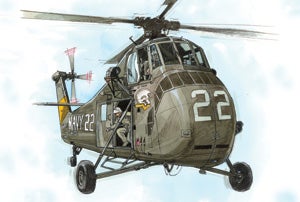


During the most intense of the Vietnam War years, I had a strong sense that I was the luckiest young sailor in the Navy, as I luxuriated in a serendipitous assignment as an air rescue swimmer and H-34 crew chief stationed in Hawaii. Operating workhorse Sikorsky S-58 helicopters out of Pearl Harbor and Barbers Point Naval Air Station across a variety of mission profiles supporting CINCPAC’s Fleet Composite Squadron One, we were treated each Tuesday to the additional privilege of a 100-mile trip to the neighboring island of Kauai, in order to work with the Pacific Missile Test Range Facility at Barking Sands. On one of these sparkling Tuesday mornings, I had no idea that I was about to learn a critically valuable aviation lesson while discovering that my luck extended far beyond simply seeing wartime service in such a pleasant locale.
In those days, the Pacific Missile Test Range Facility stayed busy conducting analyses of surface-to-surface weapons systems, and command activities included test-firing missiles and analyzing their performance using physically jettisoned “capsule” flight data recorder packages, which were parachuted to the water just before the conclusion of each given shot. Our job was to spot these floating capsules, marked by self-contained smoke flares, and recover them. We had worked out a system of approaching the smoke signature during a final, descending upwind-pattern leg, and then having the swimmer deploy by stepping out of the cargo door as the aircraft established a hover over the capsule. The swimmer could then use a grapple to recover the capsule and be hoisted back aboard the aircraft. This procedure had proven to be much quicker and more efficient than fishing around for the capsule under the rotor wash with hoist-slung devices. And as a bonus, it was a very enjoyable exercise for me at the time.

