Register

FAA Adds Texas School to ATC Feeder Network

Angelo State University is the 12th to join the agency’s Enhanced Air Traffic–Collegiate Training Initiative.

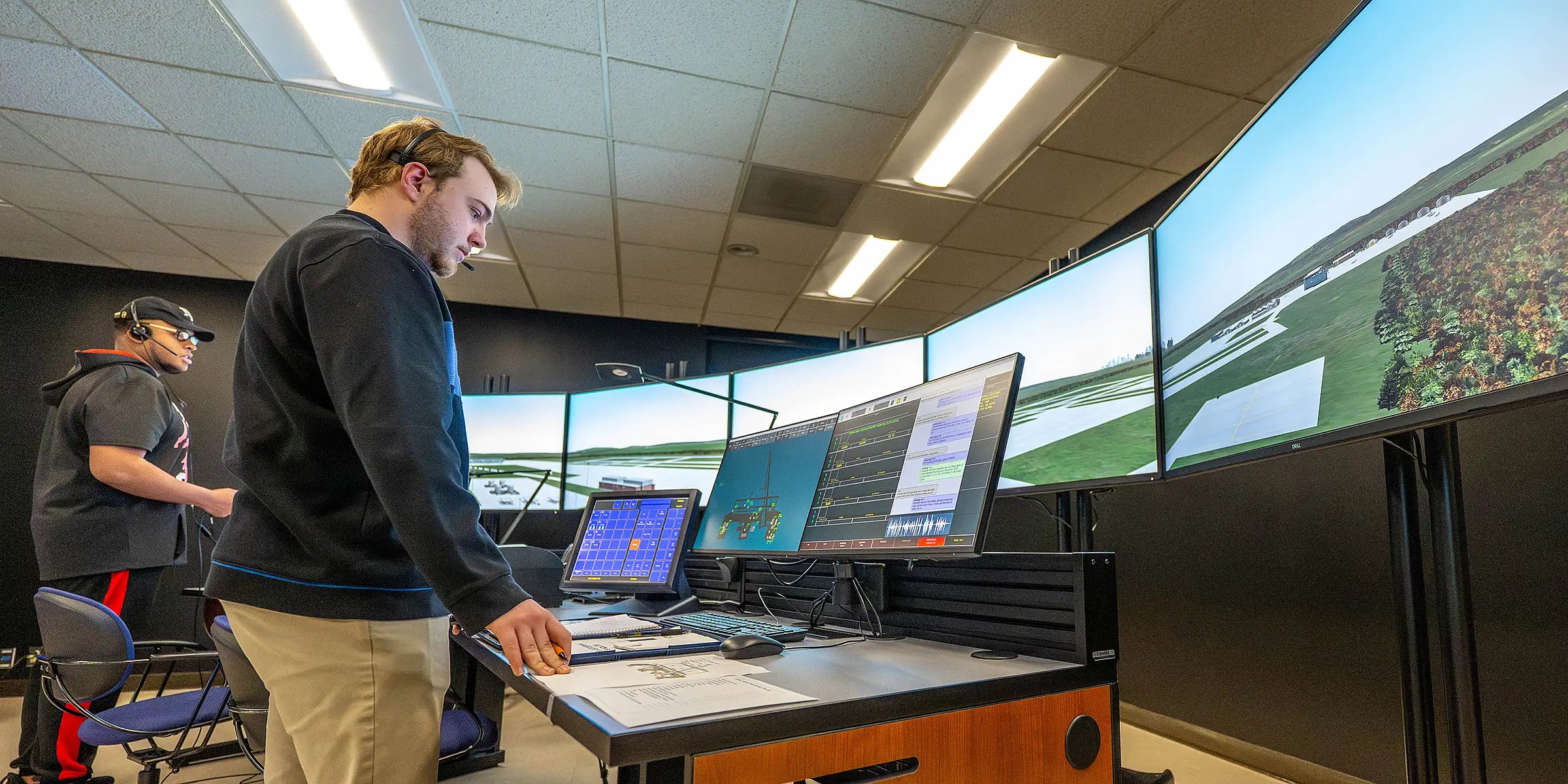
ATC simulator laboratory Angelo State University Texas
Angelo State students try out the university’s air traffic operations simulator lab. [Credit: Angelo State University]
Gemini Sparkle

Key Takeaways:

Texas is the latest state to welcome a school into an FAA program that is replicating the agency’s air traffic control (ATC) academy in Oklahoma City at universities nationwide.

The FAA on Thursday announced Angelo State University as the first university in the Lone Star State, and 12th overall, to join its Enhanced Air Traffic–Collegiate Training Initiative (E-CTI) program.

“I’m thrilled our collegiate level air traffic controller training program is expanding to one of our nation’s largest states so we can reach more students, fast track careers in aviation, and deliver the world-class air traffic control system the American people deserve,” U.S. Transportation Secretary Sean Duffy said in a statement.

Per the FAA, the 12 E-CTI schools offer identical curricula to the FAA Academy in Oklahoma City. E-CTI graduates must still complete the air traffic skills assessment (ATSA) and meet medical and security requirements.

Those who pass final performance and written assessments, though, receive an official FAA endorsement certificate. That allows them to skip the agency’s ATC academy and head directly to on-site training at the facilities they will one day oversee.

Angelo State’s agreement covers the school’s tower program. It is also the seventh U.S. school to enter the FAA’s Control Tower Operator Partnership Program (CTO-P), allowing it to send students directly to one of more than 265 federal contract towers (FCTs) operated by private contractors.

The FAA is exploring converting some FCTs to agency-owned facilities and recruiting their controllers to its own ranks.

“To keep our skies safe, we must ensure air traffic controllers have the proper training and tools, given the more than 45,000 flights under ATC supervision each day,” said Senator Ted Cruz (R-Texas), who chairs the Senate Committee on Commerce, Science, and Transportation. “This partnership—the first of its kind in Texas—will help streamline the high-caliber education and technical development of these controllers, equipping the FAA with as many talented individuals as possible.”

In addition to the 12 E-CTI schools, there are more than 20 AT-CTI universities that offer two- and four-year, nonengineering aviation degrees and basic courses. Unlike the newer E-CTI, the latter program is designed to produce qualified developmental ATC specialist candidates. AT-CTI graduates bypass the Air Traffic Basics Course that comprises the first five weeks of academy training, but they must still complete either terminal or en route training in Oklahoma City.

Angelo State earned the AT-CTI designation in July 2025 and has installed ATC simulators that meet FAA academy standards.

Growing the ATC Workforce

Angelo State is the ninth E-CTI school announced under Duffy’s oversight as President Donald Trump’s administration aims to “supercharge” the ATC workforce.

The University of Oklahoma, Tulsa Community College in Oklahoma, and Embry-Riddle Aeronautical University in Florida joined the program shortly after it launched in 2024. By mid-2025, it had grown to six schools. Duffy in January announced Sacramento City College as the first California E-CTI school and in March extended the program to Colorado, adding Aims Community College.

The expansion of collegiate programs that duplicate FAA academy courses is just one strategy officials have adopted to address a chronic shortage of ATCs.

The FAA met its hiring target of more than 2,000 controller trainees in 2025. It said Thursday it is over 67 percent of the way to hiring 2,200 additional trainees in fiscal year 2026 (FY26). Per the agency’s latest workforce plan, it targets 2,300 new hires in FY27 and 2,400 in FY28.

That means the FAA seeks to hire a total of 6,900 trainees between FY26 and ’28. It also expects to lose 5,307 during that period, netting it 1,593 in total.

Today, the agency employs about 11,000 certified professional controllers who have completed their training and deployed to the field. That is about 1,500 short of a revised FY26 staffing target that the FAA adopted under the new blueprint.

Previously, the agency used a staffing model developed with the National Air Traffic Controllers Association (NATCA) that would put the shortage closer to 3,500. NATCA told FLYING this month that it was left out of the decision to switch to the new staffing standard.

In short, the FAA is shorthanded no matter how one spins it. However, a recent hiring push netted 12,000 new applicants in 24 hours, which Duffy said in April was the most in a single day in the agency’s history.

Officials this month estimated that hiring surges and other financial incentives implemented under Duffy’s leadership resulted in a net gain of 568 personnel. Other methods, such as incentives for retirement-age ATCs to continue working, have been less effective.

“Despite the increased incentive to delay retirement, most controllers still leave the controller workforce prior to reaching the mandatory age,” the FAA’s latest workforce plan reads.

With retention of retirement-age controllers proving challenging thus far, one alternative is to increase the number of young controllers entering the ranks. After Thursday, many could come from Texas.

“This program will help address our nation’s air traffic controller shortage while creating a direct pathway for students in West Texas to pursue careers in aviation and public service,” Rep. August Pfluger (R-Texas) said in a social media post Friday. “I appreciate [Secretary Duffy] and the FAA for recognizing the strength of Angelo State University and investing in the next generation of air traffic controllers.”

Jack Daleo

Jack is a staff writer covering advanced air mobility, including everything from drones to unmanned aircraft systems to space travel—and a whole lot more. He spent close to two years reporting on drone delivery for FreightWaves, covering the biggest news and developments in the space and connecting with industry executives and experts. Jack is also a basketball aficionado, a frequent traveler and a lover of all things logistics.


Ready to Sell Your Aircraft?

List your airplane on AircraftForSale.com and reach qualified buyers.

List Your Aircraft
AircraftForSale Logo | FLYING Logo
Pilot in aircraft
Sign-up for newsletters & special offers!

Get the latest stories & special offers delivered directly to your inbox.

SUBSCRIBE