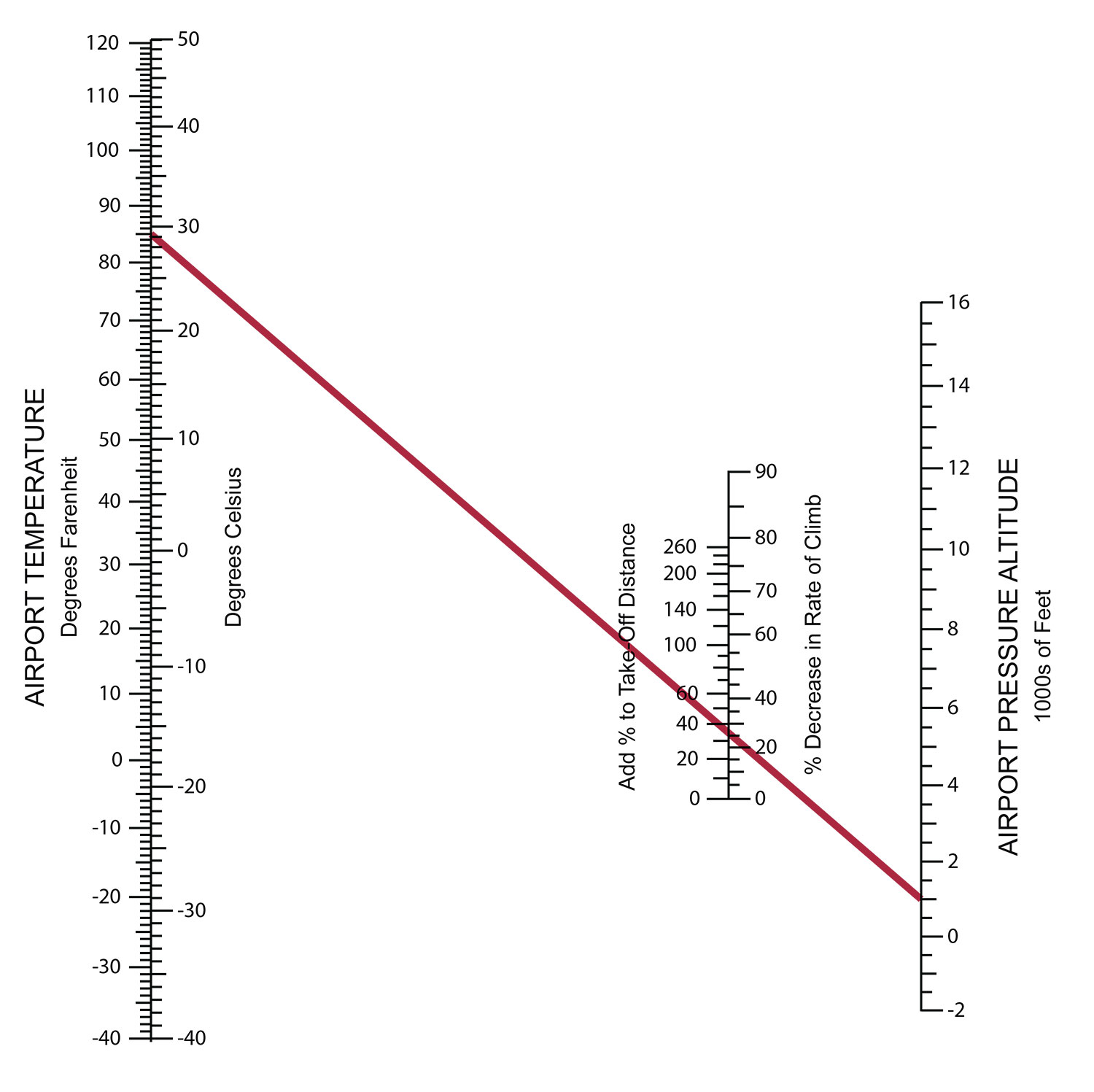
A real Koch chart is reproduced above. To use it, draw a straight line between the temperature (85 degrees F) on the left and the pressure altitude (1000 feet) on the right. Read the results from the center (35 percent increase in takeoff distance and a 25 percent reduction in climb rate).
Key Takeaways:
The magazine received corrections regarding two technical aviation topics: distinguishing a Koch chart (used for correcting takeoff/climb performance) from a pressure altitude chart, and clarifying the correct procedure for missed approaches initiated from a circling approach to ensure obstacle clearance.
A reader highlighted that the magazine's advice on returning to the Missed Approach Point (MAP) after a circling missed approach was incorrect and unsafe, emphasizing that published missed approach procedures do not guarantee obstacle clearance under such circumstances.
An aging pilot and Senior Aviation Medical Examiner shared his personal journey, noting no age restrictions for First Class Medicals, his achievement of an ATP at 75, and his decision to fly with a safety pilot after turning 80, underscoring the importance of safety and the lifelong benefits of flying.
In the December 2023 issue, the figure on page 5 is not a Koch chart, but rather a chart for computing pressure altitude.
A Koch chart normally has a pressure altitude scale on the right and temperature on the left. In the center are scales for correcting takeoff distance and climb rate relative to sea level values.
CREATE A FREE ACCOUNT
Sign up to keep reading
Create a free account to continue. Already a member? Sign in below.