











Junes “Saving The Approach” article was good. It reinforced a lot of what I already knew but some of which I hadnt used in a long time since my former airline career. In my retirement, I am instructing both beginning students in a C-150 and 288
When To Flap
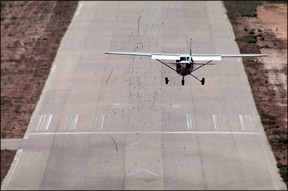
Since such an approach will be completed at a relatively long runway, the landing configuration should be set up at the final approach fix (FAF). I do not recommend changing this configuration on short final while close to the ground due to the possibility of a large pitch change. Of course, if the approach is a non-precision approach or if the precision approach ends up breaking out at 500-600 feet above the ground, go ahead and use full flaps as needed.

Key Takeaways:
- For precision instrument approaches, it's suggested to deploy approach flaps at the Final Approach Fix (FAF) to maintain a stable configuration and avoid large pitch changes close to the ground, especially in light aircraft.
- Proper hand-propping technique requires applying flat hand pressure to the prop's front surface, never wrapping fingers around the trailing edge, to prevent injury from backfires.
- Pilots should be mindful of potential visual illusions when transitioning from large to smaller runways, as different dimensions can lead to misjudging altitude during landing.
Key takeaways sponsored by Aviator Pro | Start Your Training ->
See a mistake? Contact us.

