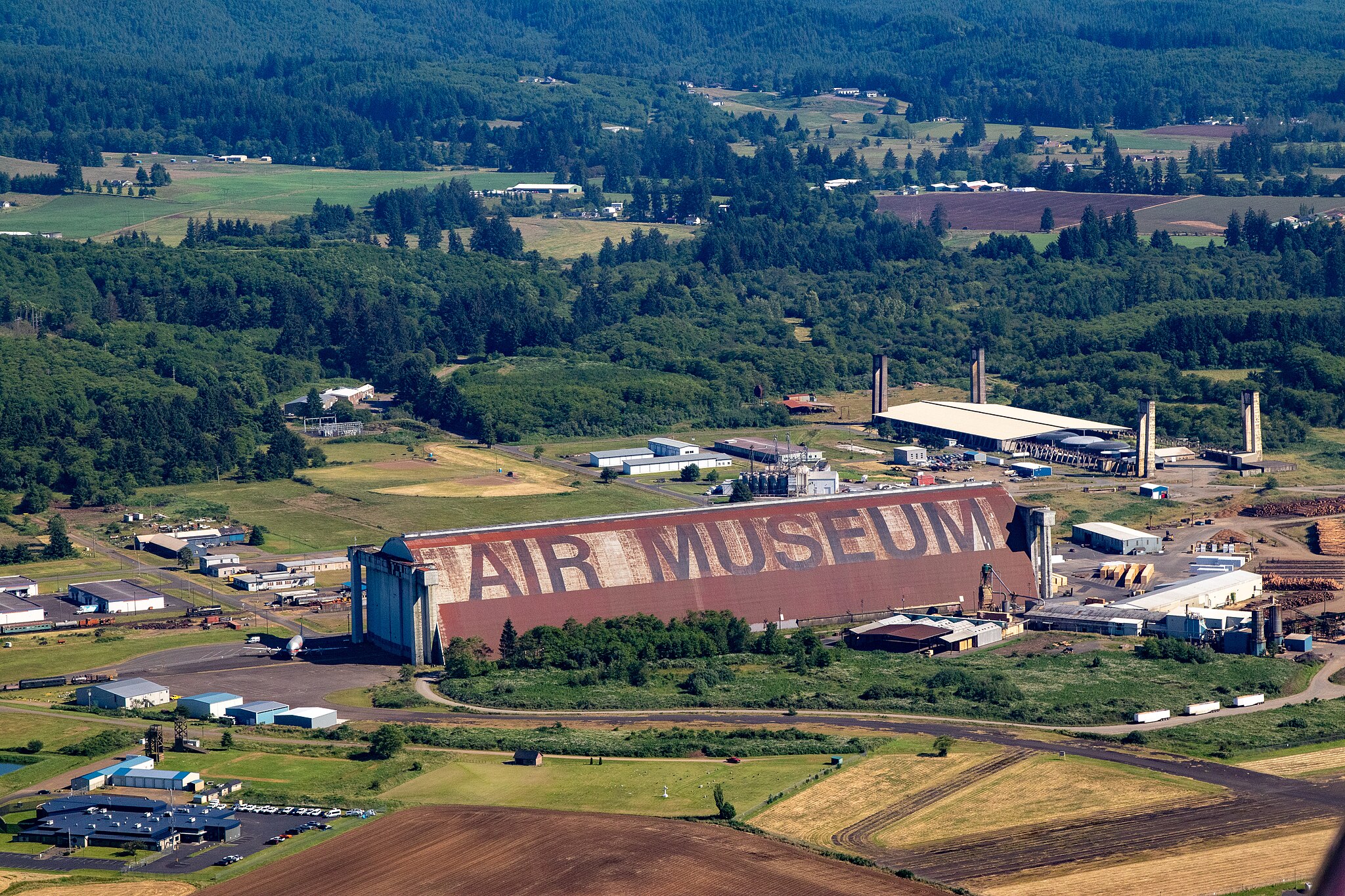
The Tillamook Air Museum, located on the coast of Oregon, is closed until further notice.
The museum is located in Hangar B, a World War II-era hangar. The hangar sustained heavy damage in a winter storm, and according to museum officials the facility most likely won’t be repaired and ready to reopen until 2027.
The hangar is one of the largest wooden buildings in the world and is owned by the Port of Tillamook. It is 192 feet high and was originally built to house Navy airships during World War II.
The trouble began on December 16, 2025, when high winds peeled back part of the roof, leaving a 200-foot-by-30-foot hole.
The damage is on the south end of the building near the transition point between the convex roof and the vertical wall. In addition to patching a hole in the roof, care must be taken to preserve the historic integrity of the structure.
When the damage was discovered, the first course of action, according to museum director Rita Welch, was to determine if the building was safe to enter. Once that was done, teams went in to recover museum exhibits and stored property (RVs and boats) and move it all to the north end of the 1,072-foot-long structure.
Once the exhibits and property were safe, the team began the monumental task of creating a plan to repair the large and historic building.
“Our team has been working behind the scenes on all aspects of the hangar repair needs,” she said. “To highlight where we are to date, we are currently focused on stabilization and assessment following the storm damage. We have vacated most of the tenants within the building, we are working with some of our larger exhibits and tenants on alternative timelines for vacation ahead of any repair, but throughout any repair the hangar will need to be fully vacated.”
Clearing artifacts out of a museum is neither quick nor easy, but it was done, Welch said.
“The artifacts have been removed from all exhibits. Items have been relocated into long term storage elsewhere on the Port. This is to ensure climate control and ease of access for location and monitoring while we work through the closure and repairs.”
The museum also contains full-sized aircraft, some of which were on loan from private individuals. Others are on loan through agreements with the U.S. Navy and Air Force.
“Of all those agreements, one collector decided to remove his items and completed that move earlier this month. The other private collectors, USN, and USAF are waiting for next steps and if available, will likely keep all items in the hangar, and we will just hold them in storage away from the damaged area until we are able to reopen,” Welch said.
According to Welch, the private owners of the aircraft are responsible for the removal and costs if they decide to move it, while the port and museum are responsible for removal and costs associated with the USN and USAF agreements.
“All aircraft moves are unique to the aircraft specs,” Welch said when asked about the cost of aircraft relocation. “Most aircraft on display are not able to fly and will require being dismantled and the use of cranes for loading and special permitting for transport. Some are in flyable condition but still would require inspections with the FAA and proper ferry permits to relocate.”
The past few months have been filled with structural assessments, research, and fundraising.
According to Welch, the Port, along with the not-for-profit group Friends of Tillamook Air Museum, paid for lidar drone technology to create 3D structural models for engineering evaluations.
The fundraising includes a $4 million federal funding request for cleanup and site preparation from the offices of U.S. Senators Ron Wyden and Jeff Merkley along with requests through the office of Oregon Emergency Management (OEM). Earlier this week the County of Tillamook was informed that the region would be getting some funding to pay for storm damage, but at this point county and museum officials don’t know how much that funding is, or if the museum is included in the allocation.
Museum staff have also reached out to the State Historic Preservation Office (SHPO) and National Parks Service for assistance on locating and applying for funding, but according to Welch, “Nothing has surfaced as of yet that we qualify for.”
In the meantime, the Port is gathering information on the cost and logistics of the repairs.
“It will be a long road to recovery for the building and any re-opening,” Welch said. “That timeline has not fully been determined, but likely either 2027 or even potentially further out.”