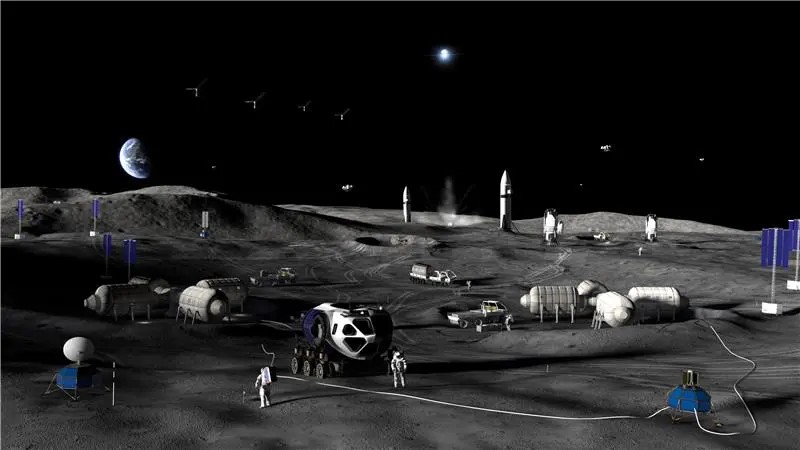
An artist’s concept of Phase 3 of NASA’s moon base project, planned to take place from 2033 to 2036. [Credit: NASA]
Key Takeaways:
NASA is significantly changing its lunar strategy, pausing development of the Lunar Gateway space station to focus instead on building a permanent human base directly on the moon's surface.
This ambitious project will require an investment of $20-30 billion over the next decade, with the goal of initiating semi-annual crewed missions to the moon starting in 2028.
The plan is divided into three phases: establishing reliable lunar access and initial site exploration by 2028, building core infrastructure for extended human presence by 2032, and transitioning to a permanent base with resource extraction capabilities by 2036.
NASA will heavily rely on commercial partners for payload delivery and human landing systems, emphasizing strict performance and schedule adherence, and leveraging an integrated workforce program.
Over the next decade, NASA plans to spend tens of billions of dollars on what one official called “humanity’s first deep-space outpost.”
NASA Administrator Jared Isaacman kicked off the space agency’s “Ignition” event Tuesday with the revelation that it will pause work on the Lunar Gateway space station, a sizable portion of which has already been built by contractors.
CREATE A FREE ACCOUNT
Sign up to keep reading
Create a free account to continue. Already a member? Sign in below.
Jack is a staff writer covering advanced air mobility, including everything from drones to unmanned aircraft systems to space travel—and a whole lot more. He spent close to two years reporting on drone delivery for FreightWaves, covering the biggest news and developments in the space and connecting with industry executives and experts. Jack is also a basketball aficionado, a frequent traveler and a lover of all things logistics.