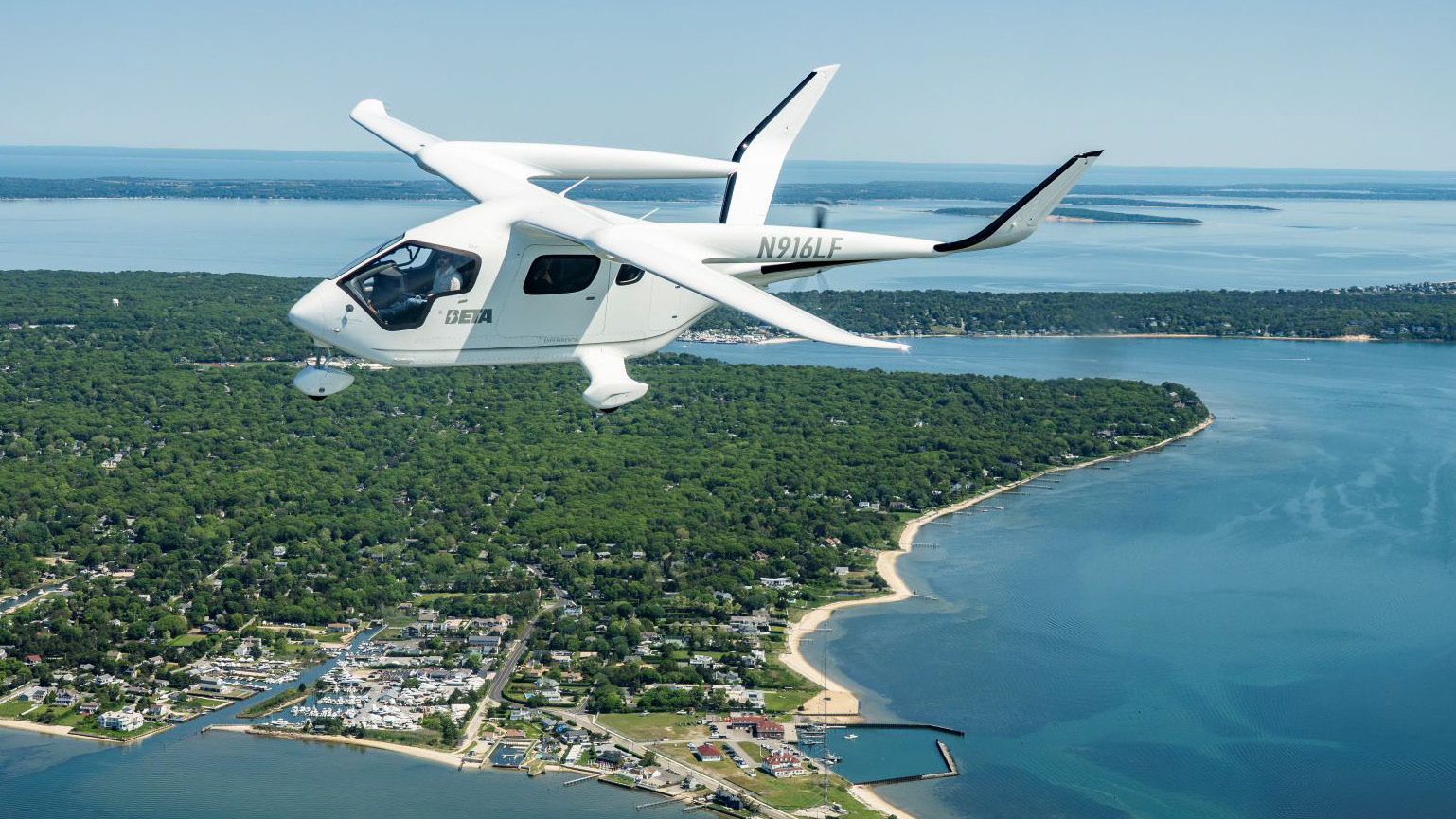
This Alia conventional takeoff and landing (CTOL) electric aircraft, the first rolled off Beta Technologies’ rate production line, flew into airports across the U.S. in 2025. [Credit: Beta Technologies]
Key Takeaways:
The FAA has established a special regulation (SFAR) for eVTOLs and launched an Integration Pilot Program (eIPP) for early integration, allowing real-world testing and potential revenue generation.
Major eVTOL manufacturers like Beta, Joby, Archer, and Wisk achieved significant flight testing milestones in 2025, including piloted transitions, extensive flight hours, and public demonstrations.
Looking ahead to 2026, the eIPP is set to facilitate sustained real-world operations and data collection, while manufacturers actively prepare for critical Type Inspection Authorization (TIA) testing towards certification.
The FAA in October 2024 published a special federal aviation regulation (SFAR) with seismic implications for the aviation industry—a framework for the early integration of electric vertical takeoff and landing (eVTOL) aircraft.
As 2026 begins, these new entrants, capable of both vertical lift and wingborne flight, may be months or even weeks away from flying in a city near you.
CREATE A FREE ACCOUNT
Sign up to keep reading
Create a free account to continue. Already a member? Sign in below.
Jack is a staff writer covering advanced air mobility, including everything from drones to unmanned aircraft systems to space travel—and a whole lot more. He spent close to two years reporting on drone delivery for FreightWaves, covering the biggest news and developments in the space and connecting with industry executives and experts. Jack is also a basketball aficionado, a frequent traveler and a lover of all things logistics.