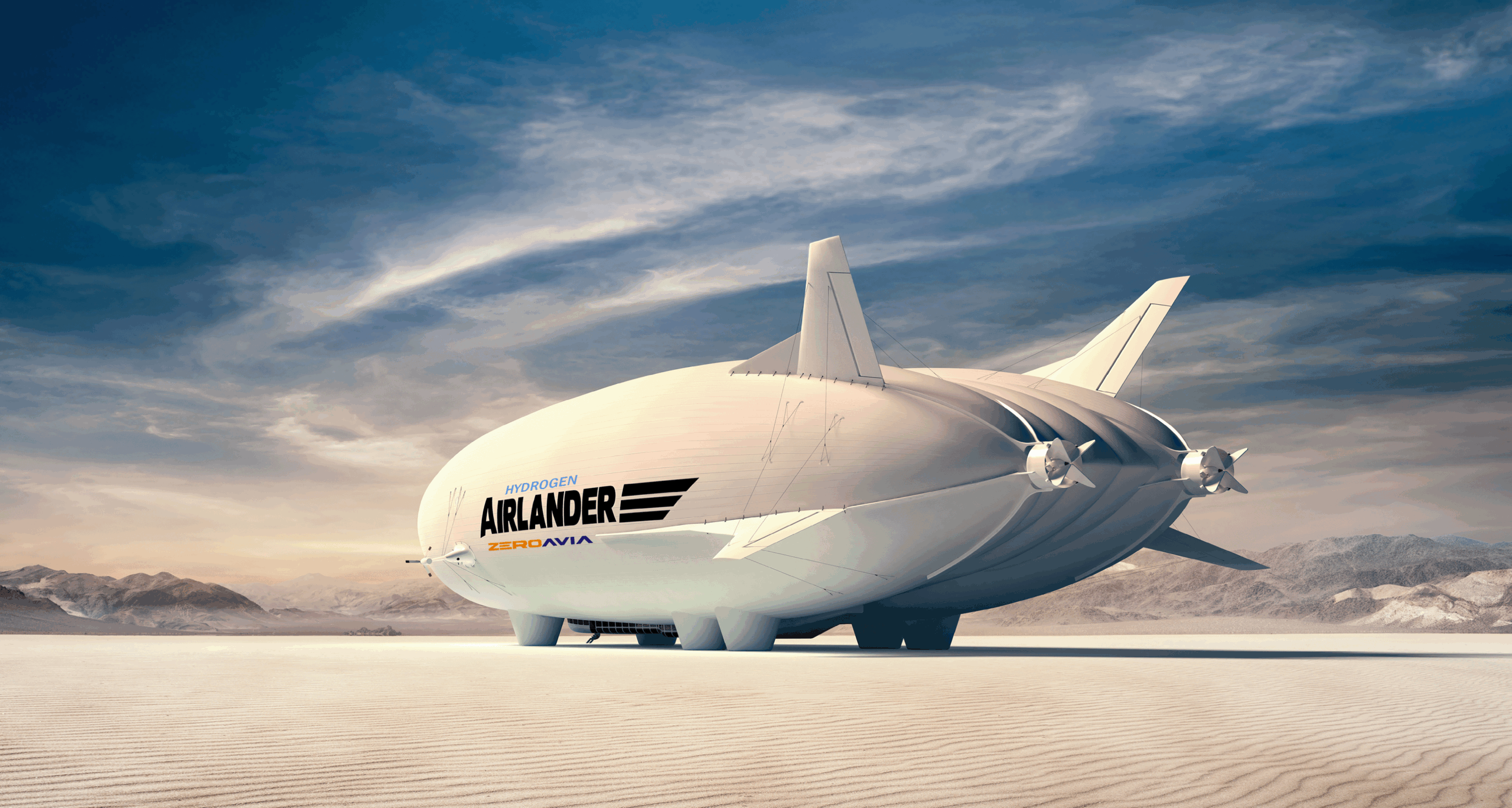
ZeroAvia’s hydrogen-electric powertrains could propel HAV’s football field-sized Airlander 10. [Courtesy: Hybrid Air Vehicles]
Key Takeaways:
Hybrid Air Vehicles (HAV) has partnered with ZeroAvia to explore hydrogen-electric propulsion for its football field-sized Airlander 10 aircraft.
The Airlander 10's massive hull space makes it an ideal candidate for storing hydrogen, with HAV aiming for a zero-emission variant capable of carrying over 100 passengers by 2030.
This collaboration will investigate installing ZeroAvia's ZA600 powertrains on future Airlander models, leveraging the aircraft's runway-independent operation and potential for diverse applications including luxury travel, cargo, and defense.
The developer of a football field-sized aircraft could turn to hydrogen for propulsion.
Hybrid Air Vehicles (HAV)—the U.K. company behind the more than 300-foot long Airlander 10—on Monday announced a partnership with hydrogen-electric powertrain developer ZeroAvia, which is looking to line-fit and retrofit its systems on a variety of aircraft.
CREATE A FREE ACCOUNT
Sign up to keep reading
Create a free account to continue. Already a member? Sign in below.
Jack is a staff writer covering advanced air mobility, including everything from drones to unmanned aircraft systems to space travel—and a whole lot more. He spent close to two years reporting on drone delivery for FreightWaves, covering the biggest news and developments in the space and connecting with industry executives and experts. Jack is also a basketball aficionado, a frequent traveler and a lover of all things logistics.