

In last month’s Aftermath, which concerned fatal accidents that the NTSB had linked to hypoxia, I was puzzled by a few that involved experienced pilots who had been flying, in one case for a rather short time, in the 12,000- to 18,000-foot altitude range without supplemental oxygen. If scrambled fighters find a maskless pilot slumped in his seat, clearly unconscious, as his airplane cruises past its destination at 25,000 feet, it’s reasonable to suspect an oxygen problem. On the other hand, if a pilot with minimal instrument experience gets tangled up in clouds at night at 15,000 feet, is hypoxia to blame? You can’t really tell, since plenty of pilots get tangled up in clouds at night at 5,000 feet with the same outcome.
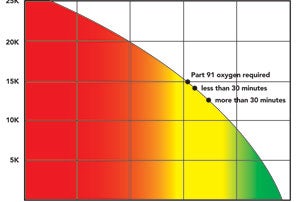
Part 91 allows you, the pilot, to fly between 12,500 and 14,000 feet without supplemental oxygen for no more than 30 minutes. Pilots are required to use oxygen above 14,000 feet at all times. Passengers are permitted to gasp for breath indefinitely below 15,000 feet; above 15,000, everybody in the airplane must be provided with supplemental oxygen.