











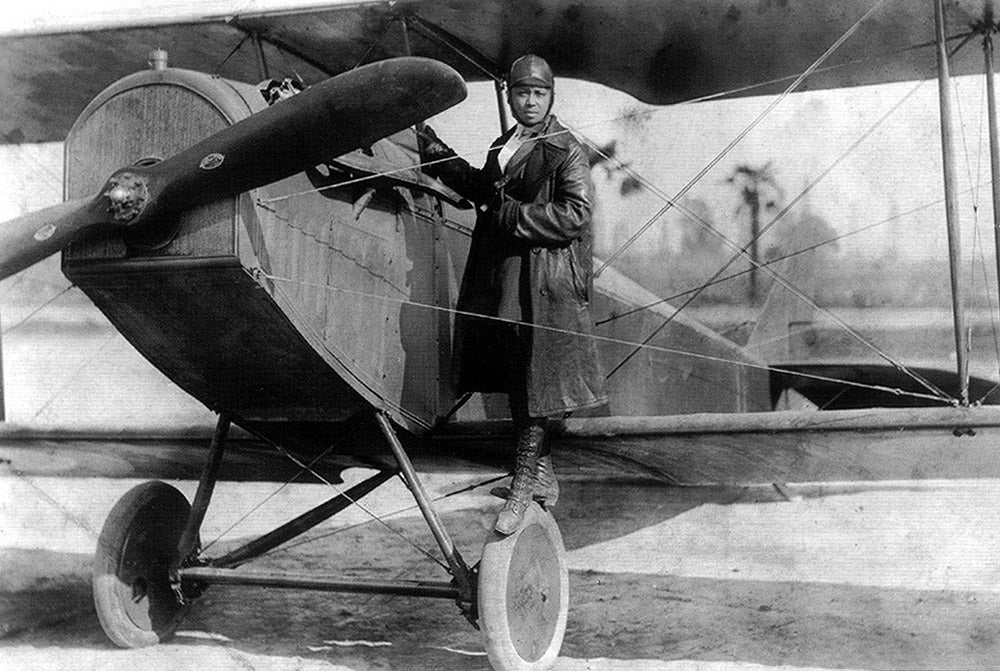
When Bessie Coleman first took flight in 1921, at the age of 29, she not only slipped the surly bonds of Earth but those of the racial prejudice and sexism of the time.
Bessie Coleman: Remembering an Aviation Pioneer

Key Takeaways:
- Bessie Coleman was the first African-American and Native American woman to earn an international pilot's license, achieving this in France after being denied enrollment in U.S. aviation schools due to race and gender.
- She overcame significant racial prejudice and sexism throughout her career, becoming a pioneering aviator known for aerobatic performances despite facing discrimination that prevented her from purchasing a plane or working in commercial aviation in the U.S.
- Coleman's motivation was to encourage aviation among her race, and she remains a symbol of overcoming discrimination and a pioneering figure in aviation, recently honored by Google on her 125th birthday.
Key takeaways sponsored by Aviator Pro | Start Your Training ->
See a mistake? Contact us.

