














Register

Beyond the Basics of Emergency Training

Gemini Sparkle

Key Takeaways:

  • Standard emergency training often oversimplifies real-world engine failure scenarios, focusing only on complete power loss from a safe altitude rather than complex situations like partial power or marginal performance.
  • In challenging flight conditions, pilots must resist the temptation to dangerously pull back to squeeze performance, prioritizing maintaining control to avoid a stall/spin, as a controlled crash is far safer than losing control.
  • Pilots should seek advanced emergency training to practice diverse scenarios, including partial power situations and techniques like last-moment flap deployment, to truly understand aircraft behavior and better prepare for complex emergencies.
See a mistake? Contact us.

We’ve all trained for emergencies that we think of as unlikely but know can happen. In singles, one of the most feared and often discussed is an engine failure, especially in the moments after takeoff with the runway inconveniently behind us.

During engine-out practice, we climb to a safe altitude, pull the power to idle, pitch for best glide airspeed and look for a suitable place to set down. This is all well and good, but it’s also a training scenario that might not match the real-life emergency you may one day face.


Ready to Sell Your Aircraft?

List your airplane on AircraftForSale.com and reach qualified buyers.

List Your Aircraft
AircraftForSale Logo | FLYING Logo
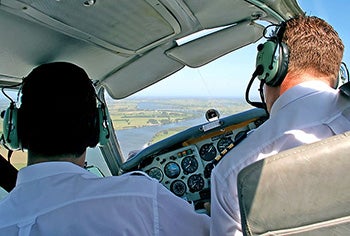
Pilot in aircraft
Sign-up for newsletters & special offers!

Get the latest stories & special offers delivered directly to your inbox.

SUBSCRIBE
