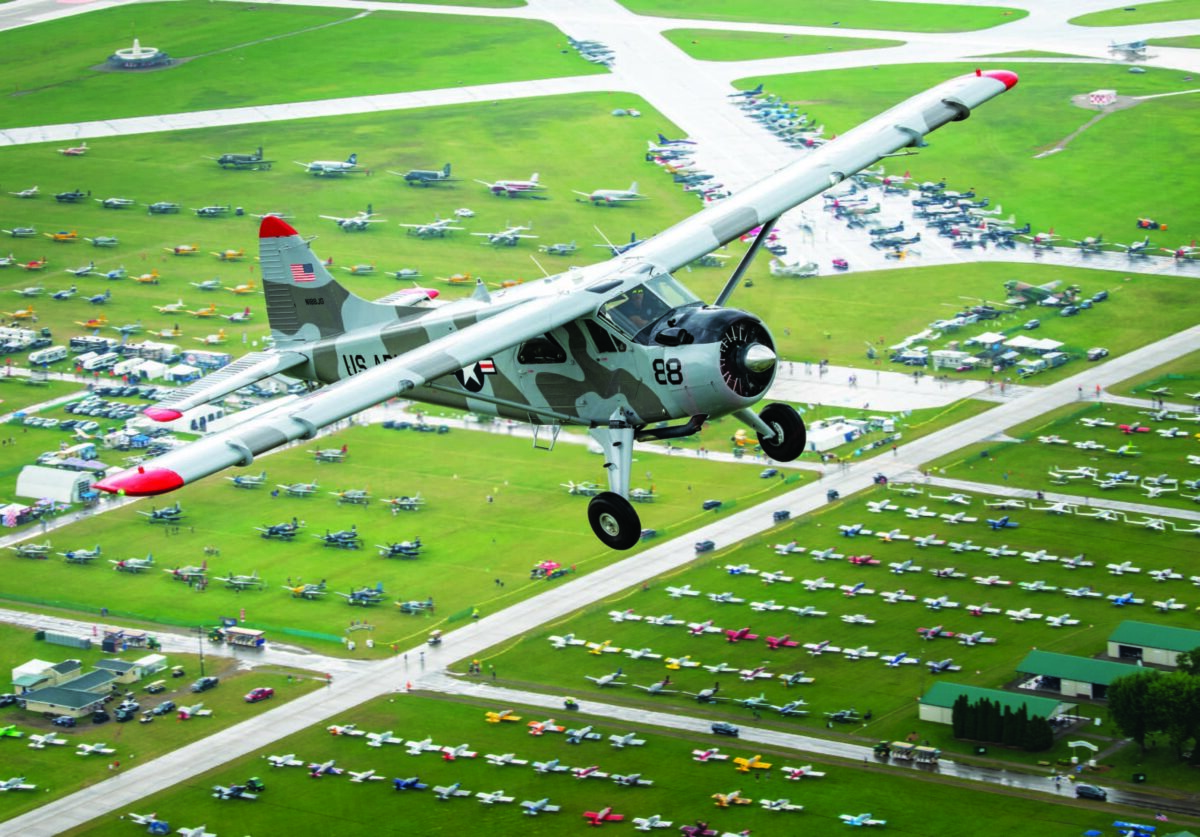
AirVenture in Oshkosh [Courtesy: Experimental Aircraft Association/Connor Madison]
Key Takeaways:
Pilots flying into major airshow events must meticulously study and adhere to complex, often extensive, arrival and departure procedures to manage high traffic volumes safely.
Crucial considerations for fly-ins include having ample fuel, monitoring weather, and planning for potential airport closures (due to incidents or IFR conditions) by identifying suitable diversion airports.
Effective preparation involves practicing key flying skills such as maintaining specific slow flight airspeeds, managing low-speed handling, and performing precise spot landings to meet event-specific operational requirements.
It’s that time of year again in the Northern Hemisphere—finally—when many pilots set their sights on flying to fun places offering short sleeve weather.
One popular airshow arrival destination is always a local or regional fly-in, and literally thousands of pilots save up their nickels for the big, international events like EAA AirVenture Oshkosh (July 21-27).
CREATE A FREE ACCOUNT
Sign up to keep reading
Create a free account to continue. Already a member? Sign in below.
Jeb Burnside has served as editor in chief of Aviation Safety magazine. He’s an airline transport pilot who owns a Beech Debonair, plus the expensive half of an Aeronca L-16B/7CCM Champ.