











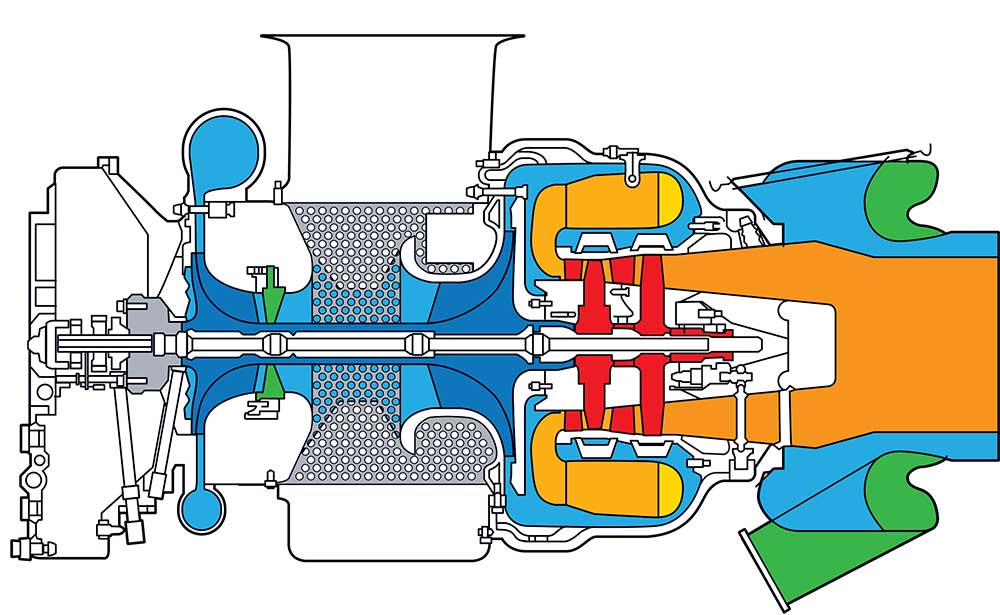
An aircraft auxiliary power unit serves as an additional energy source normally used to start one of the main engines on an airliner or business jet. The APU is equipped with an extra electrical generator to create enough power to operate onboard lighting, galley electrics and cockpit avionics, usually while the aircraft is parked at the gate. Drawing bleed air from its own compressor, an APU also drives the environmental packs used to heat and cool the aircraft.
How an Auxiliary Power Unit Works

Key Takeaways:
- The Auxiliary Power Unit (APU) is a small turbine engine that provides essential power on the ground for starting main engines, generating electricity for onboard systems, and supplying air for cabin climate control, saving fuel and wear on the main engines.
- While primarily used while the aircraft is parked, the APU can also serve as an emergency electrical power source during flight, a critical function for extended-range twin-engine (ETOPS) operations.
- Although vital for passenger comfort and widely used in medium to larger aircraft, APUs are known for producing noise, leading to operational restrictions at some airports, and feature dedicated fire safety systems.
Key takeaways sponsored by Aviator Pro | Start Your Training ->
See a mistake? Contact us.

