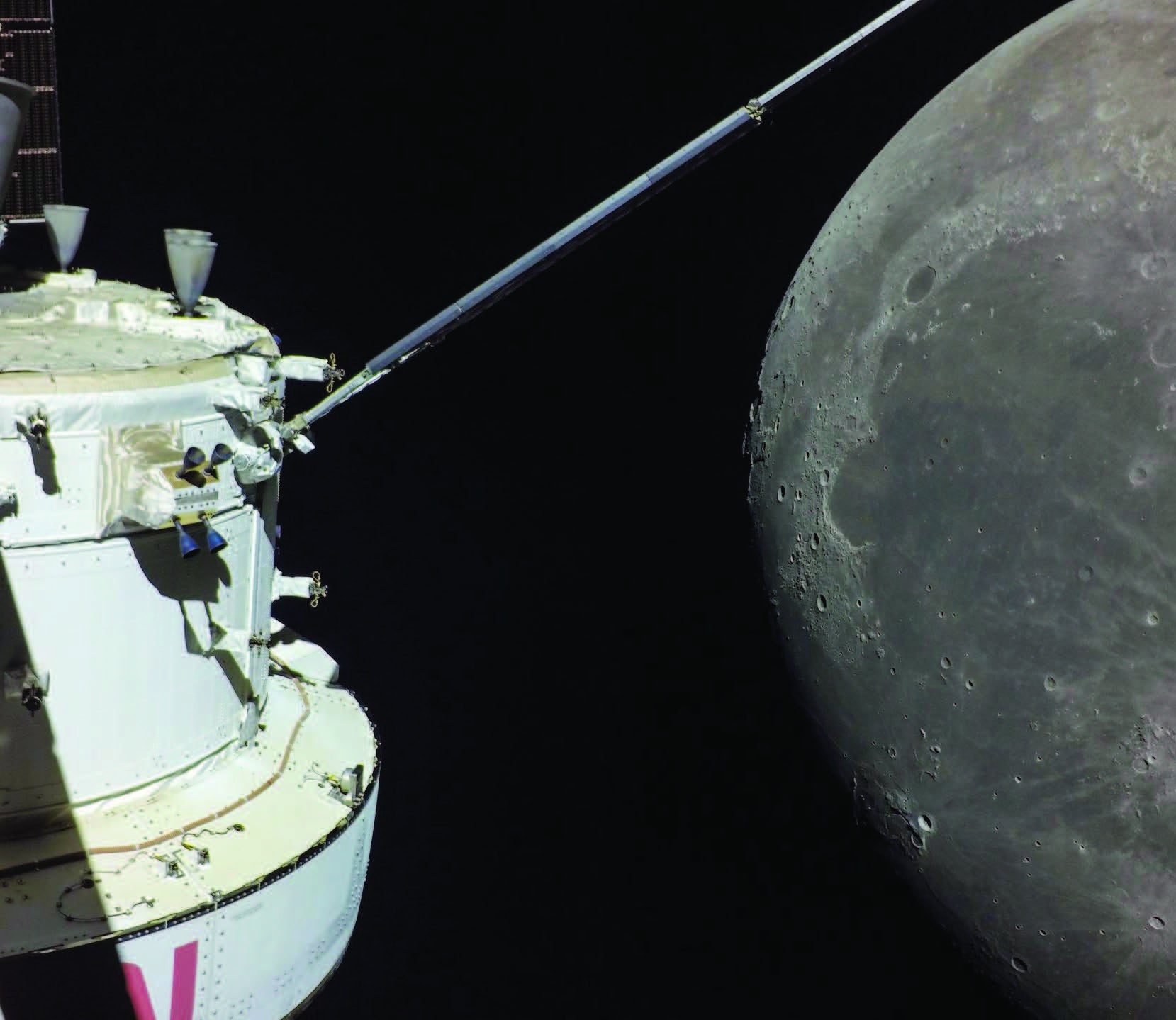
NASA’s Orion spacecraft passes within 80 miles of the moon during the Artemis I mission in 2022. [Courtesy: NASA]
Key Takeaways:
NASA's Artemis program faces significant delays in returning astronauts to the moon (now targeting 2026/2027) due to safety concerns with the Orion capsule's heat shield and critical development milestones required from contractor SpaceX's Starship.
The U.S. is engaged in a new "Moon Race" with China, aiming to reach the lunar south pole to access water ice for resource utilization and to establish a stepping stone for future human missions to Mars.
The incoming NASA chief, Jared Isaacman, is expected to bring a "commercial mindset" to the agency, potentially impacting budget allocation, increasing outsourcing, and accelerating the Moon-to-Mars initiative, while also facing challenges with the costly Space Launch System (SLS).
The U.S. is in the midst of a second Space Race, and NASA is in a time crunch.
The space agency is preparing to send American astronauts to the moon for the first time since the Apollo era. But after delaying the Artemis III lunar landing twice in 2024, there is much work to be done. And experts believe NASA is on the clock.
CREATE A FREE ACCOUNT
Sign up to keep reading
Create a free account to continue. Already a member? Sign in below.
Jack is a staff writer covering advanced air mobility, including everything from drones to unmanned aircraft systems to space travel—and a whole lot more. He spent close to two years reporting on drone delivery for FreightWaves, covering the biggest news and developments in the space and connecting with industry executives and experts. Jack is also a basketball aficionado, a frequent traveler and a lover of all things logistics.