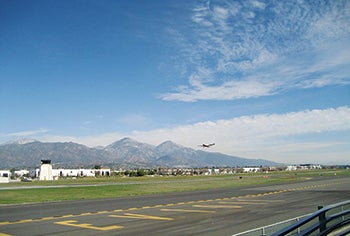


The Los Angeles basin stretches a hundred miles from the sparkling Pacific to the scrub-brush slopes of San Jacinto Peak. This sprawling plain of concrete and stucco is further bounded by the San Gabriel Mountains to the north and the Santa Anas to the south; these ramparts encompass 18 million souls and all the associated detritus of modern civilization. Surrounded by sea and desert, the metropolis is a self-contained universe with aqueducts, power lines and interstates fanning out beyond like life-sustaining roots. Occupying such an isolated corner of the continent, LA is heavily dependent on air travel and has been a hotbed of aviation from the beginning, once boasting such storied names as Douglas, Lockheed, Northrop and Hughes. The aerospace industry spawned southern California’s famous car culture, as well as a sport aviation craze that sprinkled the basin with airports big and small. More than 30 remain despite endlessly encroaching development, from funky little Flabob to bustling Van Nuys to heavy-metal behemoth LAX.
Brackett Field, my home airport as a new flight instructor, lies on the northern edge of the basin, deep within the shadow of 10,000-foot Mount Baldy. It is nestled under Ontario’s Class C airspace; to the southwest the LAX Class B rises abruptly over Interstate 10. Chino and El Monte, both towered airports, border Brackett’s own control zone. West and south, Burbank and Orange County merit additional Class C complexes. Confined by the terrain and funneled via the complex airspace, an astonishing quantity and variety of air traffic transits the area: trainers, homebuilts, warbirds, helicopters, corporate jets, traffic spotters, banner towers, mosquito sprayers, gliders and even hot air balloons and sky divers. The terrain and traffic are both frequently obscured because the basin traps moist ocean air and pollutants alike in a semipermanent inversion, creating conditions varying from thick fog and low overcasts to smog or haze. This was the environment in which I, at 20 years old and 250 hours with a fresh CFI ticket, was given a full slate of student pilots and entrusted with their safety and education.