
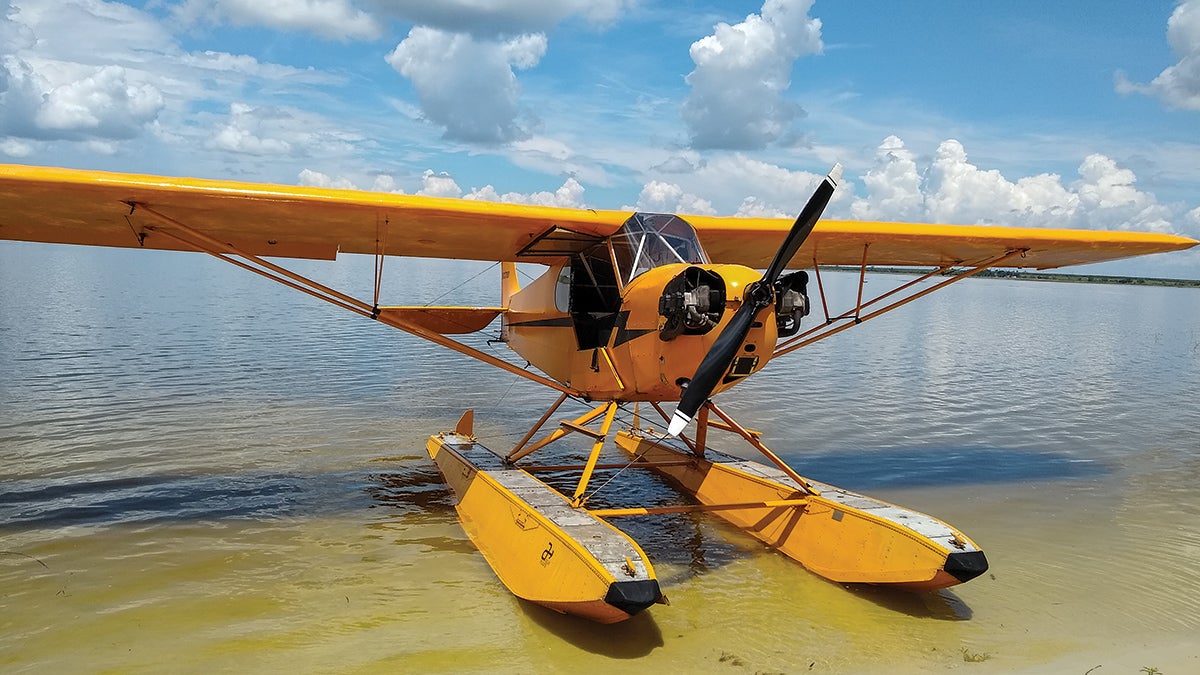
It’s a warm, sticky August morning in Florida, and even the stiff breeze swirling in through the Cub’s open door fails to refresh. I wipe my brow and adjust my ball cap, then peer intently at the lake we’re approaching. It’s not just the climate making me sweat; I’ve been working hard, and things just aren’t clicking, though this is my 18th or 19th landing of the flight. “OK, Sam,” says my young instructor, Chris Taylor, from the front seat, “go ahead and set up for a glassy water landing.” It’s an apt choice; the conditions won’t be simulated this time, for the wind has very nearly died. Besides, my landings have been pretty ugly with depth perception. Perhaps I’ll do better without it.
More Floatplane Fun in the Florida Sun

Key Takeaways:
- The author, an experienced pilot, pursued a single-engine sea rating at Jack Brown's Seaplane Base, initially struggling with depth perception before making significant progress in mastering various seaplane maneuvers.
- The training culminated in a challenging, practical check ride focused on real-world scenarios and pilot judgment, which the author successfully completed to earn his new rating.
- Beyond the certificate, the author found the training valuable for breaking aviation routine, challenging himself, and discovering a new facet of flying, inspiring him to pursue further add-on ratings.
Key takeaways sponsored by Aviator Pro | Start Your Training ->
See a mistake? Contact us.