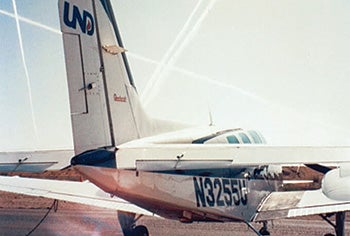


It’s almost 8 a.m., but darkness still clings to the edges of the frozen prairie. The sun has risen somewhere above the impassive overcast, but here the only herald of morning’s coming is black sky fading to battleship gray. The dim light reveals a bleak landscape, flat and nearly treeless. The wind whips and howls relentlessly, carving snow drifts into fantastic shapes. Heavily bundled figures trudge across an icy ramp to neat rows of identical green-and-white airplanes. Preflight inspections are eye-raisingly brief. The temperature is -22 degrees Fahrenheit; the wind chill colder still. Exposed skin freezes almost instantly. This is North Dakota in February. It is the least likely place on earth to host a busy flight school, let alone one of the largest and most recognized aviation colleges in the world.
I first visited the University of North Dakota in June; the leafy, well-manicured campus was in full bloom. The sleek aviation complex gleamed in the warm sunlight, its curved black windows reflecting puffy clouds in a bright blue sky. At the airport, neat rows of green-and-white Pipers covered the expansive ramps — almost 100 airplanes in all. T-shirt-clad students inspected their assigned aircraft with unhurried care, enjoying the afternoon breeze. Every minute or two, a Warrior lifted off one of the parallel runways, banking over softly rustling wheat fields toward an improbably wide horizon. It seemed the most natural place in the world for a busy collegiate flight program.