














Register

Sikorsky Debuts ‘Rotor Blown Wing’ UAS

Drone successfully flies in both helicopter and fixed-wing flight modes.

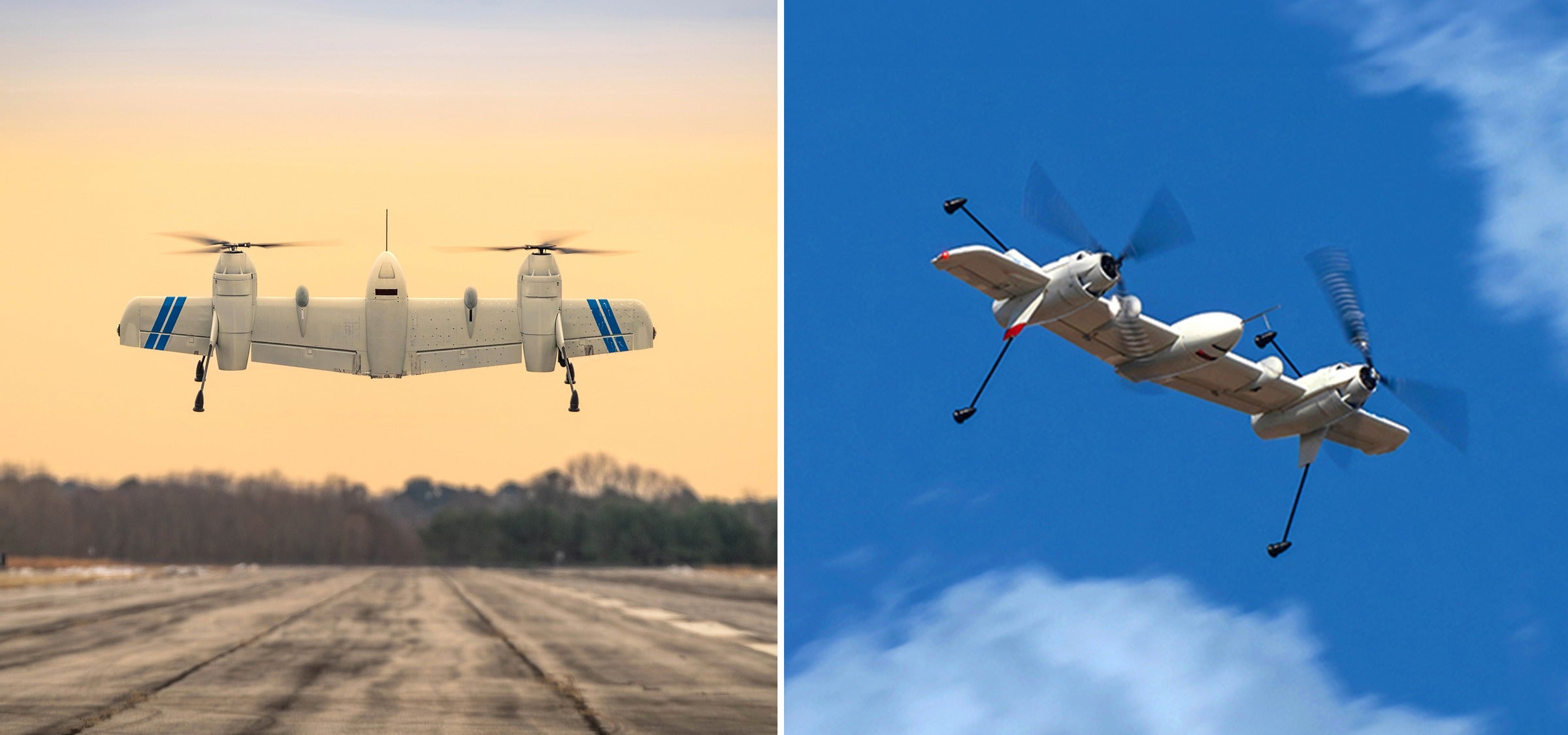
Sikorsky demonstrates a rotor blown wing tail sitter drone can transition between helicopter and fixed wing flight modes. [Courtesy: Sikorsky]
Gemini Sparkle

Key Takeaways:

  • Lockheed Martin's Sikorsky successfully flew its "rotor blown wing" uncrewed aerial system, demonstrating stable operation in both helicopter (VTOL) and fixed-wing flight modes.
  • The drone performed 30 seamless transitions between modes, reached a top cruise speed of 86 knots, and proved its design has potential to scale to larger sizes.
  • This innovative UAS combines helicopter and airplane characteristics, offering diverse applications from naval operations and search & rescue to military intelligence, surveillance, and reconnaissance.
See a mistake? Contact us.

Lockheed Martin’s Sikorsky has successfully flown its “rotor blown wing” uncrewed aerial system in both helicopter and fixed-wing flight modes, it announced Monday.

The 115-pound twin-prop drone with a 10-foot wingspan takes off and lands like a helicopter from a tail-sitting configuration, transitioning and cruising in forward flight like an airplane. The “rotor blown wing” term stems from the constant airflow from the proprotor wash across the wing, according to the company.


Ready to Sell Your Aircraft?

List your airplane on AircraftForSale.com and reach qualified buyers.

List Your Aircraft
AircraftForSale Logo | FLYING Logo
Pilot in aircraft
Sign-up for newsletters & special offers!

Get the latest stories & special offers delivered directly to your inbox.

SUBSCRIBE
