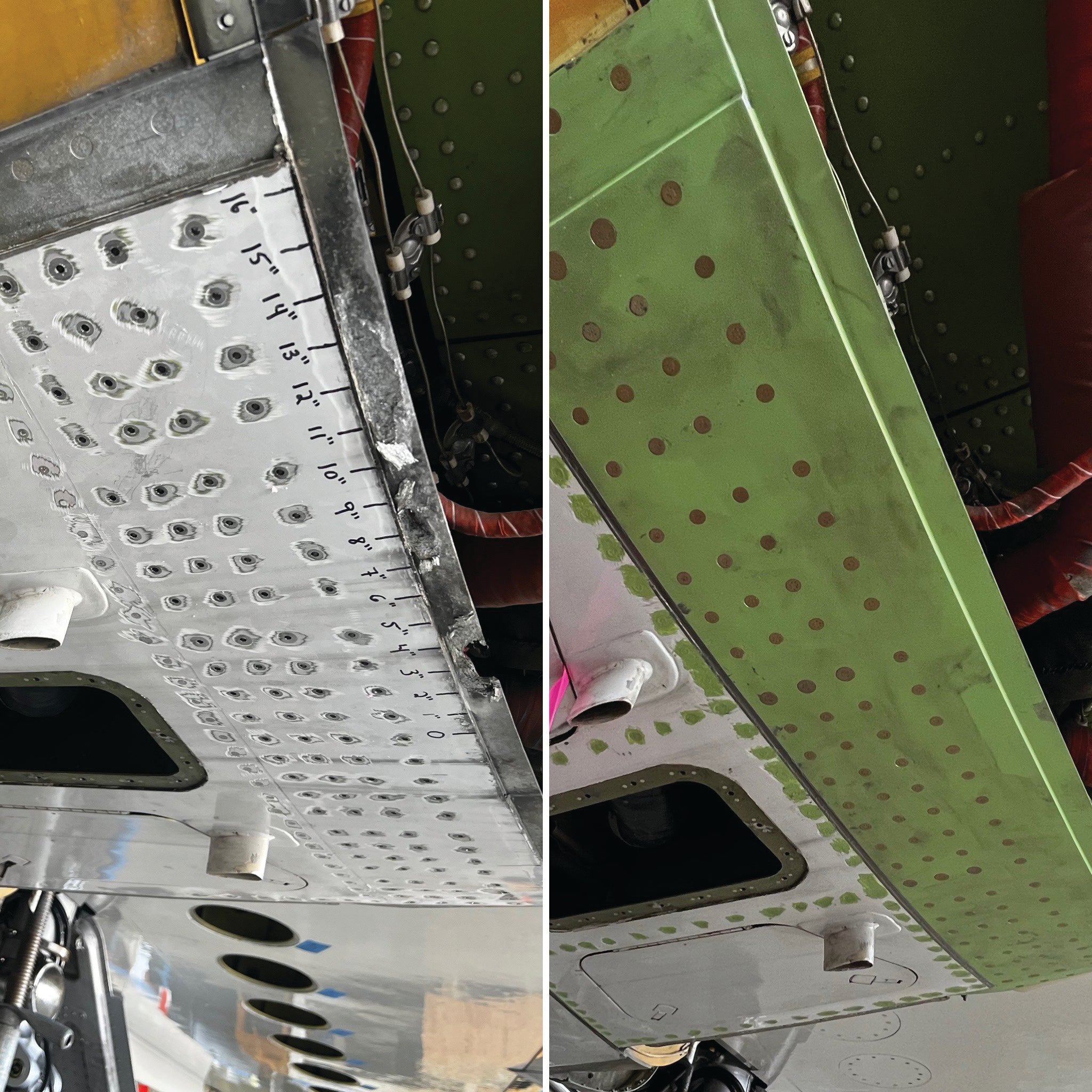
Corrosion comes in all shapes and sizes. [Courtesy: SEAL Aviation]
Key Takeaways:
While OEM Service Bulletins (SBs) are not initially mandatory, they are crucial for aviation safety, as unaddressed issues like corrosion (e.g., Learjet 45 wing spars) can escalate into mandatory Airworthiness Directives (ADs).
Corrosion is a significant threat in aviation, manifesting in various forms that can severely compromise aircraft structural integrity, leading to safety hazards and potentially catastrophic accidents.
Aircraft corrosion is primarily caused by environmental factors (e.g., moisture, deicing fluids) and industrial pollutants, emphasizing the critical role of diligent maintenance and proactive adherence to manufacturer recommendations.
Following manufacturer service recommendations early can help prevent costly repairs, minimize downtime, and most importantly, enhance safety by identifying and addressing problems before they escalate into mandatory directives or tragic events.
Richard is a US Navy Veteran, A&P Mechanic, and Embry-Riddle Aeronautical University alumni. His experience ranges from general and corporate aviation to helicopters, business jets, and commercial airliners. Former owner of a 145 repair station, he currently has an aerospace product management role and is a member of the T-C-Alliance. Follow him on X (Twitter) at @RScarCo.