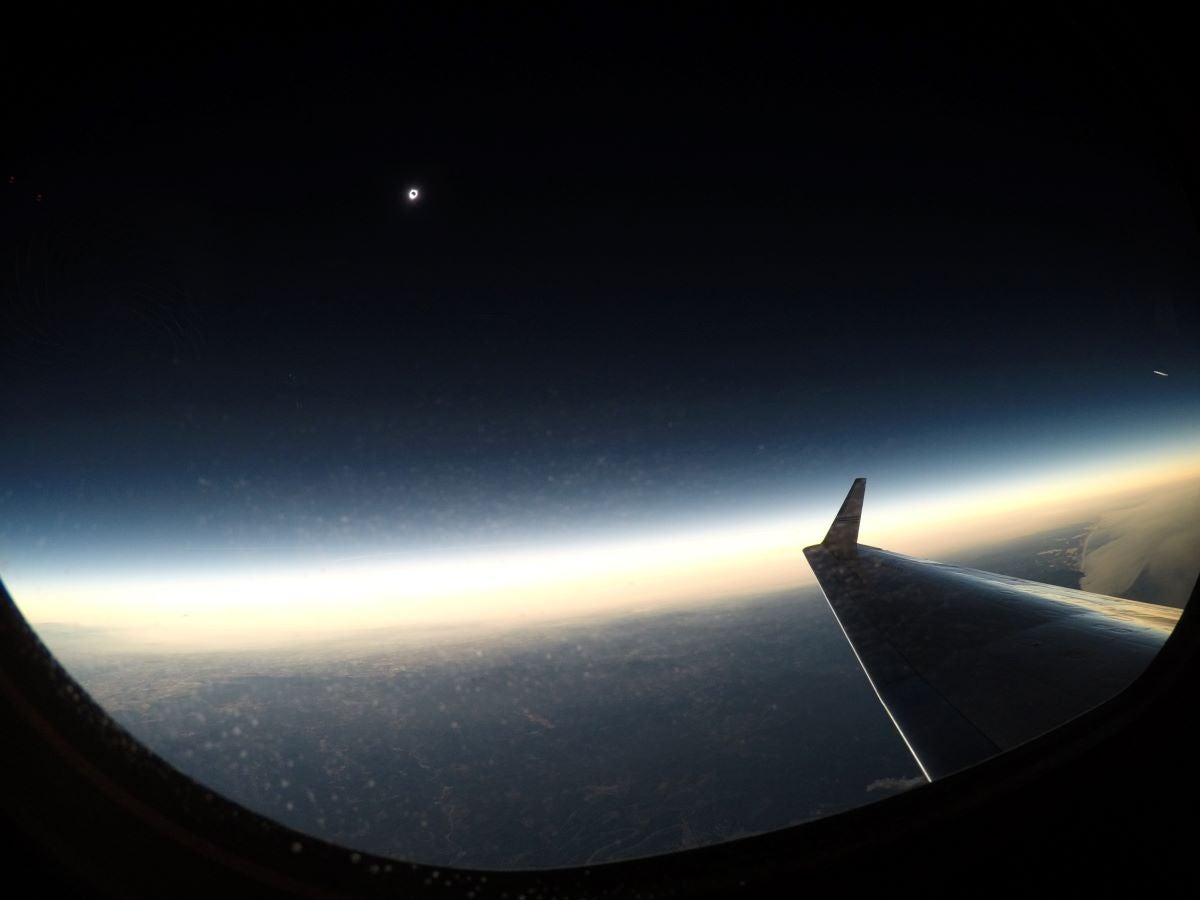
A total solar eclipse is seen on Monday, August 21, 2017, from onboard a NASA Armstrong Flight Research Center’s Gulfstream III 25,000 feet above the Oregon coast. [Courtesy: NASA/Carla Thomas]
Key Takeaways:
The FAA warns pilots to plan ahead, file IFR routes, and frequently check NOTAMs and TFRs due to anticipated increased air traffic, workload, and operational changes during the April 8 total solar eclipse.
Pilots in the eclipse's path of totality should expect air traffic delays, limited parking, and potential airport closures or restrictions on regular activities like practice approaches.
The total solar eclipse will cross the U.S. from Texas to Maine on April 8, with live video coverage provided by the Exploratorium for those outside the path.
Spectators must use special eclipse glasses to prevent permanent eye damage and are encouraged to focus on experiencing the moment rather than photography.
On April 8, millions in the U.S. will be watching the total solar eclipse—and many may be doing it from an aircraft cockpit.
If you are one of those, the FAA is asking pilots to plan ahead and file a preferred IFR route as the safety agency expects there will be increased workload in the path of the eclipse.
CREATE A FREE ACCOUNT
Sign up to keep reading
Create a free account to continue. Already a member? Sign in below.
Meg Godlewski has been an aviation journalist for more than 24 years and a CFI for more than 20 years. If she is not flying or teaching aviation, she is writing about it. Meg is a founding member of the Pilot Proficiency Center at EAA AirVenture and excels at the application of simulation technology to flatten the learning curve. Follow Meg on Twitter @2Lewski.