














Register

NASA’s GUSTO Scientific Balloon Sets Record

The floating observatory is flying at an altitude of more than 125,000 feet.

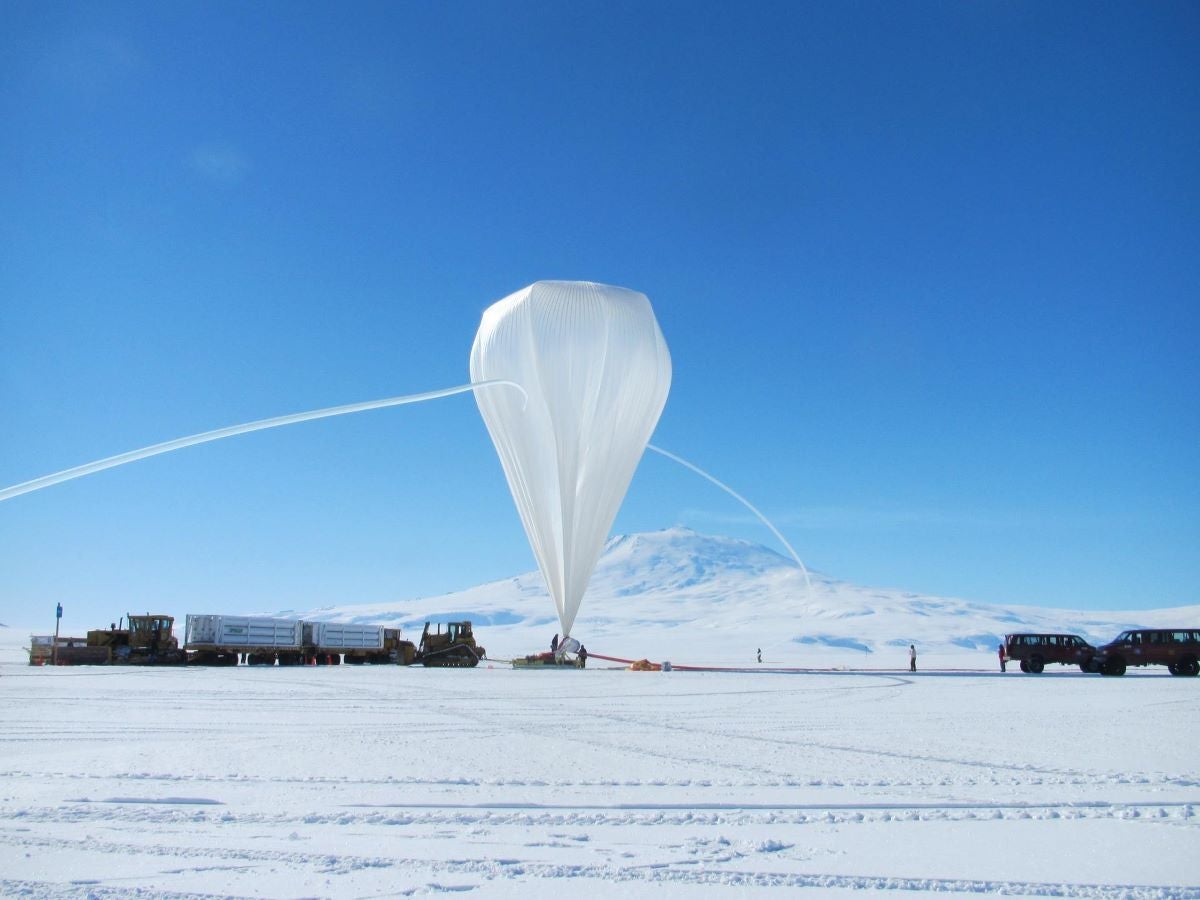
Launching from Antarctica, Galactic/Extragalactic ULDB Spectroscopic Terahertz Observatory (GUSTO) will fly a long-duration balloon carrying a telescope with carbon, oxygen, and nitrogen emission line detectors to measure emissions from the interstellar medium, the cosmic material found between stars. [Courtesy: NASA]
Gemini Sparkle

Key Takeaways:

  • NASA's GUSTO scientific balloon mission at the South Pole set a new record for the longest flight of a heavy-lift, long-duration balloon, surpassing 55 days.
  • The mission aims to create a 3D map of the Milky Way and the Large Magellanic Cloud by measuring emissions from interstellar gas using high-frequency radio waves.
  • Scientific balloon missions like GUSTO offer a significantly lower-cost alternative to orbital missions for groundbreaking cosmic observations.
  • The GUSTO balloon continues to fly beyond its initial 60-day goal to help researchers understand the limits of long-duration ballooning.
See a mistake? Contact us.

A scientific balloon mission underway at the South Pole has set the record for longest flight of any NASA heavy-lift, long-duration balloon mission, according to the space agency.

NASA launched the Galactic/Extragalactic ULDB Spectroscopic Terahertz Observatory (GUSTO) scientific balloon in late December from McMurdo Station in Antarctica in order to map portions of the Milky Way and nearby Large Magellanic Cloud (LMC). The telescope tethered to the balloon is collecting data that will be used in the making of a 3D map of the Milky Way and LMC dwarf galaxy near it using high-frequency radio waves.


Ready to Sell Your Aircraft?

List your airplane on AircraftForSale.com and reach qualified buyers.

List Your Aircraft
AircraftForSale Logo | FLYING Logo
Pilot in aircraft
Sign-up for newsletters & special offers!

Get the latest stories & special offers delivered directly to your inbox.

SUBSCRIBE
