














Register

NASA Reveals the X-59—Its Antidote to the Sonic Boom

The experimental aircraft is expected to fly 1.4 times the speed of sound, or around 925 mph, according to NASA.

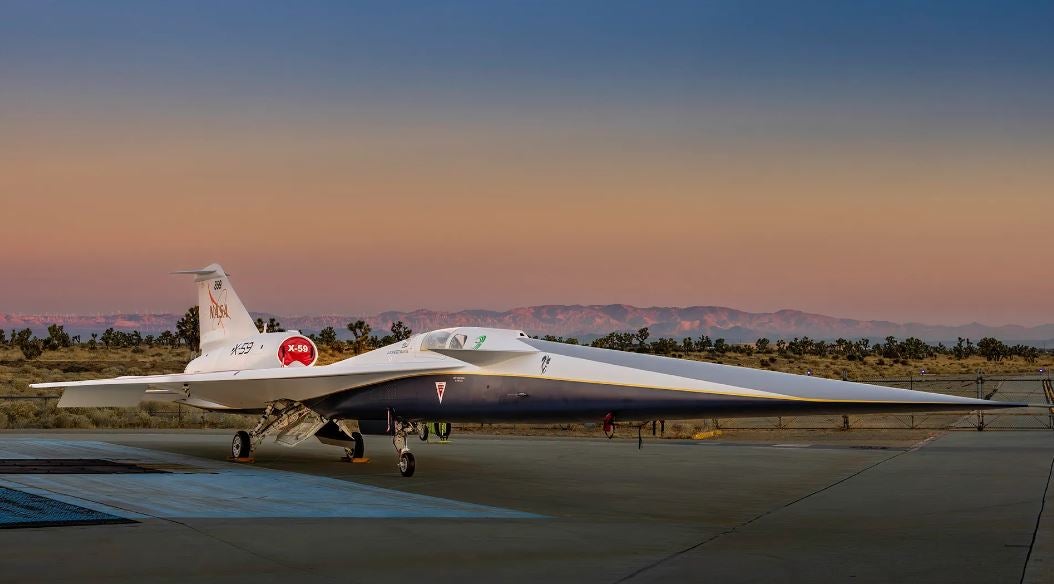
NASA’s X-59 quiet supersonic research aircraft sits on the apron outside Lockheed Martin’s Skunk Works facility at dawn in Palmdale, California. The X-59 is the centerpiece of NASA’s Quesst mission, which seeks to address one of the primary challenges to supersonic flight over land by making sonic booms quieter. [Courtesy: Lockheed Martin Skunk Works]
Gemini Sparkle

Key Takeaways:

  • NASA unveiled the X-59 Quiet SuperSonic Technology (QueSST) experimental aircraft, designed to transform a loud sonic boom into a gentle thump.
  • The X-59 achieves this 'low boom' through its unique, elongated shape that disperses shockwaves and features an innovative external vision system instead of a traditional forward cockpit window.
  • The project's goal is to gather data on public perception of the quieter sound to inform future regulations for potential commercial supersonic flight over land, which is currently banned.
See a mistake? Contact us.

A dramatic curtain drop at Lockheed Martin’s Skunk Works facility in Palmdale, California, on Friday gave the world its first look at the X-59—NASA’s new experimental aircraft designed to quiet the sonic boom.

The one-of-a-kind X-59 Quiet SuperSonic Technology (QueSST) aircraft is part of NASA’s Low Boom Flight Demonstration project aimed at collecting data to help shape regulations for possible future commercial supersonic flight over land 50 years after it was banned by the FAA due to the noise of the sonic boom.


Ready to Sell Your Aircraft?

List your airplane on AircraftForSale.com and reach qualified buyers.

List Your Aircraft
AircraftForSale Logo | FLYING Logo
Pilot in aircraft
Sign-up for newsletters & special offers!

Get the latest stories & special offers delivered directly to your inbox.

SUBSCRIBE
