














Register

Chart Wise: Roanoke LDA Y Runway 6

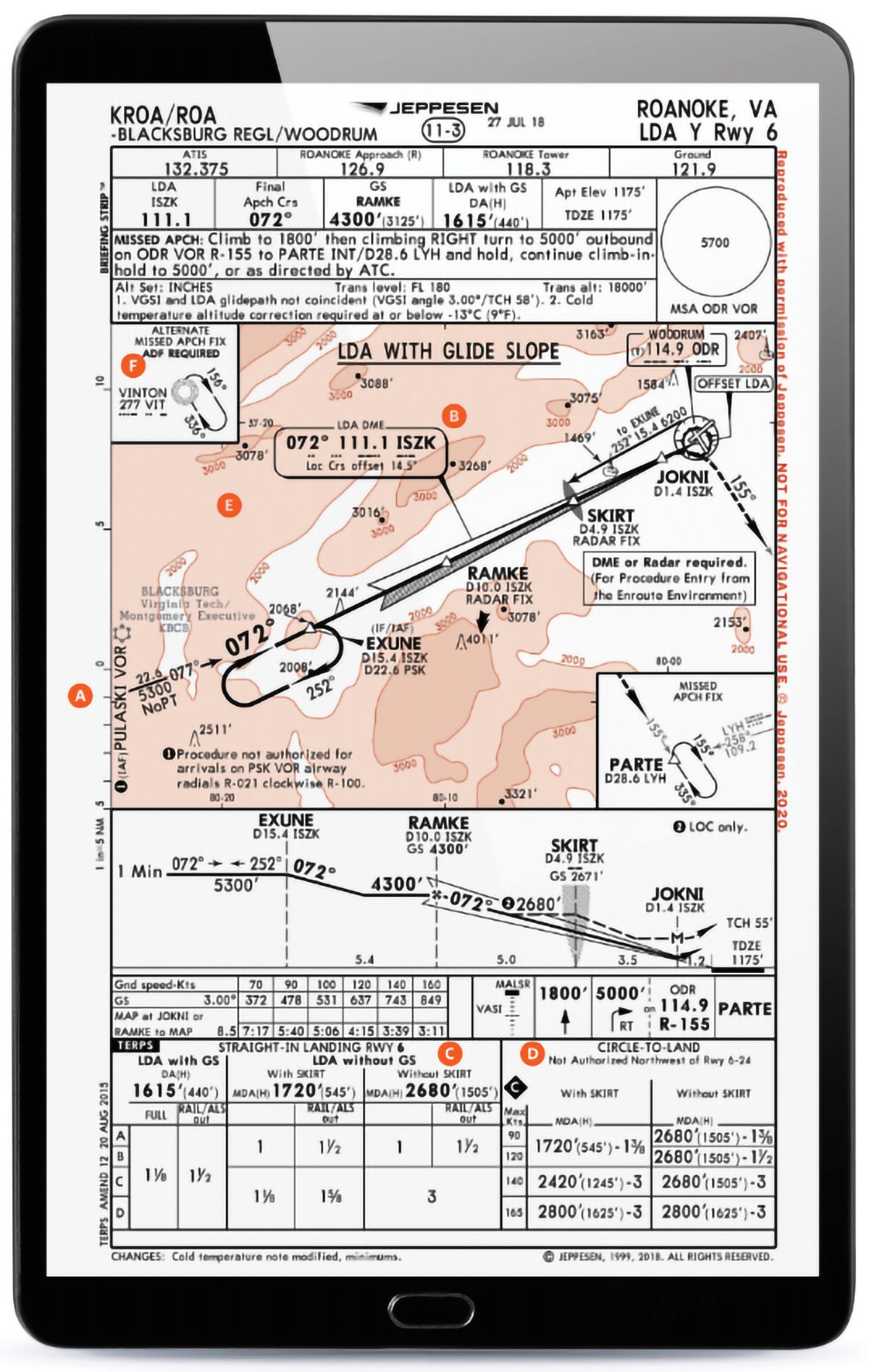
The mountains of western Virginia necessitate an offset approach.

A pilot who might be visiting Roanoke, nestled in the Blue Ridge Mountains of southwest Virginia, might choose to use this less-often-found type of approach when landing Runway 6 via the LDA Y RWY 6. [Image: Jeppesen]
Gemini Sparkle

Key Takeaways:

  • The LDA Y RWY 6 approach is offset, requiring pilots to transition from VOR to localizer navigation and make a 14.5-degree left turn for final runway alignment.
  • Approach minimums are significantly higher if the glide slope, though available, is out of service or cannot be used, highlighting the importance of aircraft capabilities.
  • High surrounding terrain heavily influences the approach, restricting circling maneuvers northwest of Runway 6/24 and dictating a high Minimum Safe Altitude (MSA).
  • The standard missed approach procedure utilizes VOR navigation, making an ADF receiver optional despite an NDB being located along the path.
See a mistake? Contact us.

Technically called a localizer-type directional aid (LDA), most of us remember and refer to these types of procedures as “localizer darn angle” approaches. Many of them aim for a single runway but are not directly aligned with it. In this case, a pilot who might be visiting the city nestled in the Blue Ridge Mountains of southwest Virginia might choose to use this less-often-found type of approach when landing Runway 6 via the LDA Y RWY 6.

A) VOR, THEN TURN ONTO THE FINAL PATH

Jason Blair

Jason Blair is a flight instructor and an FAA designated pilot examiner, and an active author in the general aviation and flight training communities.

Ready to Sell Your Aircraft?

List your airplane on AircraftForSale.com and reach qualified buyers.

List Your Aircraft
AircraftForSale Logo | FLYING Logo
Pilot in aircraft
Sign-up for newsletters & special offers!

Get the latest stories & special offers delivered directly to your inbox.

SUBSCRIBE

