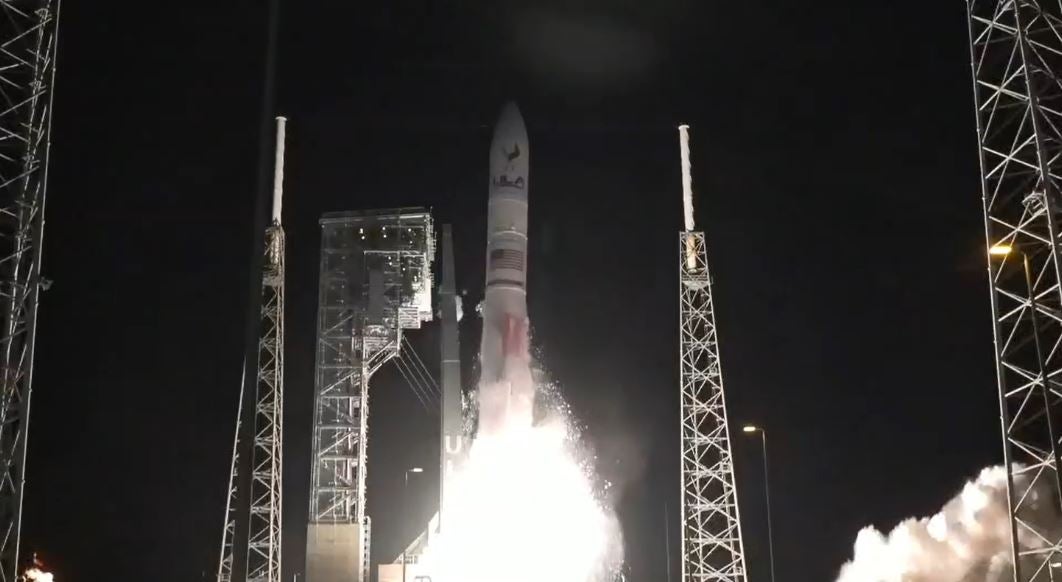
As part of NASA’s commercial lunar payload services initiative, Astrobotic’s Peregrine lander launched on United Launch Alliance’s (ULA) Vulcan rocket at 2:18 a.m. EST from Launch Complex 41 at Cape Canaveral Space Force Station in Florida. [Courtesy: NASA]
Key Takeaways:
The first U.S. commercial lunar mission, Astrobotic’s Peregrine lander, successfully launched on United Launch Alliance's (ULA) inaugural Vulcan rocket, carrying NASA instruments and various international payloads.
Hours after launch, the Peregrine lander experienced a "propulsion anomaly" threatening its ability to achieve a stable sun-pointing orientation and soft-land on the moon, leading to critically low battery levels.
Astrobotic later successfully reoriented the spacecraft to charge its battery and regained communications, though the team is still evaluating the propulsion system failure that jeopardizes the mission's ultimate success in landing on the moon on February 23.
The first U.S. commercial lunar payload services (CLPS) mission launched before dawn Monday, headed to the moon with a payload of NASA instruments to study the lunar surface.
Hours into the mission, however, a “propulsion anomaly” potentially threatened the success of the lander reaching the moon’s surface as planned.
CREATE A FREE ACCOUNT
Sign up to keep reading
Create a free account to continue. Already a member? Sign in below.