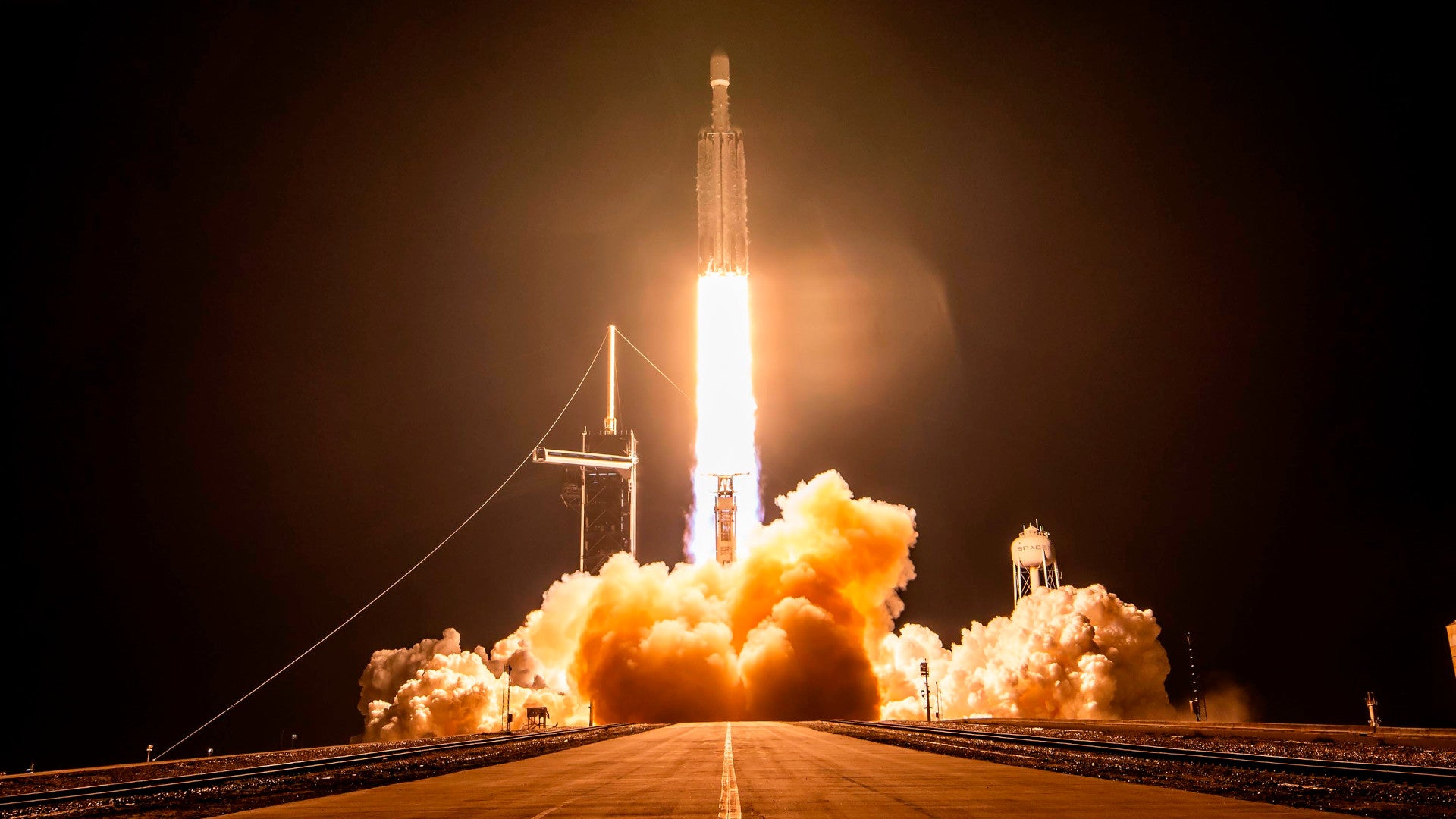
The U.S. Space Force’s X-37B spaceplane lifts off from Launch Complex 39A at Kennedy Space Center in Florida aboard a SpaceX Falcon Heavy rocket on December 28, 2023. [Courtesy: U.S. Space Force]
Key Takeaways:
The U.S. Space Force launched the seventh mission of the secretive X-37B spaceplane, USSF-52, using a powerful SpaceX Falcon Heavy rocket, which could enable it to reach deeper orbits, possibly even near the moon.
While its exact purpose, payload, and destination remain largely undisclosed, the mission is stated to test operations in new orbital regimes, study the effects of radiation on NASA payloads, and advance future space domain awareness technology.
The X-37B project emphasizes developing reusable space technology and pushing innovation for future spacecraft, with its advanced features and record-setting mission durations.
The timing of this launch, closely following China's own secretive Shenlong spaceplane mission, has fueled speculation about a new space race between the two nations.
There’s a mystery unfolding on the outskirts of Earth’s atmosphere.
Last week, the U.S. Space Force launched the seventh mission of the X-37B: a secretive spaceplane or orbital test vehicle (OTV) project intended to prepare the country for the next era of space travel.
CREATE A FREE ACCOUNT
Sign up to keep reading
Create a free account to continue. Already a member? Sign in below.
Jack is a staff writer covering advanced air mobility, including everything from drones to unmanned aircraft systems to space travel—and a whole lot more. He spent close to two years reporting on drone delivery for FreightWaves, covering the biggest news and developments in the space and connecting with industry executives and experts. Jack is also a basketball aficionado, a frequent traveler and a lover of all things logistics.