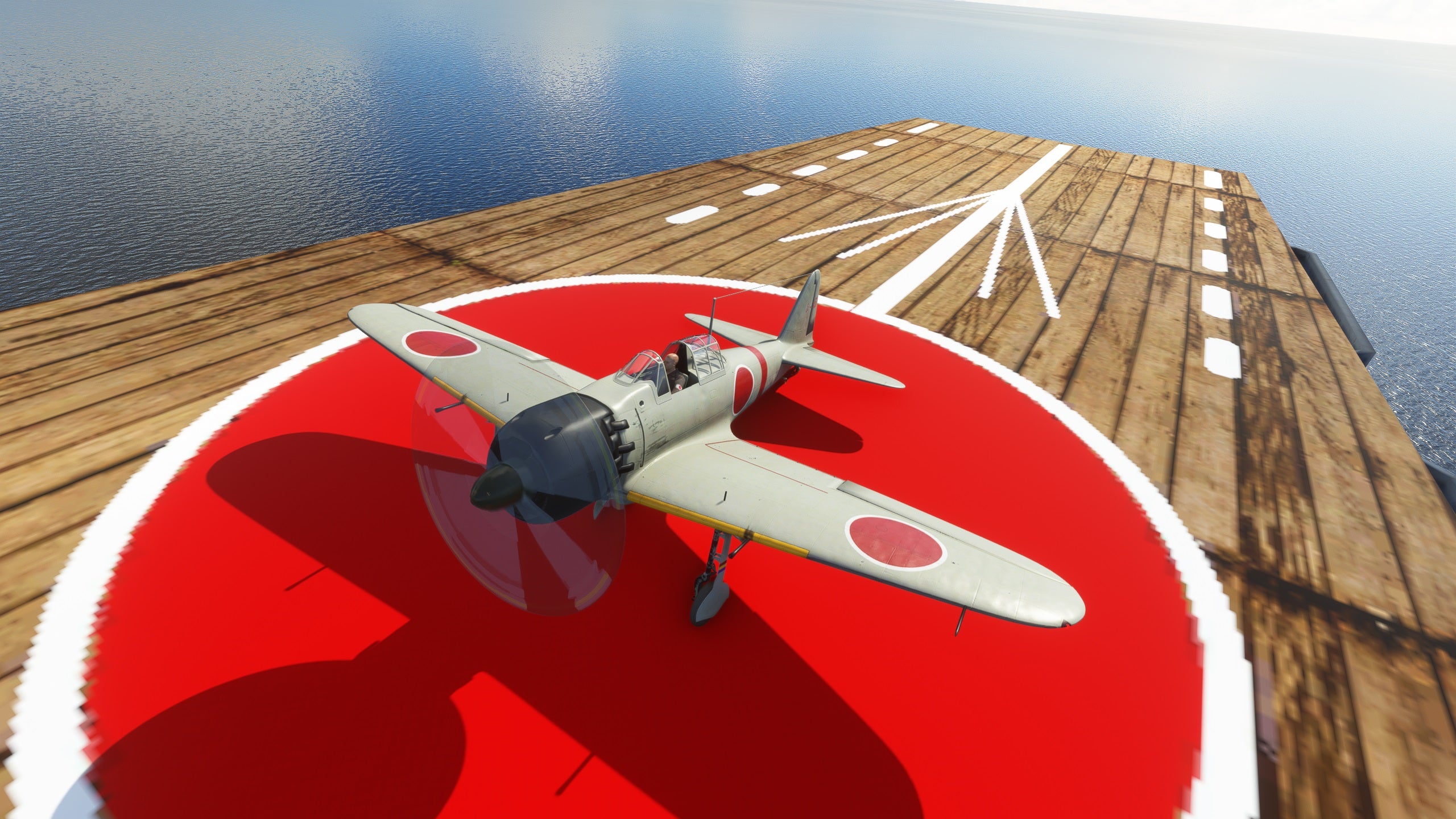
Introduced in 1940, the Mitsubishi A6M was dubbed the Navy Type 0 carrier fighter. [Image courtesy of Patrick Chovanec]
Key Takeaways:
The Mitsubishi A6M2 "Zero" was a formidable WWII fighter, celebrated for its exceptional range, maneuverability, and firepower, initially dominant due to its lightweight design.
This lightweight construction, however, sacrificed critical protection, lacking armor and self-sealing fuel tanks, making the Zero highly vulnerable to combat damage and fire.
The article simulates a Battle of Midway flight, a pivotal event where the devastating loss of Japanese carriers and experienced pilots exposed the Zero's exploitable weaknesses and marked a turning point in the Pacific War.
For this session in Microsoft Flight Simulator 2020, I’m flying the Mitsubishi A6M2, Japan’s main fighter of World War II, famously known as the “Zero.”
Introduced in 1940, the A6M was dubbed the Navy Type 0 carrier fighter or Reisen (零戦, “Zero Fighter”) for short, in reference to the Imperial Year 2600.
CREATE A FREE ACCOUNT
Sign up to keep reading
Create a free account to continue. Already a member? Sign in below.
Patrick Chovanec works as an economist in New York City, and has taught as a professor at China's Tsinghua University and at Columbia University. He is a private pilot, and author of the recently released book ""Cleared for the Option: A Year Learning to Fly.""