











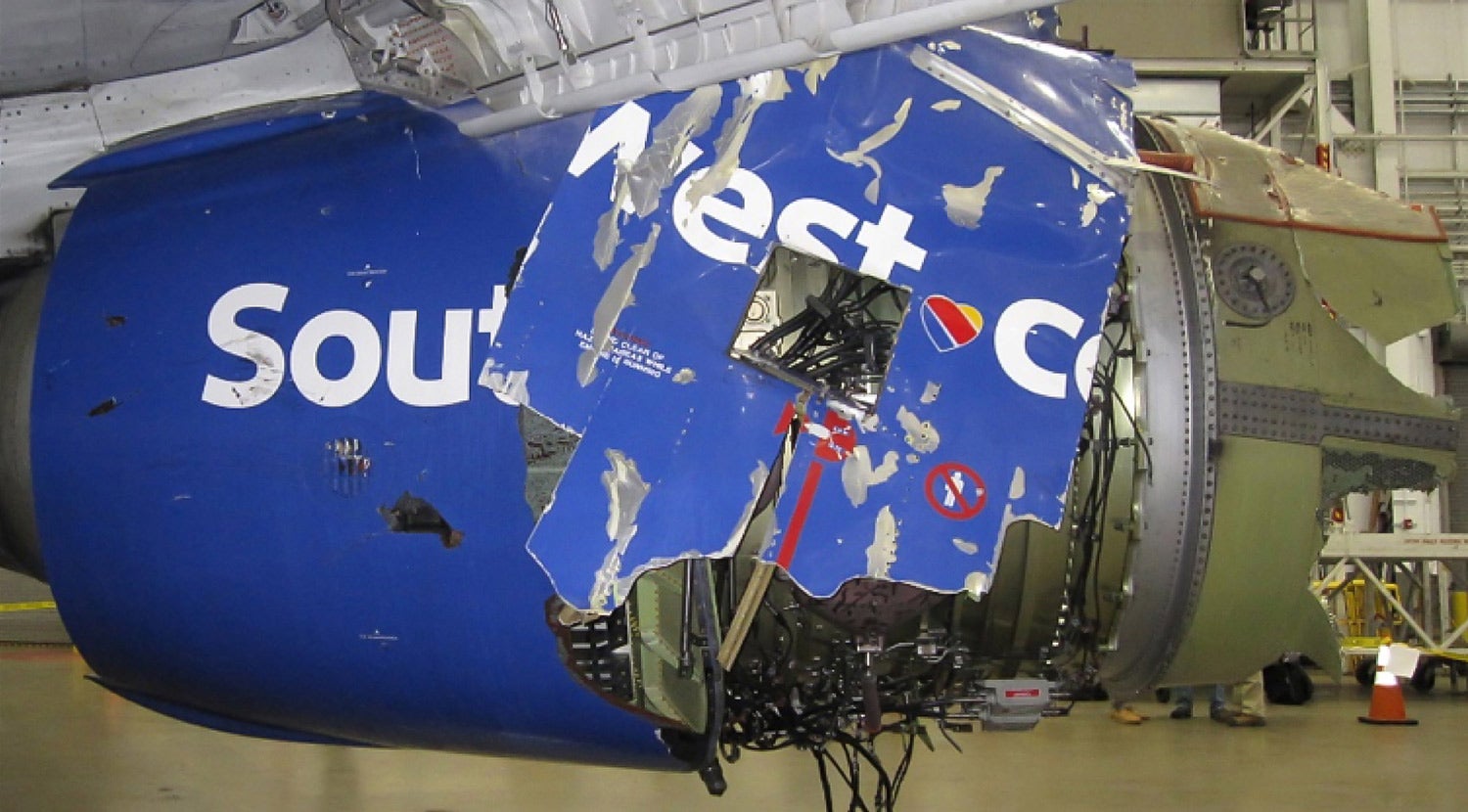
Following an accident on Southwest Airlines (SWA) Flight 1380 in April 2018 that resulted in the death of passenger Jennifer Riordan, the National Transportation Safety Board announced the probable cause during a public board meeting held last week. A fractured fan blade from a CFM International CFM-56-7B engine, powering a Southwest Airlines Boeing 737-700, led to the engine inlet and fan cowl separating and subsequently damaging the fuselage, resulting in a rapid cabin depressurization.
NTSB Issues Seven Recommendations After SWA 1380 Accident

Key Takeaways:
- The NTSB determined the probable cause of the Southwest Airlines Flight 1380 accident (which resulted in one fatality and rapid cabin depressurization) was a low-cycle fatigue crack in a fan blade that led to its separation, impact with the engine case, and subsequent fuselage damage.
- The NTSB issued seven new safety recommendations, primarily to the FAA, EASA, and Southwest Airlines, to address the need for ensuring the structural integrity of the fan cowl on Boeing 737 Next-Generation airplanes.
- Key recommendations include requiring Boeing to redesign the 737 NG fan cowl structure and mandate its retrofit, and expanding certification requirements for collaborative analysis of fan blade impact scenarios between airplane and engine manufacturers.
- Boeing stated that all 737 NGs are safe due to existing fan blade inspections and confirmed it is working on design enhancements to address the NTSB's recommendations, noting the issue is limited to the 737 NG and does not affect the 737 MAX.
Key takeaways sponsored by Aviator Pro | Start Your Training ->
See a mistake? Contact us.

