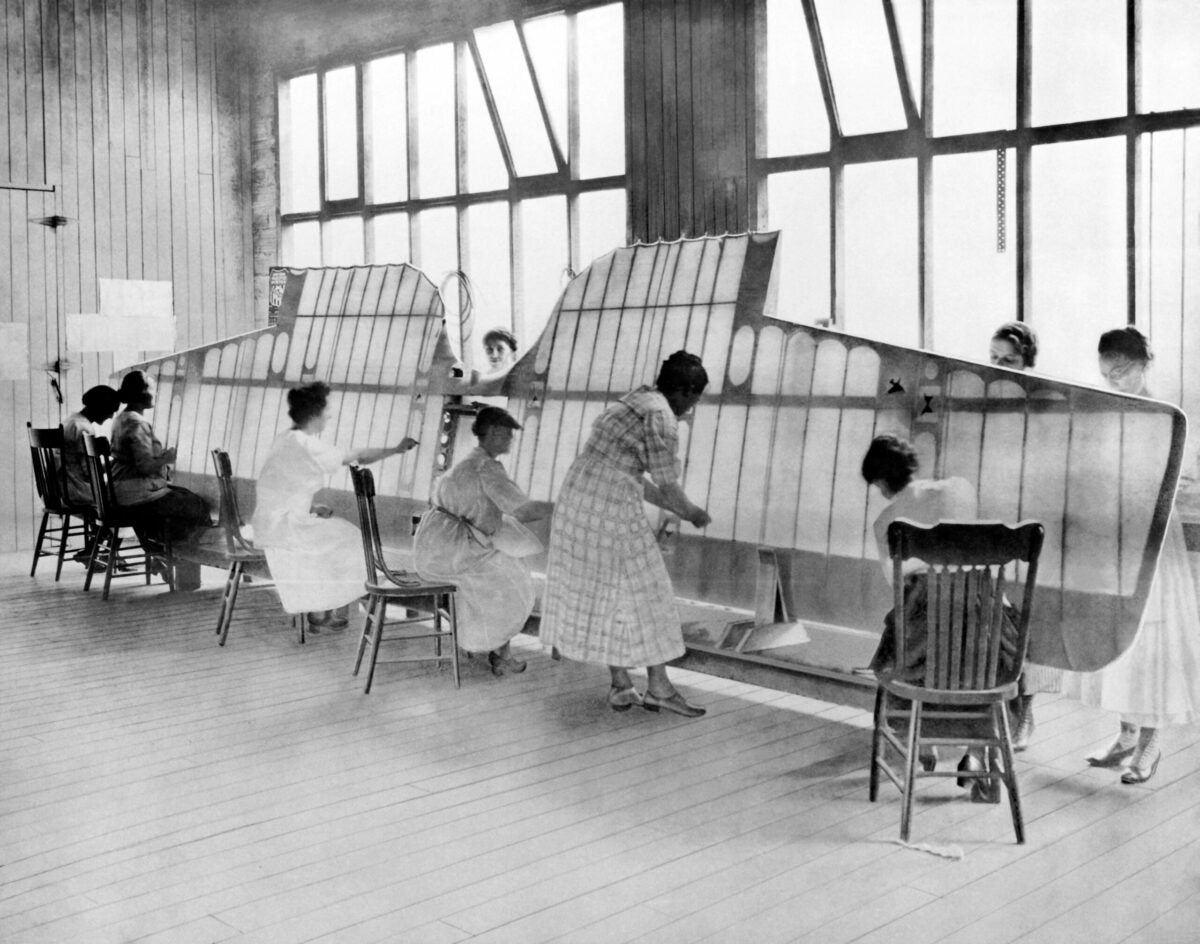
The Boeing factory had large windows to allow light in. Good lighting was necessary for such close work. [Courtesy: The Boeing Company]
Key Takeaways:
While "Rosie the Riveter" represents women's WWII aviation factory work, women were integral to aircraft construction much earlier, starting in the 1920s.
The Boeing Company and Douglas Aircraft Company hired women for their sewing skills to meticulously hand-stitch fabric coverings onto the wings of early wooden aircraft.
This work was highly tedious and precise, involving cutting linen, machine-sewing panels, and hand-stitching fabric over wing spars to exacting specifications for safety and efficiency.
Teams of women, including those led by Charlotte Douglas at Douglas Aircraft, covered the historic Douglas World Cruisers that successfully circumnavigated the globe in 1924.
Most aviation aficionados have seen the black-and-white newsreel footage of women working in aircraft factories during World War II. They became known as “Rosie the Riveter,” or in California, the “Janes Who Made the Planes.” They were the women who took these factory jobs to free up men for fighting.
But this wasn’t the first time women were part of mass aircraft construction.
CREATE A FREE ACCOUNT
Sign up to keep reading
Create a free account to continue. Already a member? Sign in below.
Meg Godlewski has been an aviation journalist for more than 24 years and a CFI for more than 20 years. If she is not flying or teaching aviation, she is writing about it. Meg is a founding member of the Pilot Proficiency Center at EAA AirVenture and excels at the application of simulation technology to flatten the learning curve. Follow Meg on Twitter @2Lewski.