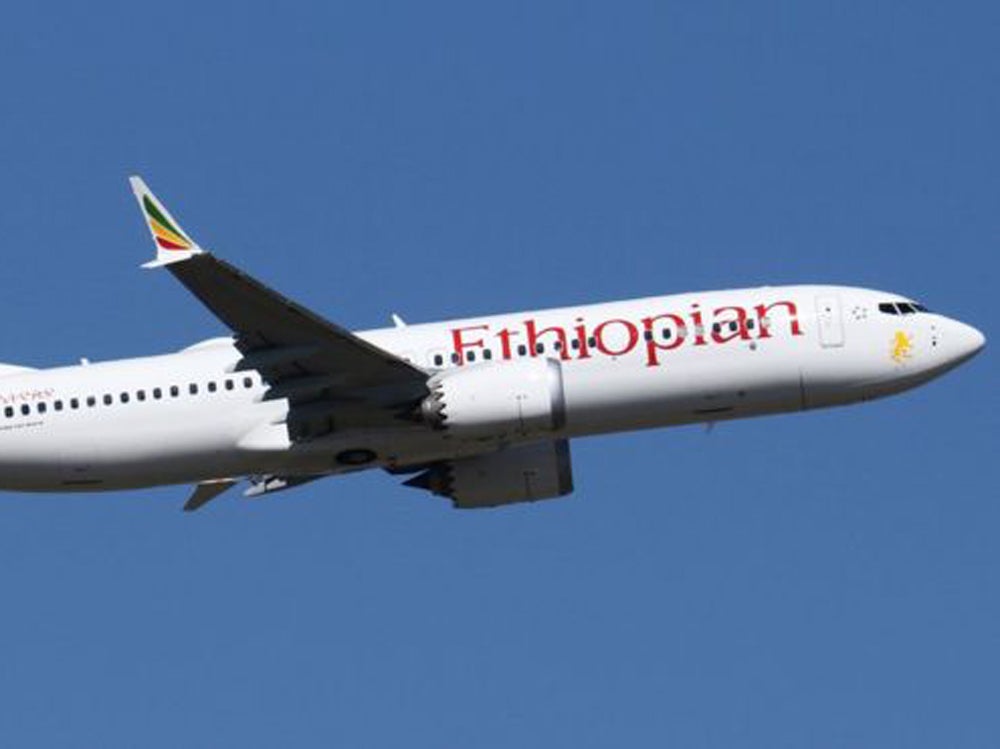
The NTSB is clashing with its Ethiopian counterpart over the agency's report on the cause of the crash of Ethiopian Airlines flight 302 on March 10, 2019. [Courtesy: Boeing]
Key Takeaways:
The National Transportation Safety Board (NTSB) has stated that Ethiopian aviation accident investigators' findings on the cause of the Ethiopian Airlines Flight 302 crash are "unsupported by evidence."
While Ethiopian investigators attributed the MCAS malfunction to a manufacturing electrical problem, the NTSB found no evidence for this, suggesting instead that the angle-of-attack sensor vane separated due to impact with a foreign object, likely a bird.
The NTSB criticized the Ethiopian Aircraft Accident Investigation Bureau (EAIB) for issuing its final report without allowing the NTSB to review new information and for not including NTSB's evidence supporting the bird strike theory, violating international protocols.
Ethiopian aviation accident investigators’ findings behind the cause of the crash of Ethiopian Airlines flight 302 on March 10, 2019 are “unsupported by evidence,” according to a new report issued Tuesday by the National Transportation Safety Board (NTSB).
Flight 302, a Boeing 737 Max 8, crashed shortly after takeoff, killing all 157 people on board.
CREATE A FREE ACCOUNT
Sign up to keep reading
Create a free account to continue. Already a member? Sign in below.
Meg Godlewski has been an aviation journalist for more than 24 years and a CFI for more than 20 years. If she is not flying or teaching aviation, she is writing about it. Meg is a founding member of the Pilot Proficiency Center at EAA AirVenture and excels at the application of simulation technology to flatten the learning curve. Follow Meg on Twitter @2Lewski.