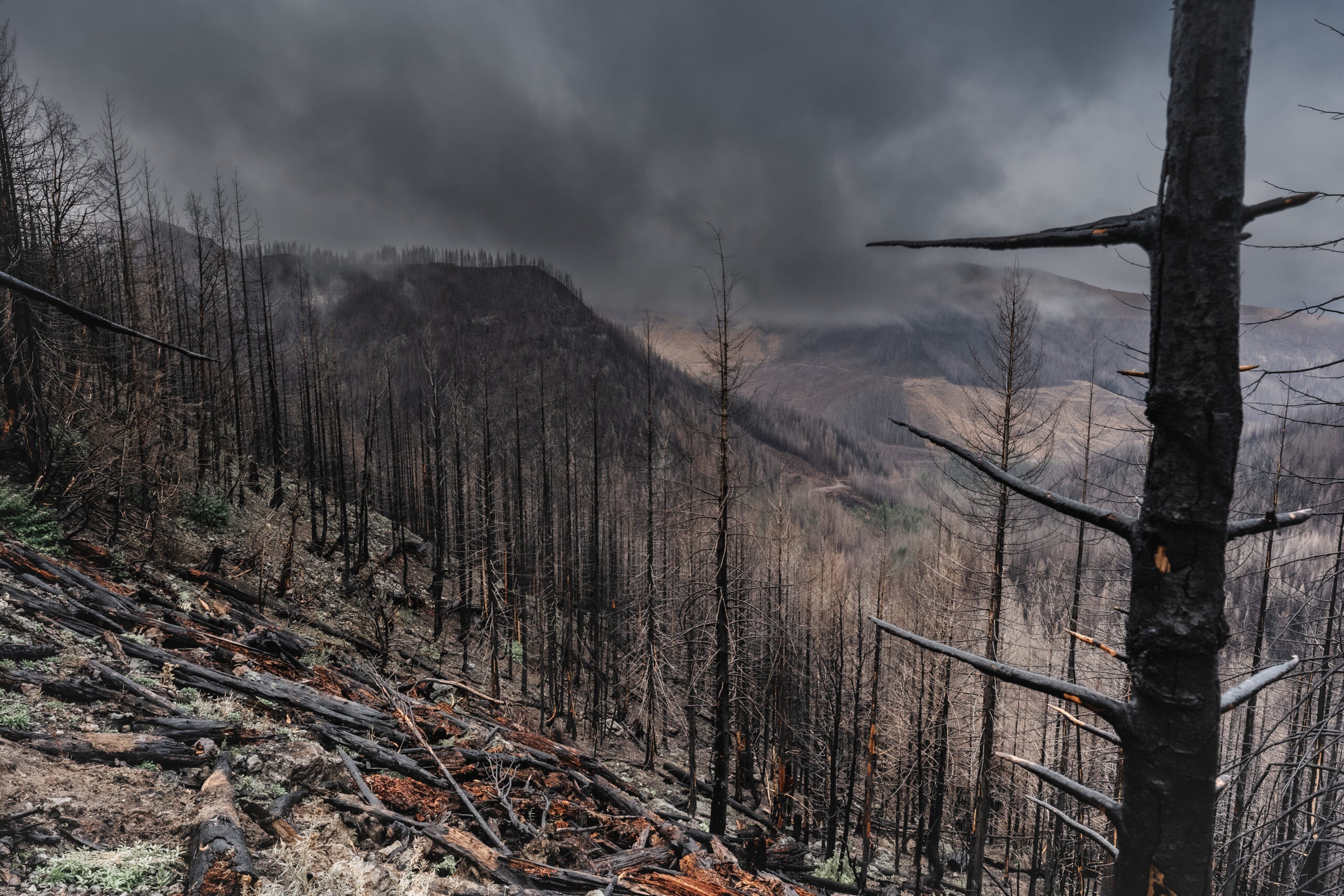
Unmanned aerial vehicles (UAVs) are used to replant wildlands that have been scorched by fire.
[Courtesy: DroneSeed]
Key Takeaways:
Wildfires leave land unstable and prone to erosion, necessitating rapid reforestation, a task often complicated by the cost, danger, or environmental disruption of traditional methods.
Companies like DroneSeed utilize FAA-approved heavy-lift drone swarms and LiDAR technology to precisely reseed post-fire wildlands, offering a more efficient and less invasive alternative.
These drones deploy specialized "pucks" containing seeds, nutrients, and protective agents to maximize establishment and survival rates while minimizing disturbance to fragile terrain.
Drone reforestation offers a scalable, precise, and potentially more cost-effective solution, often complementing traditional planting techniques and being financed, in part, through carbon offset sales.
These were the words of the ranger as he led a group of reporters up a hillside that a few months before had been ravaged by wildland fire outside of Medford, Oregon. The dirt gave way beneath our boots like sand. Each step tore up the soil, and soon there was a human-made furrow—normally this hill was covered with a layer of prairie grass.
CREATE A FREE ACCOUNT
Sign up to keep reading
Create a free account to continue. Already a member? Sign in below.
Meg Godlewski has been an aviation journalist for more than 24 years and a CFI for more than 20 years. If she is not flying or teaching aviation, she is writing about it. Meg is a founding member of the Pilot Proficiency Center at EAA AirVenture and excels at the application of simulation technology to flatten the learning curve. Follow Meg on Twitter @2Lewski.