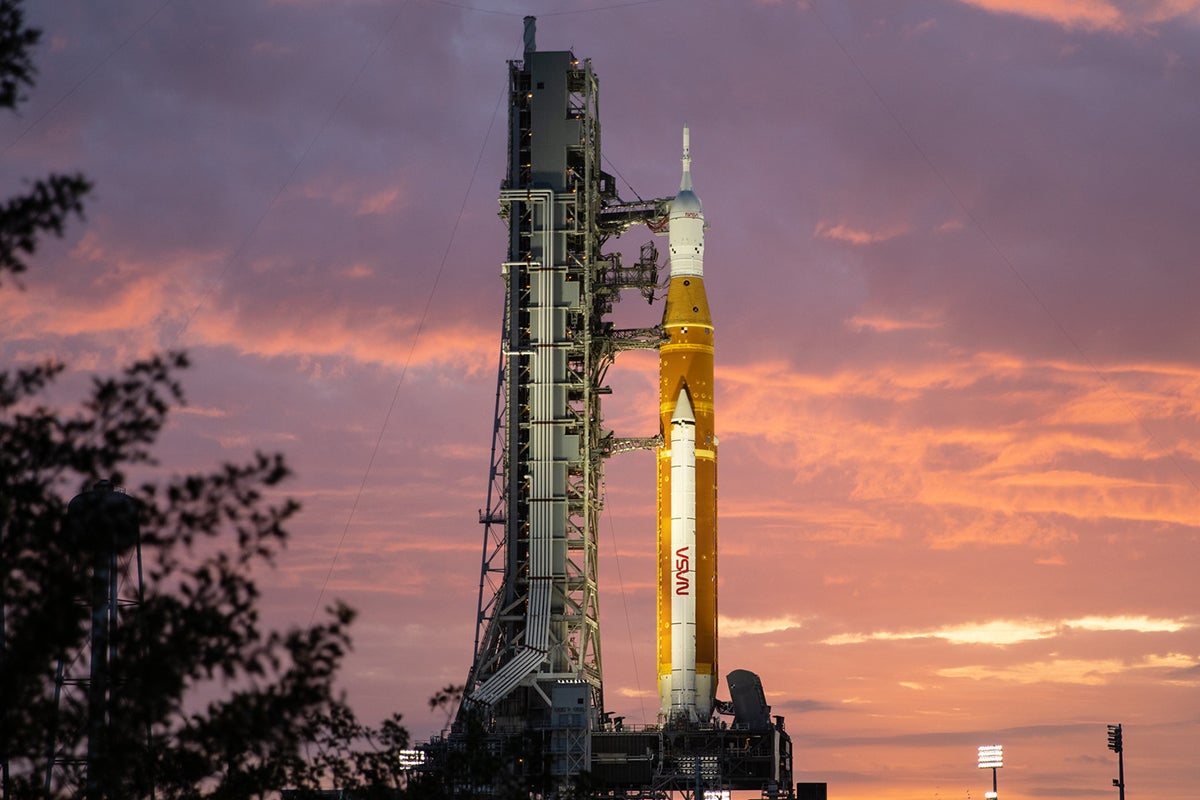
Artemis I, including the SLS booster rocket and Orion spacecraft, is expected to lift off Monday, as early as 8:33 a.m. ET. [Courtesy: NASA]
Key Takeaways:
NASA's Artemis I is a historic uncrewed test flight of the Orion spacecraft and powerful SLS rocket, aiming to orbit the moon for 42 days to gather crucial data for future crewed missions.
This mission is the foundational step in the broader Artemis program, which seeks to return humans to the lunar surface—including the first woman and person of color—for long-term exploration and eventually to enable human travel to Mars.
Emphasized as a high-risk test flight, Artemis I will push the spacecraft's limits and includes contingencies for early return, with a primary goal of ensuring the safety and performance of subsequent crewed missions to the moon.
It’s finally happening. After years of planning, designing, building, engineering, and testing, NASA’s Artemis I mission is scheduled to lift off Monday on a historic journey to the moon.
“We are go for launch,” NASA associate administrator Robert Cabana told reporters Monday, following a successful Flight Readiness Review. “This day has been a long time coming.”
CREATE A FREE ACCOUNT
Sign up to keep reading
Create a free account to continue. Already a member? Sign in below.
Thom is a former senior editor for FLYING. Previously, his freelance reporting appeared in aviation industry magazines. Thom also spent three decades as a TV and digital journalist at CNN’s bureaus in Washington and Atlanta, eventually specializing in aviation. He has reported from air shows in Oshkosh, Farnborough and Paris. Follow Thom on Twitter @thompatterson.