














Register

To Infinity and Beyond

The U.S. Space Force takes on the new frontier of national security.

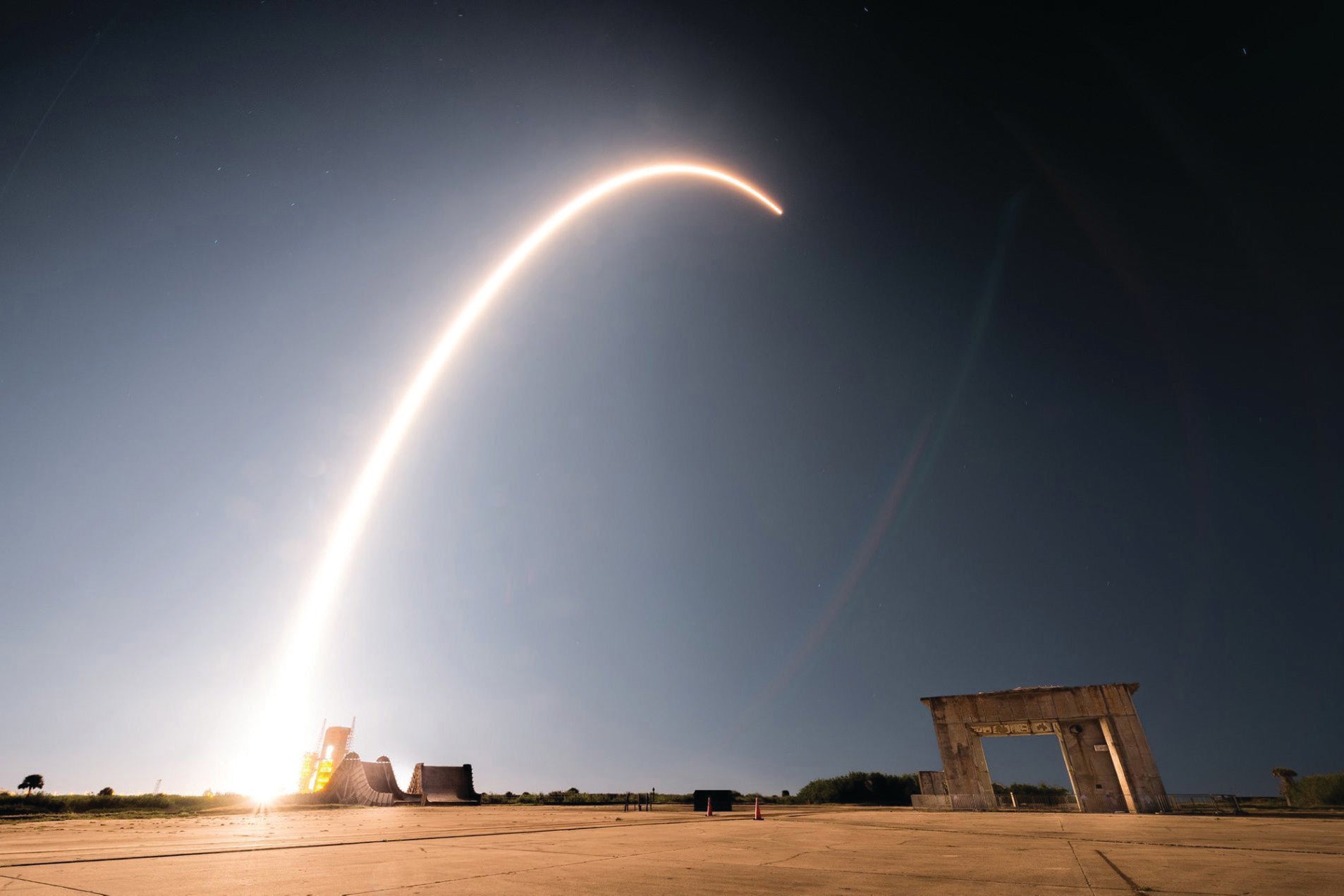
A Falcon 9 rocket launches on Jan. 6, 2020, at Cape Canaveral Air Force Station. The rocket, carrying an installment of Starlink satellites, was the first official launch of the United States Space Force. [U.S. Air Force photo by Joshua Conti]
Gemini Sparkle

Key Takeaways:

  • The U.S. Space Force (USSF) was established to address space becoming a contested and congested environment, driven by adversaries like China and Russia modernizing their military space capabilities.
  • The USSF is designed as a streamlined, "purpose-built" organization focused on speed, reducing bureaucracy, and decentralizing decision-making to rapidly develop and deploy new defense capabilities.
  • A key strategy for the USSF involves expanding partnerships, especially with the rapidly advancing commercial space sector, to leverage technology and accelerate acquisitions.
See a mistake? Contact us.

The U.S. Space Force (USSF)—the nation’s newest military service branch and the first created in a generation—stands ready to engage in a new era of national defense where commercial space and military interests collide.

Pushing military capabilities “to infinity and be-yond” isn’t exactly new. The U.S. military began space research following World War II and prior to the formation of the Department of the Air Force. Nearly four decades later, the U.S. Air Force (USAF) unified efforts by establishing the Air Force Space Command in 1982. That mission later expanded into cyberspace as well as providing space-based communication and navigational support for U.S. forces deployed in Iraq and Afghanistan.


Ready to Sell Your Aircraft?

List your airplane on AircraftForSale.com and reach qualified buyers.

List Your Aircraft
AircraftForSale Logo | FLYING Logo
Pilot in aircraft
Sign-up for newsletters & special offers!

Get the latest stories & special offers delivered directly to your inbox.

SUBSCRIBE
