











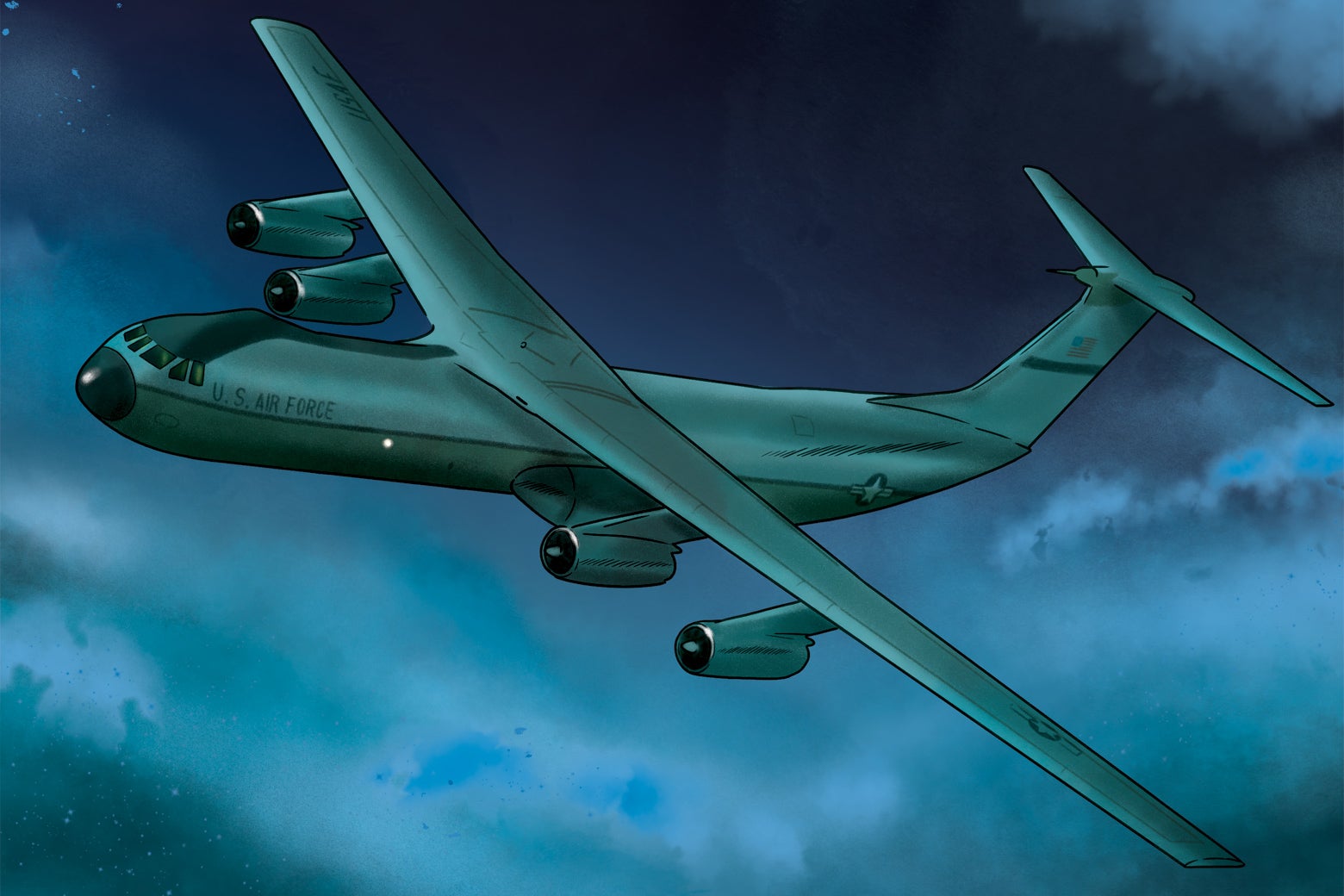
A lot has been written over the past few years about pilots relying on the automation to fly the airplane to the detriment of actual hands-on-the-stick piloting skills. I have long been baffled by pilots’ reliance on the autopilot. But perhaps this attitude comes from my Air Force training early on and particularly from a black, black night at low altitude over the Atlantic Ocean. In October 1973, the war in Vietnam was winding to a close. For the previous three years or so, I had been flying the Lockheed C-141 Starlifter to Southeast Asia and all over the Pacific Ocean, supporting the US missions in that part of the world. Then, a new crisis: Israel had once again been attacked by Egypt, and the Air Force was tasked with supplying arms to Israel.
Final Turn in the Azores

Key Takeaways:
- During a critical C-141 mission in the 1973 Yom Kippur War, the aircraft experienced a failure of its elevator artificial-feel system, significantly increasing the difficulty of manual flight.
- On a subsequent automated night landing approach, the aircraft unexpectedly pitched up and neared a stall due to the autothrottle system's delayed power adjustment during a turn.
- The pilot immediately disengaged automation and relied on fundamental hands-on instrument flying skills to recover the aircraft from the dangerous situation in complete darkness.
- This near-catastrophe underscored the critical importance of core piloting skills and understanding automation's limitations, as the system itself made an error akin to a beginner pilot.
Key takeaways sponsored by Aviator Pro | Start Your Training ->
See a mistake? Contact us.

