













Register

Thunderbumbers

As a committed subscriber I believe you have the best "bible" of information anywhere. Anyone who doesnt take advantage of Aviation Safety is cheating themselves. I have saved every issue for years. Regarding Aprils article on convective weather (On A Mission: Thunderstorms) I acknowledge the 20-mile principle in avoiding thunderstorms. However, after 35 years of Florida summers, flying in both VFR and IFR conditions, it is seldom that thunderstorms allow 20-mile avoidance, especially in the afternoon and evening. In non-turbo light twins and singles that cant climb high enough to "see" whats ahead, getting under the bases and using cockpit Nexrad provides a better choice of airports to run to when things look grim and a better visual picture to dodge mature cell activity.

Gemini Sparkle

Key Takeaways:

  • A pilot argues that the strict 20-mile thunderstorm avoidance rule is often impractical in Florida summers, finding cockpit Nexrad and strategic navigation (including flying under bases when safe) more effective for avoiding cells, while acknowledging that grounding the aircraft is sometimes the only intelligent decision.
  • A reader criticizes a flight examiner who demonstrated a low-altitude turnback maneuver after a simulated engine failure, deeming it a dangerous and inappropriate judgment error for pilot training.
  • An expert explains that aluminum rivets should never be used on carbon fiber structures due to galvanic corrosion (aluminum sacrifices itself to carbon) and the risk of fracturing carbon fibers from radial swelling, recommending titanium or stainless steel fasteners and electrical isolation for aluminum parts.
See a mistake? Contact us.

As a committed subscriber I believe you have the best “bible” of information anywhere. Anyone who doesnt take advantage of

Aviation Safety is cheating themselves. I have saved every issue for years.

Regarding Aprils article on convective weather (On A Mission: Thunderstorms) I acknowledge the 20-mile principle in avoiding thunderstorms. However, after 35 years of Florida summers, flying in both VFR and IFR conditions, it is seldom that thunderstorms allow 20-mile avoidance, especially in the afternoon and evening. In non-turbo light twins and singles that cant climb high enough to “see” whats ahead, getting under the bases and using cockpit Nexrad provides a better choice of airports to run to when things look grim and a better visual picture to dodge mature cell activity.

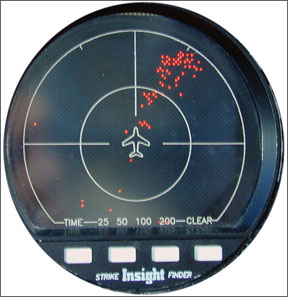
Thunderstorm Avoidance Equipment

288

Ready to Sell Your Aircraft?

List your airplane on AircraftForSale.com and reach qualified buyers.

List Your Aircraft
AircraftForSale Logo | FLYING Logo
Pilot in aircraft
Sign-up for newsletters & special offers!

Get the latest stories & special offers delivered directly to your inbox.

SUBSCRIBE

