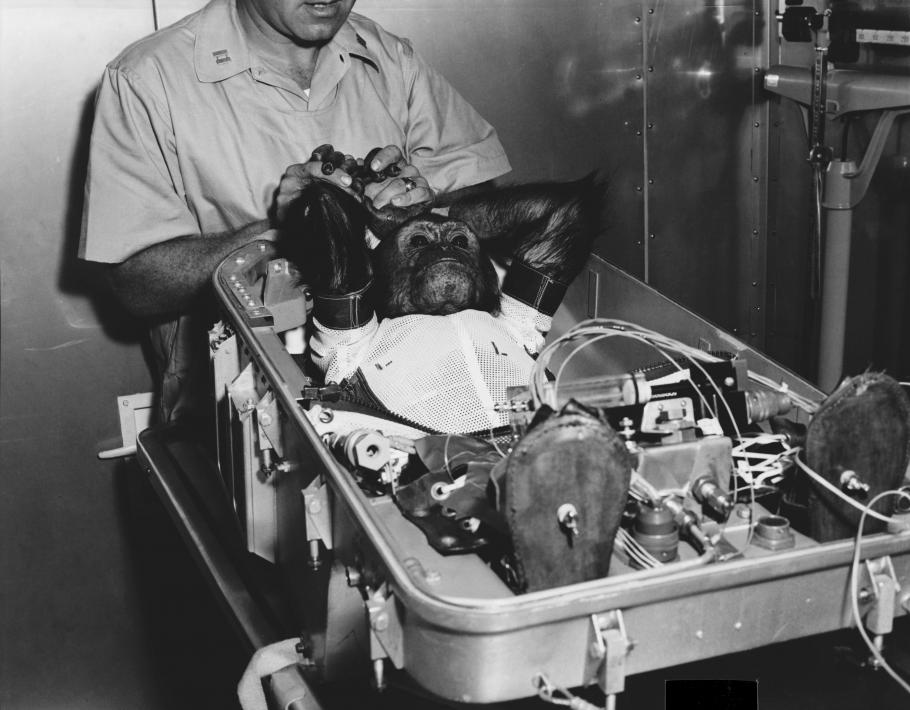
Enos the chimpanzee successfully orbited Earth in 1961, undergoing rigorous training and completing a vital mission that directly preceded John Glenn's historic flight for the U.S.
Early animal space exploration by both the U.S. and Soviets was fraught with risks and failures, including the Soviet dog Laika's fatal pioneering orbit in 1957 and NASA's early monkey missions.
Animal spaceflights have evolved from critical tests of survival for humans to ongoing scientific research on the International Space Station, involving diverse species in more humane conditions.
Sixty years ago this week, humanity sent its bravest into Earth’s orbit—a chimpanzee named Enos.
In the midst of the Cold War, the U.S. had set its sights on the moon, but strapping yourself to a rocket wasn’t exactly as common as it is today. So, in the early 1960s, NASA sent dozens of animals into space to make sure humans could survive prolonged periods of weightlessness.
CREATE A FREE ACCOUNT
Sign up to keep reading
Create a free account to continue. Already a member? Sign in below.
Jeremy attained his bachelor's in journalism and emerging media from Kennesaw State University. He also served in the Georgia Air National Guard as a C-130 Crew Chief for six years, holding an associate in aircraft maintenance technology.