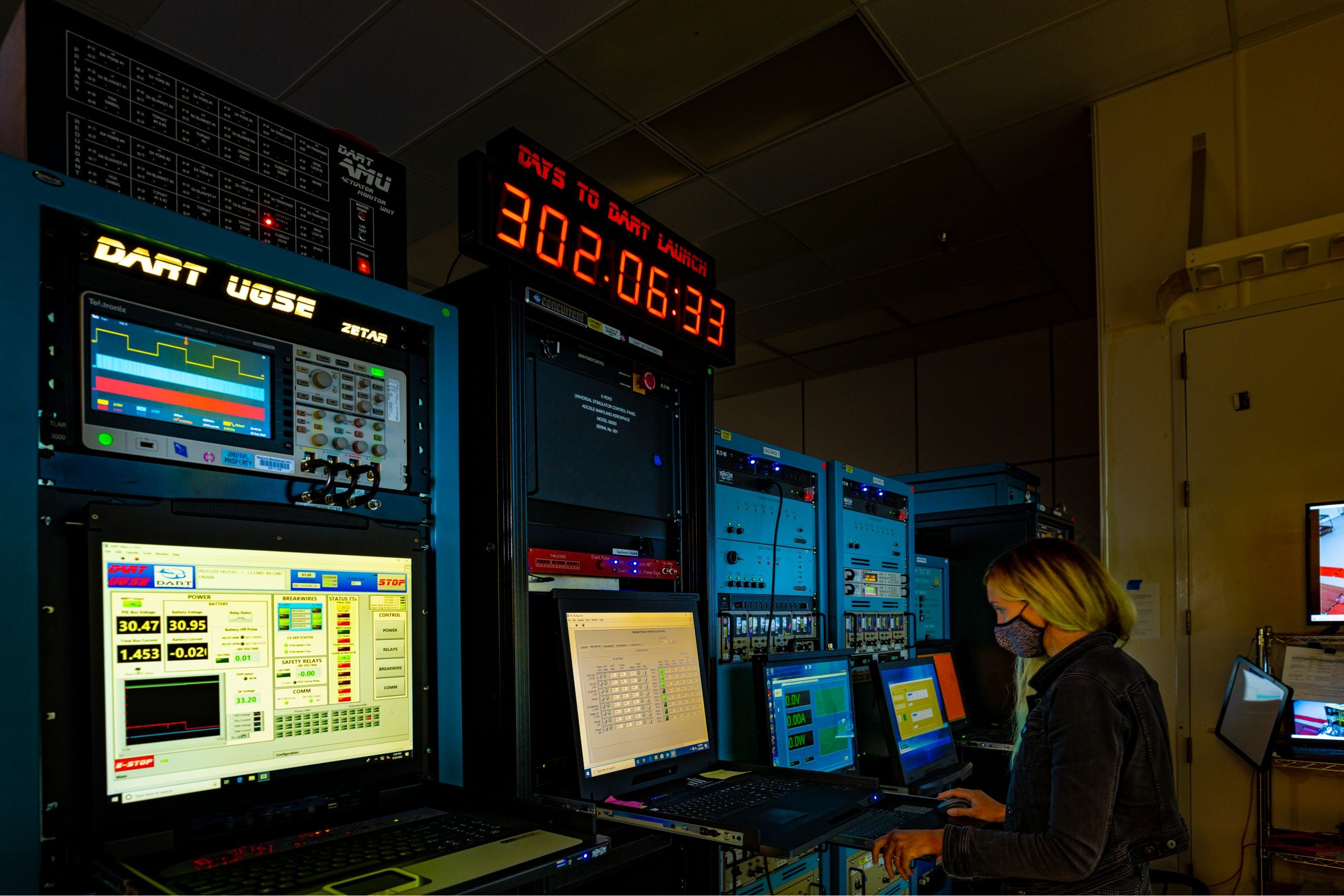
In the Ground System Equipment control room at APL, engineers perform tests and simulations on the DART spacecraft, which sits behind glass in the clean room. Credit: Credit: NASA/Johns Hopkins APL/Ed Whitman
Key Takeaways:
NASA's DART mission is launching as the first test of planetary defense, designed to alter an asteroid's trajectory.
International organizations (e.g., UN's SMPAG, EU's NEOShield) and national groups are actively developing protocols and researching methods to monitor and respond to near-Earth object (NEO) threats.
Key asteroid deflection techniques being studied include kinetic impactors (like the DART mission), blast deflection, and gravity tractors.
The overarching goal is to be prepared for potential asteroid impacts, with early detection being crucial for successfully deflecting a threatening object.
NASA’s Double Asteroid Redirection Test (DART)—history’s first mission aimed at changing the trajectory of an incoming asteroid—is set to launch Wednesday from Vandenberg Space Force Base in California.
While the threat from possible asteroids hurtling toward Earth is remote, NASA says it wants to develop and test planetary defense systems just in case.
CREATE A FREE ACCOUNT
Sign up to keep reading
Create a free account to continue. Already a member? Sign in below.
Thom is a former senior editor for FLYING. Previously, his freelance reporting appeared in aviation industry magazines. Thom also spent three decades as a TV and digital journalist at CNN’s bureaus in Washington and Atlanta, eventually specializing in aviation. He has reported from air shows in Oshkosh, Farnborough and Paris. Follow Thom on Twitter @thompatterson.