











So, there I was, droning along level at 9000 feet. I had just launched from Cheap Fuel Stop, Fla, on a non-stop IFR to Virginia. I was cleared direct Savannah, and was motoring off in that general direction, from southwest of Orlando. Miami Center had turned me over to Orlando Approach. It was a 288
Mushroomed
So, there I was, droning along level at 9000 feet. I had just launched from Cheap Fuel Stop, Fla, on a non-stop IFR to Virginia. I was cleared direct Savannah, and was motoring off in that general direction, from southwest of Orlando. Miami Center had turned me over to Orlando Approach. It was a typical Florida spring afternoon, with scattered white puffies in all quadrants, tops to about 7-8000 feet and smooth, clear air above.

Key Takeaways:
- The author recounts an experience with Orlando Approach where a controller failed to provide a specific reason for an IFR vector, giving a vague explanation that the pilot considered unprofessional and misleading.
- This highlights a broader issue of ATC communication, where pilots feel "mushroomed" by vague reasons for vectors, and the author advocates for clearer phraseology for situations like avoiding busy arrival/departure corridors.
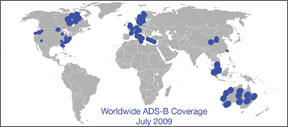
- The FAA's ADS-B Out mandate, effective by 2020, requires general aviation (GA) to invest billions in new equipment to maintain access to controlled airspace.
- Despite the high cost to GA, the direct financial benefits for GA are minimal, with the primary advantages accruing to the FAA (through reduced infrastructure and personnel) and airlines (via operational efficiency), leaving GA questioning the skewed cost-benefit ratio.
Key takeaways sponsored by Aviator Pro | Start Your Training ->
See a mistake? Contact us.

