












![[Credit: Premier Aircraft]](https://www.flyingmag.com/wp-content/uploads/2026/07/Screenshot-2026-07-17-at-3.41.42-PM.png)



Diamond Aircraft doesn’t have a single flagship story the way some manufacturers do. It has a design philosophy that happened to outlive an ownership change, a jet program, a recession, and a continent-spanning corporate restructuring. Somehow, the manufacturer kept building safer, more efficient airplanes the entire time. Understanding how that philosophy came to be, and how it’s been refined generation after generation, is the real starting point if you’re shopping the DA20 through DA62 lineup today.
Where the Obsession With Safety Started
Every Diamond aircraft on the ramp today descends from a decision founder Christian Dries made more than 40 years ago.
While working toward his pilot’s license, Dries was flying an all-metal airplane through a required spin recovery when a wing very nearly separated from the fuselage. He landed to discover only a handful of rivets were still holding it in place. That moment reshaped how he thought about airplane structure entirely, and when he later founded what became Diamond Aircraft (first building the H36 Dimona motor glider under Hoffmann Flugzeugbau in Austria), composite construction was the answer to a question he never wanted to ask himself again in the air.
That obsession shows up in details easy to overlook on a spec sheet. Diamond isolates fuel tanks between the wing spars and armors the fuel lines against chafing, which has made post-crash fires strikingly rare across the fleet. The cabin is built as an integral composite “roll cage,” designed the way a Formula 1 monocoque is designed, allowing the structure around the occupants to fail and absorb energy while the survival cell itself resists crushing. That kind of design came from someone who once watched his own airplane nearly come apart, not from a committee optimizing for a marketing bullet point.
Building the Lineup, One Step at a Time
Diamond’s product evolution reads like a series of carefully sequenced bets, each one building directly on the lesson learned from the last.
The DV20 Katana, certified in 1993, proved the composite formula could scale from motor gliders to a certified trainer. The real turning point came in 1997, when Diamond introduced the DA40 Diamond Star, a four-seat, all-composite single that combined docile handling with genuine cross-country capability. With more than 2,200 examples built, the DA40 became the aircraft that convinced flight schools and private owners alike that a composite single could be both safe and practical, and its low fatal accident rate relative to the broader general aviation single-engine fleet has followed it ever since.
Diamond’s next move was the one that raised eyebrows across the industry. In 2002, the company unveiled the DA42 Twin Star at the Berlin Airshow. It was a light twin powered not by traditional avgas engines, but by diesel powerplants burning Jet-A. Untested engines in a brand-new twin-engine airframe was a gamble, and Diamond’s early partnership with Thielert did prove troublesome. Rather than abandon the concept, Dries started his own engine company, Austro Engine, to build a more refined diesel powerplant in-house. The gamble paid off this time. The DA42 became the first diesel-powered general aviation aircraft to complete a nonstop transatlantic crossing, and Austro’s turbo-diesels remain a defining feature of the Diamond twin lineup today.
From there, the formula scaled. The DA62, certified in 2015, took the diesel-twin concept and stretched it into a genuine family and business hauler with seven seats, twin Austro AE330 engines, a useful load north of 1,500 pounds, and cruise speeds approaching 200 ktas, all while burning under 12 gallons per hour combined. The aircraft convinced flight departments and serious cross-country families that a piston twin could still make financial sense in an era of rising fuel costs.
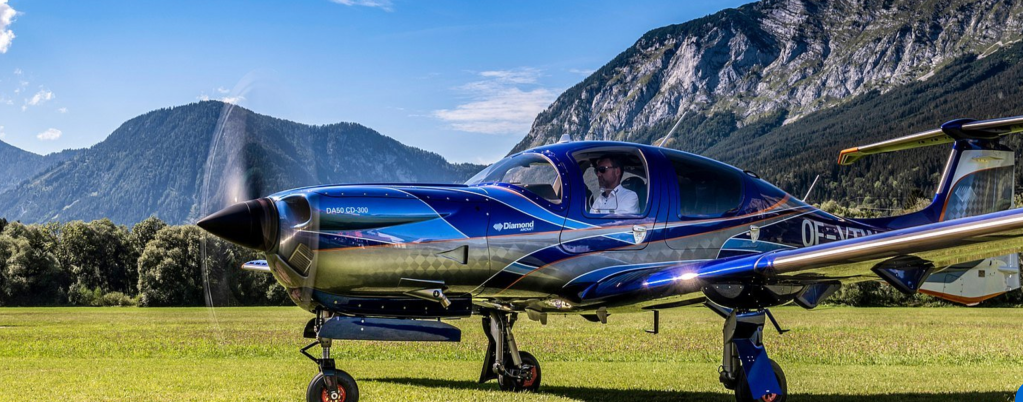
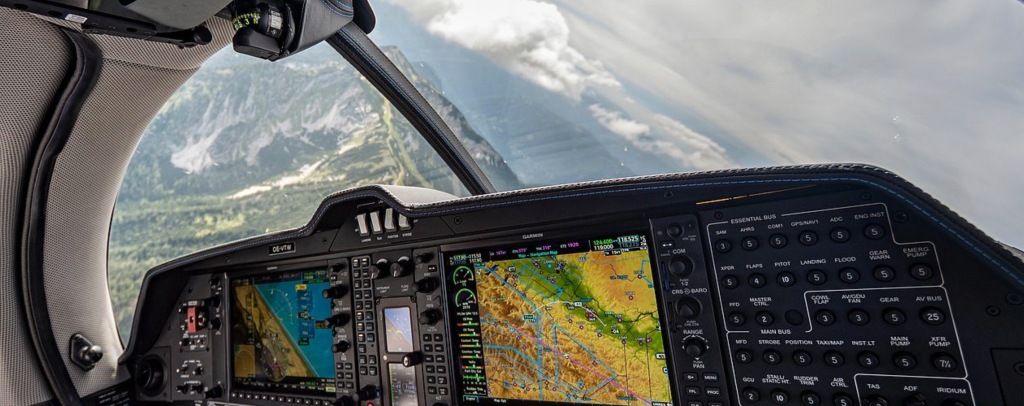
The most recent addition, the DA50 RG, took the lineup in a different direction: a five-seat, retractable-gear single built around the 300 hp Continental CD-300, another jet-fuel FADEC engine that trades avgas dependency for Jet-A availability practically anywhere in the world. With a cabin cross-section borrowed from the DA62, gull-wing doors, and the same Garmin G1000 NXi flight deck found across the current lineup, the DA50 RG has drawn comparisons to Cirrus’s SR22T from owners who’ve flown both, though its jet-fuel engine and retractable gear give it a distinctly different ownership proposition.
What Changed Under New Ownership
Christian Dries sold his stake in Diamond in stages, culminating in Wanfeng Aviation’s full acquisition of the company in December 2017. It was a transition that plenty of longtime Diamond watchers worried would drain the entrepreneurial urgency that built the company. Eight years on, the more accurate read is that Wanfeng has funded continued refinement without making fundamental changes to the Diamond brand.
The most visible recent evidence came at AERO Friedrichshafen 2026, where Diamond rolled out certified advanced Garmin avionics features for the DA62, standard LED taxi and landing lighting across the DA62, DA50 RG, and DA42-VI, magnetic door-closing straps for the gull-wing doors, and a striking new anthracite-and-racing-green demonstrator scheme for the DA50 RG.
None of it is revolutionary on its own. Taken together, it demonstrates that the company is still treating its existing customers to a steady cadence of real improvements and not coasting on a decade-old airframe.
The more substantive commitment has been Diamond and Austro Engine’s formal Sustainable Aviation Fuel development program, launched in 2023. Because most of the current Diamond fleet already runs on Jet-A rather than 100LL, the company is positioned to absorb SAF blends with little or no airframe modification once broader availability catches up with production. Diamond has already run DA42-VI test flights on SAF in partnership with Lufthansa Aviation Training, work aimed at validating unblended and blended sustainable fuel across Austro’s turbo-diesel platforms. It’s a quieter story than a new model announcement, but for a manufacturer whose engines already sidestep the leaded-fuel questions hanging over the rest of piston GA, it’s a head start.
And then there’s the D-Jet: the single-engine very light jet program Diamond first announced in 2003, flew in prototype form, and suspended in 2013 after roughly $188 million in development costs. Wanfeng’s 2016 investment in Diamond Canada explicitly included the rights to the D-Jet program and the stated intent to reassess its future. That reassessment hasn’t yet produced a relaunch, and the program remains suspended rather than canceled.
The D-Jet isn’t a factor in today’s purchase decision for prospective buyers, but it’s a reminder that Diamond has never closed the door on the idea that its owner-pilots might one day step up into a jet built with the same crashworthy composite philosophy as their DA40.
The Safety Record
Diamond’s safety reputation is backed by a consistent pattern in NTSB data that owner groups and independent reviewers have tracked for years. Comparative analyses of NTSB accident records have repeatedly shown the DA40’s fatal accident rate landing at a fraction of the broader single-engine piston average, with the DA42 following a similar pattern among light twins. Even in the rare cases something does go wrong, occupants in Diamond aircraft walk away uninjured far more often than the general aviation average. Real-world results prove that the composite roll-cage cabin structure does exactly what it was designed to do.
That safety record doesn’t mean the airplanes are immune to the same pilot decision-making errors that show up across general aviation. Loss of control during gusty crosswind landings, spatial disorientation in IMC, and the occasional freak weather event, like the 2022 static rollover of a DA42 caught by a sudden Orlando microburst while taxiing, are worth studying before you fly, but the airframe’s structural integrity isn’t what’s at play there. Like any high-performance airplane, the aircraft can only do so much of the work. Recurrent training and sound judgment still carry the rest.
The Diamond Lineup by Model
Diamond’s current lineup features one design language scaled across five different missions, from a two-seat trainer to a seven-seat family hauler. Each model is tailored to a slightly different mission and functions in its own niche.
DA20: The entry point into Diamond ownership is still the aircraft that established the brand in North America. The current DA20-C1 Eclipse carries a 125 hp Continental IO-240-B3B, cruises at roughly 130-138 knots, and offers a useful load around 600 pounds. It’s relatively modest, but appropriate for its mission as a primary trainer and economical personal aircraft. It burns around 6 gallons per hour of 100LL, has a range of roughly 500-550 nm, and remains spin-certified. That makes it an incredible value for training, as it’s a callback to the accident that shaped Christian Dries’ design philosophy in the first place.
In Europe, Diamond has taken the DA20 in a different direction. After more than a decade out of production, the company restarted its Wiener Neustadt line in late 2025 with the DA20i Katana, now built around a 100 hp Rotax 912 iSc3 Sport engine and a Garmin G500 TXi glass cockpit rather than the Continental powerplant used in the North American C1. Early fleet orders from European flight academies suggest strong demand for the Rotax variant’s lower fuel burn and modern avionics, but Diamond has made no announcement about bringing that version to North America; for now, the Continental-powered DA20-C1 remains the only DA20 available to U.S. buyers, built continuously at Diamond’s Canadian facility.
The composite airframe and canopy-style entry give the DA20 a fighter-jet feel that’s out of proportion to its size and price, which is a large part of why flight schools and time-building owners alike have kept it in continuous production for more than three decades.
DA40: The DA40 is really two airplanes wearing the same airframe. The Lycoming-powered XLT runs a 180 hp IO-360-M1A on 100LL, cruises around 147-155 knots, and offers a more familiar mechanical ownership experience. It has no diesel-specific maintenance ecosystem to learn, and a lower acquisition cost for buyers who don’t need Jet-A independence. The DA40 NG swaps that for a 168 hp Austro AE300 turbodiesel burning Jet-A at just 5 to 6 gallons per hour in economy cruise, roughly half what the Lycoming version drinks, with similar or slightly better cruise speeds in the 150-154 knot range.
Useful load runs 900 to 950 pounds depending on variant, and range extends to nearly 900-940 nm on the NG with long-range tanks. The tradeoff is that the Austro’s single-lever FADEC simplicity and fuel savings come with a more complex powerplant and a reduction gearbox. Maintenance here leans more heavily on Diamond-specific expertise.
Your decision between the two comes down to where you fly and fuel. If 100LL is cheap and plentiful at your home field, the XLT is the simpler ownership proposition. If you’re flying internationally, at altitude, or want to hedge against the uncertainty hanging over avgas, the NG’s Jet-A independence is worth the added mechanical complexity.
DA42: Diamond’s original twin is the platform that proved the diesel gamble could actually work. The current DA42-VI pairs two 168 hp Austro AE300 engines, the same basic powerplant found in the DA40 NG, and delivers cruise speeds in the 180-197 knot range depending on power setting and altitude, while burning just 9 to 10.4 gallons per hour combined. For comparison, those figures undercut plenty of single-engine avgas competitors, let alone other light twins. Useful load sits around 1,250 pounds, and range extends past 1,000 nm depending on configuration and reserves.
What makes the DA42 compelling is that Diamond built the redundancy of two engines into an airplane that still handles and fuels like something far simpler. It remains, by a wide margin, the best-selling piston twin in the world. Pilots tend to like having the genuine twin-engine safety margin without a significantly higher fuel bill that would have traditionally come attached to it.
DA62: While the DA42 proved that the diesel-twin formula worked, the DA62 was a less modest step up. Built on a stretched version of the DA50’s fuselage, the DA62 seats up to seven across three rows, and pairs two 180 hp Austro AE330 engines for a useful load that climbs as high as 1,565 to 1,609 pounds depending on configuration. That’s more than 300 pounds beyond the DA42, which means instead of just carrying a few passengers, it can carry a family, gear, and fuel, and still have margin left over.
Cruise speeds run from around 171 knots at economy settings up to 192-198 knots at higher power, with combined fuel burn typically in the 11 to 18 gallons-per-hour range depending on how hard it’s flown, and range stretching past 1,200 nm and, in some loading scenarios, well beyond 1,500. It’s not pressurized, so oxygen is necessary above roughly 12,500 feet, but it will comfortably operate single-engine up to 11,000-13,000 feet if needed. Owners and reviewers have long compared it to a Beechcraft Baron in mission and cabin volume, but at roughly half the fuel burn. Maybe that’s why flight departments and cross-country families keep choosing the DA62 over both older metal twins and newer single-engine flagships.
DA50 RG: The newest addition to the lineup takes a different approach entirely. Rather than adding an engine, it adds retractable gear and a bigger single-engine airframe borrowed from the DA62’s cabin. The DA50 RG is powered by a 300 hp Continental CD-300 turbodiesel, the same jet-fuel philosophy as the rest of the lineup, and cruises at 168-181 knots depending on power setting, burning roughly 9 to 15 gallons per hour of Jet-A depending on how aggressively it’s flown. Useful load comes in around 1,210 to 1,232 pounds, with a range in the 750 to 860 nm bracket depending on reserves and altitude.
This is the most direct competitor to the Cirrus SR22T in the Diamond lineup. The DA50 RG comes with more cabin volume, retractable gear, and no worries with regard to 100LL availability or pricing.
What the Market Looks Like Right Now
Diamond’s used market in 2026 spans a wide range depending on model, generation, and equipment.
DA20 models: Prices span roughly $70,000 for older, higher-time examples up to around $418,000 for late-model, low-time aircraft, with most listings clustering between $100,000 and $380,000.
DA40 models: The broader market runs from about $140,000 for early Lycoming-powered DA40s with higher time up to roughly $699,000 for a factory-new 2026 DA40 NG. Controller.com’s market-leading data puts the current average purchase price at $416,382, with well-equipped late-model DA40 NG and XLT variants carrying current Garmin G1000 NXi avionics typically trading in the $500,000–$580,000 range.
DA42 models: Twin-engine DA42s span roughly $575,000 for older examples up to just over $1.1 million for a low-time DA42-VI, with an average purchase price around $717,384. Buyers should confirm current factory pricing directly with Diamond or an authorized dealer, since new-build DA42-VI list prices weren’t consistently reflected in used-market listing data at the time of writing.
DA62 models: As Diamond’s flagship twin, the DA62 commands roughly $933,000 to just over $2 million depending on hours, equipment, and seating configuration, with an average purchase price of $1,450,750. A factory-new 2026 DA62 was listed at $1,894,480.
DA50 RG models: Pricing for Diamond’s newest model has been less consistent across the used and new markets, with listings ranging from roughly $855,000 to $1.64 million depending on year, equipment, and whether the aircraft is new or used. Given the spread, prospective buyers should confirm current factory pricing directly with Diamond or an authorized dealer rather than relying on asking-price averages alone.
Across every model, buyers should treat these figures as asking-price ranges rather than appraised or transacted values, and should budget for a pre-purchase inspection at a Diamond-authorized service center, where technicians trained specifically on Diamond’s bonded composite structures and Austro or Continental powerplants can verify service bulletin compliance and inspect for the kind of latent issues a generalist shop might miss entirely.
Buying With the Right Support Behind You
The technology and safety story is only half of what determines whether Diamond ownership goes smoothly. The other half is who’s standing behind the airplane once you own it.
Premier Aircraft, an authorized Diamond Aircraft dealer with locations across the central and southern U.S., works primarily with the DA-series lineup. A Diamond-specific dealer’s advisors and technicians see the same bonded composite structures, the same Austro and Continental powerplants, and the same Garmin G1000 NXi configurations often enough to know exactly where the tradeoffs and upgrade paths lie on any given serial number.
Whether you’re stepping into a DA20 as a first-time owner, moving up to a DA42 or DA62 for family cross-country travel, or evaluating a new DA50 RG against a Cirrus SR22T, the acquisition conversation should start with an honest look at the mission you’re actually flying, and an airplane built around keeping you and your passengers safe while you fly it.

