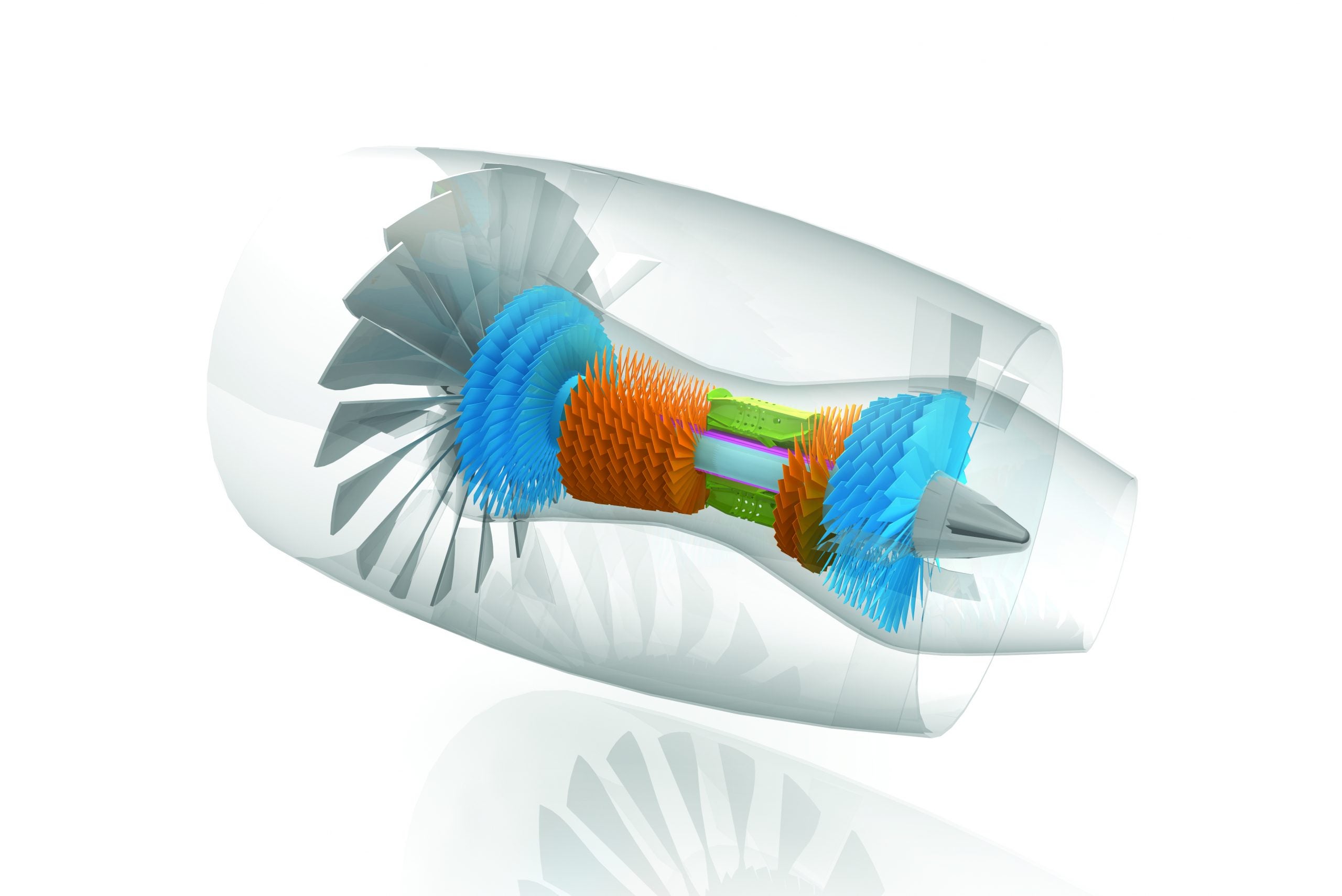
Modern turbofan engines utilize Newton's second law to achieve efficient, quieter, and lower-emission flight.
The engine's process begins by a large fan drawing in massive amounts of air ("Suck"), which is then compressed to high pressure and temperature ("Squeeze").
Fuel is added to the high-pressure air and ignited in the combustor ("Burn"), spinning turbines that in turn power the fan and compressors.
Accelerated air, primarily from the bypass duct, exits the engine ("Blow"), providing up to 80 percent of the overall thrust.
Take a close look at the inner workings of a modern turbofan engine and you’ll discover a marvelous network of parts that puts Newton’s second law of motion to work with elegance and surprising simplicity, allowing today’s jets to go farther on less fuel while making less noise and emitting lower emissions. Here’s how a turbofan works:
CREATE A FREE ACCOUNT
Sign up to keep reading
Create a free account to continue. Already a member? Sign in below.