











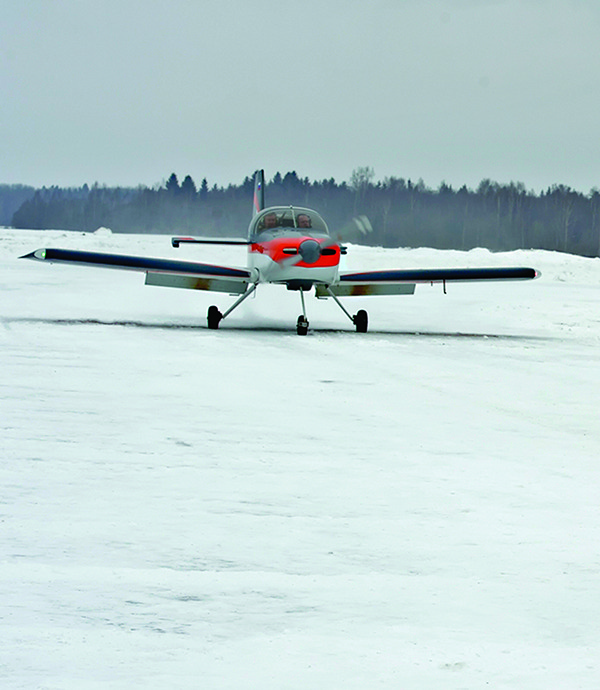


When compared against the opposite extreme—summer—flying in winter has a lot to recommend it. Because the air is cooler and therefore denser, aircraft performance is better. For the same reason—cooler air—flying in winter can be more comfortable than in the summer, thanks to the lack of air conditioning aboard the overwhelming majority of personal aircraft. And thunderstorms, typically the most dangerous weather of summer months, are rare—but not nonexistent—in winter. Of course, any kind of extreme can be a bad thing, or at least something demanding our attention. Winter flying is no different.
In fact, cold weather brings its own concerns and considerations to the task of safely getting in the air and back on the ground. For example, winter fronts and weather systems often feature low ceilings spread over a much broader area than we’d typically encounter other times of the year. Thanks to the colder temperatures, a lot more of the associated precipitation will be of the solid, frozen variety, either as it alights on something solid or shortly thereafter. When that something is an airborne aircraft, what happens next may not be fully within your control. But first you have to unlimber the airplane and get it airborne.

