














U.S. and NATO Scramble Jets as Russia Tests Boundaries

NORAD deploys an E-3, four F-16s, and four KC-135 tankers.

F-16
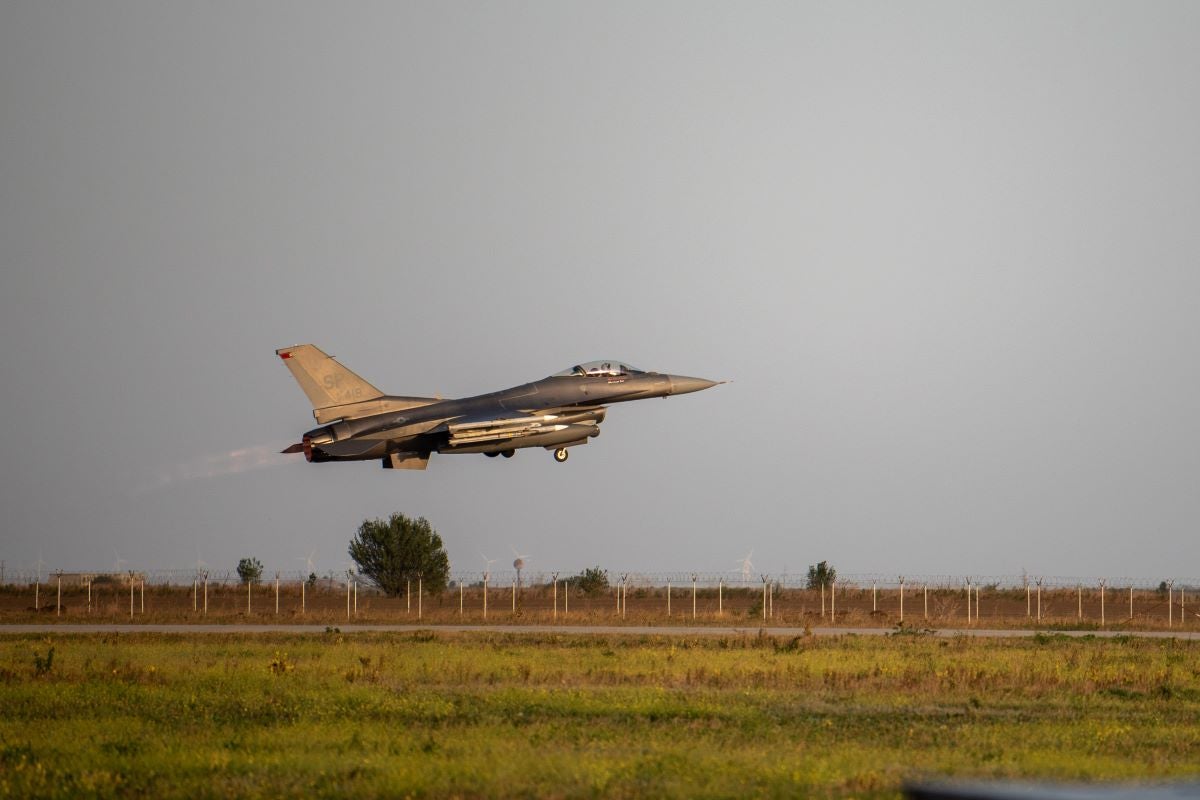
An Air Force F-16 Fighting Falcon departs from the 86th Air Base, Romania, on September 23, 2023, in support of NATOs enhanced air policing capabilities. [Courtesy: Department of Defense]
Gemini Sparkle

Key Takeaways:

  • U.S. fighter jets recently tracked Russian military aircraft in the Alaskan Air Defense Identification Zone, an activity NORAD considers regular and not a threat, marking the ninth such incursion this year.
  • Concurrently, Russia is stepping up harassment of Western air forces in Europe, including intercepting a Russian reconnaissance plane over the Baltic Sea and three MiG-31s entering Estonian airspace.
  • Drones launched from Russia crossed into Poland, leading to Polish and NATO fighter jets shooting them down, marking the first direct engagement between NATO and Russian military assets since the 2022 Ukraine invasion.
See a mistake? Contact us.

U.S. fighter jets scrambled to identify and track Russian military aircraft that entered closely-monitored airspace around Alaska, the North American Aerospace Defense Command said Thursday.

The Russian aircraft, two Tu-95s and two Su-35s, flew into a stretch of international airspace known as the Alaskan Air Defense Identification Zone (ADIZ), which “requires the ready identification of all aircraft in the interest of national security,” according to NORAD. The joint U.S.-Canada command responded by sending an E-3, four F-16s, and four KC-135 tankers to identify the Russian airplanes and intercept them if needed.


F-16
An F-16 in flight [Credit: U.S. Air Force]

The Russian aircraft did not enter U.S. or Canadian airspace.

“This Russian activity in the Alaskan ADIZ occurs regularly and is not seen as a threat,” NORAD said.

This marks the ninth such incursion by Russian warplanes this year, and the third in about a month.

More Violations Could Spell ‘Big Trouble’

Russia appears to be stepping up harassment of Western air forces.

On Sunday, German and Swedish fighter jets scrambled to intercept a Russian reconnaissance aircraft, an IL-20M, spotted flying in neutral airspace over the Baltic Sea. Two German Eurofighters reached the area first and monitored the Russian aircraft until Swedish fighter jets took over the escort.

Late last week, three Russian MiG-31 fighters entered Estonian airspace without permission and remained there for about 12 minutes.

Estonia summoned Russia’s chargé d’affaires over the incident, but the Russian Ministry of Defense insisted it did not violate its neighbor’s airspace.

President Donald Trump criticized the incursion during a press conference at the White House.

“Well, I don’t love it,” Trump told reporters, according to NPR. “I don’t love it when that happens. Could be big trouble.”

On September 9, drones launched from Russia crossed into Poland. Polish and NATO fighter jets responded and shot down several of the drones. It was the first time that any NATO member had directly engaged and destroyed Russian military assets since Russia’s large-scale invasion of Ukraine in early 2022.

Zach Vasile

Zach Vasile is a writer and editor covering news in all aspects of aviation. He has reported for and contributed to the Manchester Journal Inquirer, the Hartford Business Journal, the Charlotte Observer, and the Washington Examiner, with his area of focus being the intersection of business and government policy.
Pilot in aircraft
Sign-up for newsletters & special offers!

Get the latest stories & special offers delivered directly to your inbox.

SUBSCRIBE
