














Register

They Just Didn’t Have the Wright Stuff

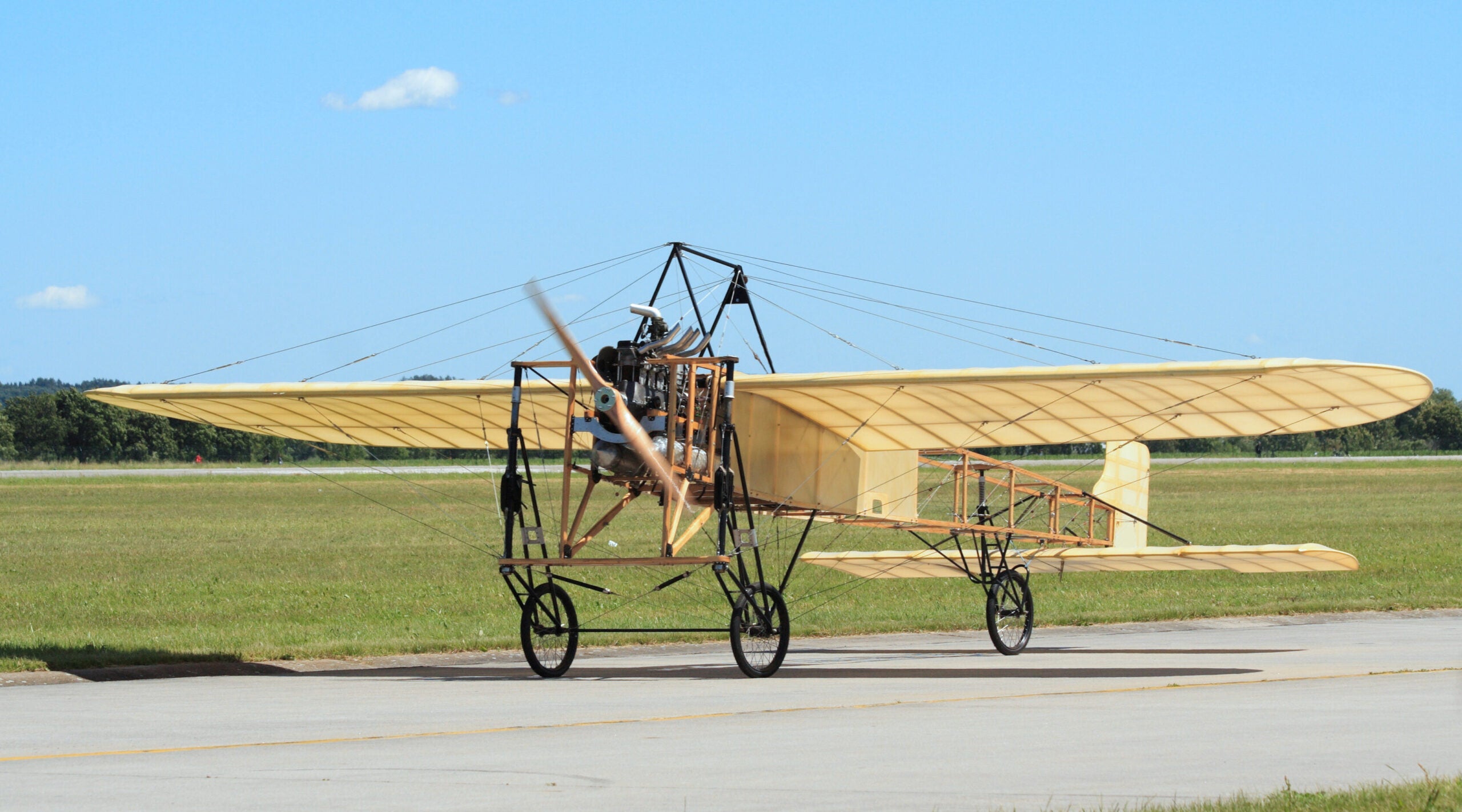
Other designs all chose to pin the tail on the airplane.

Longitudinally unstable to a point that would be unimaginable today, and with sketchy roll-and-yaw control, the Wright Flyer machines were not really 'simplicity itself' to fly. [Adobe Stock]
Gemini Sparkle

Key Takeaways:

  • Louis Blériot's successful English Channel crossing in 1909 popularized his Model 11 and its conventional "tail-aft" aircraft configuration.
  • This success contributed to the rapid obsolescence of the Wright Flyer's "canard" (elevators-forward) design, despite the Wrights' pioneering achievements.
  • The Wrights' choice of the canard configuration was influenced by their belief in pilot control and specific design considerations, but it inherently lacked the longitudinal stability and safety features later understood for effective canard designs.
See a mistake? Contact us.

On October 28, 1908, the New York Times reported, under the headline “WRIGHT TEACHES FLYING,” that Wilbur Wright was teaching a certain Count de Lambert to fly. European nobility habitually shored up its ruins with heaps of names. The full handle of Wright’s pupil, who was his first, was Charles Alexandre Maurice Joseph Marie Jules Stanislas Jacques de Lambert.

After three flights totaling 35 minutes, the count told the Times reporter that the “handling of the aeroplane was simplicity itself, and he was confident that he would become proficient in a very short time.”


Peter Garrison

Peter Garrison taught himself to use a slide rule and tin snips, built an airplane in his backyard, and flew it to Japan. He began contributing to FLYING in 1968, and he continues to share his columns, ""Technicalities"" and ""Aftermath,"" with FLYING readers.

Ready to Sell Your Aircraft?

List your airplane on AircraftForSale.com and reach qualified buyers.

List Your Aircraft
AircraftForSale Logo | FLYING Logo
Pilot in aircraft
Sign-up for newsletters & special offers!

Get the latest stories & special offers delivered directly to your inbox.

SUBSCRIBE
