














The Bahamas Offers Tropical Playground With Widespread Appeal

Caribbean country’s 700 idyllic islands provide pilots plenty to see and do.

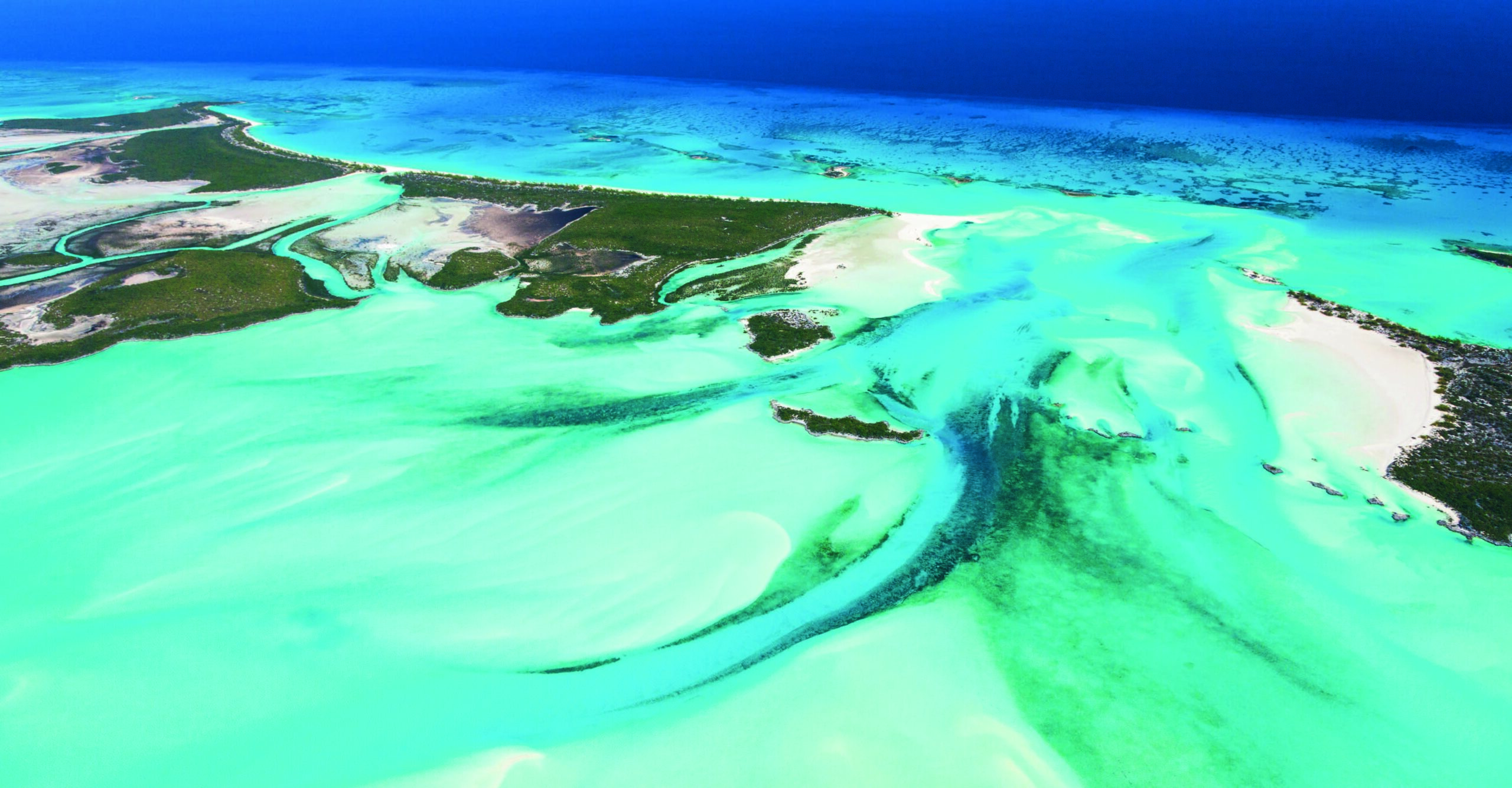
The clear blue waters and land masses of the Bahamas are best viewed from above. [Adobe Stock]
Gemini Sparkle

Key Takeaways:

  • The Bahamas offer pilots diverse and relaxing island adventures, with many popular destinations accessible within a single fuel stop from southern Florida.
  • Flying to and from the Bahamas requires specific documentation, including eAPIS forms, cruising permits, passports, life vests, and mandatory use of designated Airports of Entry.
  • Key "Out Islands" like Cat Island, The Exumas, and Long Island provide unique attractions such as deep-sea fishing, swimming with pigs, world-class diving at Dean's Blue Hole, and exploring natural caves.
See a mistake? Contact us.

The Bahamas offer a pilot the unparalleled opportunity to choose their own adventure. The country’s 700 idyllic islands are a tropical playground and cater to a wide variety of interests—with a heavy emphasis on rest and relaxation.

The clear blue waters that surround these diverse land masses are best seen from above. When flying from southern Florida, most of the popular places to land in The Bahamas are within one fuel stop from the American mainland in a single-engine piston. 

This Article First Appeared in FLYING Magazine

If you're not already a subscriber, what are you waiting for? Subscribe today to get the issue as soon as it is released in either Print or Digital formats.

Subscribe Now

Whether you decide to make a quick trip to Bimini, the island closest to the U.S., or stretch your aircraft’s legs for an overnight in Great Inagua or Acklins Island, The Bahamas are paradise at every turn. Some of the most pilot-friendly options to begin your aerial exploration of the country include airports at Cat Island, the Exumas, and Long Island.  

These locations in the “Out Islands” are all well-known for their tranquility, each with their own specific flair and memorable activities. Cat Island is the farthest from the U.S. mainland, and since its remoteness equates to fewer visitors than many of the other islands, the beaches are calmer. The sands of the Exumas are just as welcoming, and glimmering blue images of the picturesque chain are likely what many recall when thinking of The Bahamas. Long Island, as it’s aptly named, is one of the lengthier islands and boasts stunning topography. 

Regardless of which island you select, you are in for a memorable retreat. Long Island’s claim to fame is its world-class diving opportunities, headlined by Dean’s Blue Hole, which is one of the deepest, naturally occurring dive sites in the world. The Exumas sport many acclaimed activities, including an attraction that has become increasingly popular in recent years—swimming with pigs. Cat Island caters to those looking to engage in pelagic activities and is a well-known point of origin for deep sea fishing excursions. 

Outside of remembering to bring your swimsuit and lots of sunscreen, the biggest considerations when flying to any of the country’s islands are ensuring the entry requirements are followed properly. While obviously more complex than flying between two U.S. states, flying to The Bahamas is relatively straightforward. Let this guide serve as reference for some of the important considerations when planning a trip to this ultimate destination. 

Flying to the Bahamas

Put simply, there are two things you need to know when planning a bucket-list flight to the islands—the rules to get there and to get back.

Your journey can start at any stateside airport, as long as you file a flight plan (DVFR or IFR) and that it is activated before leaving Florida. There are several other important paperwork and general requirements to ensure you comply with, the chief of which is completing an electronic advance passenger information system (eAPIS) form. This is a United States Customs and Border Protection requirement that provides manifest-specific information related to leaving and entering the country. 

You’ll also need to bring your passports and every person aboard must also have a U.S. Coast Guard-approved life vest readily available. The Bahamas also require that a cruising permit is completed (bring three copies), as well as an immigration card for each visitor. 

As with many highly anticipated vacations, there are often extra steps to take before there is a drink in your hand and your toes are in the sand. You must first land at a Bahamian Customs-identified airport of entry (AOE). 

Cat Island, the Exumas, and Long Island each have their own AOE, two of which offer fuel. New Bight Airport (MYCB) on Cat Island does not. 

According to official Bahamian sources, nine of the country’s roughly 55 airports offer 100LL—at an average price of $5.25 per gallon. These airports are within a 20-minute flight of other airports without services. 


The Exumas boast many  acclaimed activities, including one that has become quite popular in recent years—swimming with pigs. [Adobe Stock]

Leaving paradise is largely the inverse process of what it took to get there. You will require the return version of the cruising permit, which is known as a general declaration outward form. You will also file a flight plan and complete eAPIS documentation, which are required in order to speak with U.S. Customs. When you advise the agency of your ETA, you will receive additional information that will be referenced when filing your international flight plan. Another key consideration is that you must leave the country from an AOE, and you will be heading for an AOE in Florida. 

Additional information about flying to and from The Bahamas, including several useful checklists and overview of relevant fees, can be found within the country’s official GA resource at https://www.bahamas.com/getting-here/private-aviation/pilot-faqs. Additionally, there is a government-sponsored group called The Bahamas Flying Ambassadors, which consists of pilots with extensive experience flying in the country. These aviators openly provide their expertise to others looking to fly to the country for the first time. 

Cat Island

This tranquil island offers many secluded beaches and resorts. One is Hawk’s Nest Resort & Marina, which combines two distinct activities in one—boating and aviation. The coveted tourist destination features a 28-slip marina, as well as a private 3,000-foot-long paved runway (MYCH). 

One pilot who has spent his fair share of time on Cat Island is Robert Chavez, who formerly flew a Cessna Gran Caravan for the resort’s longtime owner (Hawk’s Nest is currently listed for sale). Chavez provides an overview of what it’s like flying to the resort from eastern Florida, including required customs procedures.

“It is about a two-hour flight from Treasure Coast International Airport (KFPR) in Fort Pierce, which was where we would handle all of our eAPIS and customs,” Chavez said. “We would leave Florida in the morning and clear the ADIZ. You fly a straight line from Fort Pierce to Cat Island and go over the top of Freeport, by Great Abaco, [some other islands], and then you see Cat Island. You will be flying low over the water and having a great view all the way there. 

“The first part you see of Cat Island is Arthur’s Town, which is on the north end of the island. We would head straight into New Bight [Airport], which is about halfway up the island, and that’s where we had to clear customs, since it’s the port of entry. Then it is about an easy 10-minute flight over to Hawk’s Nest, which is on the south end, or the ‘toe’ of the island. You land there, and then it is a short walk from the strip to the clubhouse or the resort. They also have a restaurant and bar and bicycles you can use to go all over the island. Everything is conveniently located.”


A chance to explore shipwrecks, swim with dolphins while scuba diving, view Columbus Point, and a myriad of boating opportunities are among the many activities available to visitors of The Bahamas. [Adobe Stock]

One of the most compelling reasons to visit Hawk’s Nest is to participate in its various fishing competitions throughout the year. Cat Island is an attractive deep sea fishing destination, due to the wide variety of species that swim in the waters that deepen significantly only a short way from the shoreline. 

There are a handful of other noncommercialized resorts on the island, with varying amenities that allow guests to balance a true look into Bahamian culture with what you would expect of a first-class destination. 

Outside of seaside rest and relaxation, Cat Island offers a few natural points of interest to check out, including Mount Alvernia. At 206 feet msl, this hill, topped with a historical monastery, represents the highest point in the country. Like the other less densely populated islands, one of the allures of Cat Island is mingling with its approximately 2,000 residents. One of the best times to do this is during the Rake & Scrape Festival, which highlights local music during a lively three-day event in early June. 

Another airport option on Cat Island is Arthur’s Town (MYCA), which is located toward the northernmost portion of the island. There is no fuel, but there is a 7,034-foot-long-by-150-foot-wide asphalt paved runway. 

The Exumas

There are 365 islands in the Exumas, making it a place with nearly limitless opportunities for adventure and seclusion. 

One of the more interesting sites for aviators to venture is Norman’s Cay. The almost beachfront site has a sordid history of drug smuggling operations. An airstrip was built here in support of these illegal ferrying operations in late 1970s and early ’80s, which operates today with the identifier of MYEN. The paved runway is 4,700 feet by 100 feet. Once heavily guarded, the cay’s airport is now unattended and a great place in the northern portion of the islands to vacation. 

This is an interesting site for pilots, specifically as they are able to see an airplane that never left. No, it’s not a ramp queen sitting derelict on a forgotten apron—it’s a DC-3 submerged in shallow waters just east of the airport. The airplane has become a popular snorkeling site and is actually one of several aircraft resting in the waters surrounding the island chain. 


Aerial view of the Flying Fish Marina next to Clarence Town, Long Island, in The Bahamas. [Adobe Stock]

One of the other sunken aircraft, an unnamed multiengine model, is located near the airport on Staniel Cay. MYES features a 3,030-by-75 paved runway, which features a stunning approach over the shallow waters surrounding the island in the midportion of the Exumas. There is much to do in the immediate vicinity of the airport, making it an attractive destination spot for pilots and nonflying tourists alike.

Another water activity that is beloved in the Exumas is sailing. Perhaps you could scout some interesting spots from the air that you would like to visit by boat? Staniel Cay is one of the many attractive sailing destinations, or starting points, and is home to the Staniel Cay Yacht Club. Its marina can accommodate boats of all sizes, from dinghies to mega-yachts, and offers charters of varying types to those wanting to see the Exumas from a memorable perspective. 

A nearby site that is well known to the captains of any local charters is Thunderball Grotto. The blue-water-surrounded, partially submerged cave will already be familiar to James Bond movie fans, as the series’ 1965 film, Thunderball, was shot on location there. Visitors can channel their inner agent 007 by exploring the site’s above and underwater splendor. It is one of the most popular snorkeling sites in the chain and where you can take some of the best souvenirs—photos with the stunning landscape and diverse fish population. 

Swimming with various animals is a popular way to spend your time in the Exumas, with possible swimming partners ranging from dolphins to nurse sharks. One of the most widely broadcast excursions in the Exumas is swimming with the pigs. These castaway swine are not native to Big Major Cay (a short boat ride from Staniel Cay), and a common hypothesis is that they were left by sailors. Humans are able to mingle with the approximately 20 pigs that live on the aptly named Pig Beach. These swine only ask for a few things for their highly popularized companionship—petting and an occasional treat. 

Sun, nice weather, and pristine beaches are as commonplace in the Exumas as death and taxes are in daily life, and it’s easy to take these for granted if you spend enough time there. So which airport should you fly into if you want to lessen the time it takes between moving your feet from the rudder pedals to one of the many white-sand beaches? 

There is no ICAO identifier for the airport at Farmer’s Cay, but it is one of the best choices if looking for surf and sand everyone will enjoy. The tie-down area adjacent to the 2,500-by-80 paved runway is only a few seconds’ walk from a beach. Farmer’s Cay is a good place for a respite as your trek south along the island chain. One of the other reasons for a stopover on the island is for lunch at the nearby bar and grill.

Exuma International (MYEF), 282 nm to the southeast of Fort Lauderdale Executive (KFXE), is the AOE in the Exumas. The airport has a sole 7,000-by-150 paved runway, as well as an FBO. 

Long Island

If visiting Long Island, your journey would begin at Stella Maris (MYLS) if you have not cleared customs at another AOE. The airport has fuel, as well as a 4,019-by-75 paved runway. 

The airport is the northernmost public airport, of which there are two on the island. One of the points of interest near Stella Maris is Columbus Point, named for the famed explorer who first visited the island in 1492. Today there stands a structure in his memory, which was erected on the cliffs overlooking the ocean. A short walk is required to reach the site, which is one of the best places to see sweeping scenery in all of the islands. 

Another remarkable natural setting is Hamilton’s Cave. This natural site is most accessible by flying to the island’s other public airport, Deadman’s Cay (MYLD). It has a 4,042-by-100 paved runway, with several references noting some sections of the runway as being rough. It’s a short drive between the two locations, which is well worth it to be able to experience the largest cave system in The Bahamas. Hamilton’s Cave is owned and operated by a local, who serves as its docent for anyone wanting a guided tour. While tourists get to see much of the cave, there are reportedly some sections that have never been explored. 

The airport also sits close to two other attractive points of interest on Long Island—Clarence Town and Dean’s Blue Hole. Clarence Town is the capital of Long Island and a great place to visit if looking for a bite to eat or experience how the laid-back locals live. Dean’s Blue Hole is where locals and tourists alike flock to enjoy themselves. At 663 feet deep at its lowest point, it is the world’s third deepest blue hole. The stunning dark blue water is surrounded by jutting cliffs. Dean’s is one of the best places in The Bahamas to snorkel or scuba dive, and there is an alphabet list of different fish species you will see. 

You can also try and catch many of the fish types you see in the crystal-clear waters, and bonefishing is one of the most revered activities on Long Island. The island’s many sand flats and shallow waters are good habitats for bonefish, and quality fishing opportunities are available year-round.


This feature first appeared in the June Ultimate Issue 959 of the FLYING print edition.

Grant Boyd

Grant Boyd is a private pilot with eight years of experience in aviation business, including marketing, writing, customer service, and sales. Boyd holds a Bachelor's and a Master's of Business Administration degree, both from Wichita State University, and a Doctor of Education degree from Oklahoma State University. He was chosen as a NBAA Business Aviation ""Top 40 Under 40"" award recipient in 2020.
Pilot in aircraft
Sign-up for newsletters & special offers!

Get the latest stories & special offers delivered directly to your inbox.

SUBSCRIBE

