











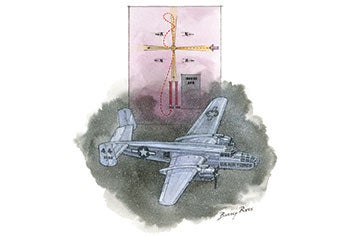


The January day was crisp and cold with just wisps of high clouds painting the Texas sky as we, my two Air Force cadet student pilots and I, began our IFR cross-country. Before starting back to our base in west Texas, I checked the weather and was gratified to see the forecast we had received before departure was going to hold up — nothing more than a high overcast with perhaps a lower scattered layer at 5,000 or 6,000 feet. My students were two of the sharper ones in the class and seemed to be mastering the intricacies of instrument flight with little trouble.
Now the venerable old B-25 twin-engine bomber droned through the afternoon toward the lowering sun, with one student in the left seat, me in the right, and the other student leaning in between us. The big Wright engines howled their song inches from our ears, making conversation impossible except by interphone. The promised overcast was thickening faster than I thought it would, and the ground below was disappearing in patches, obscured by scudding clouds beneath. Well, I thought, a good demonstration of a real instrument approach would be a fitting topper to the lesson.

