











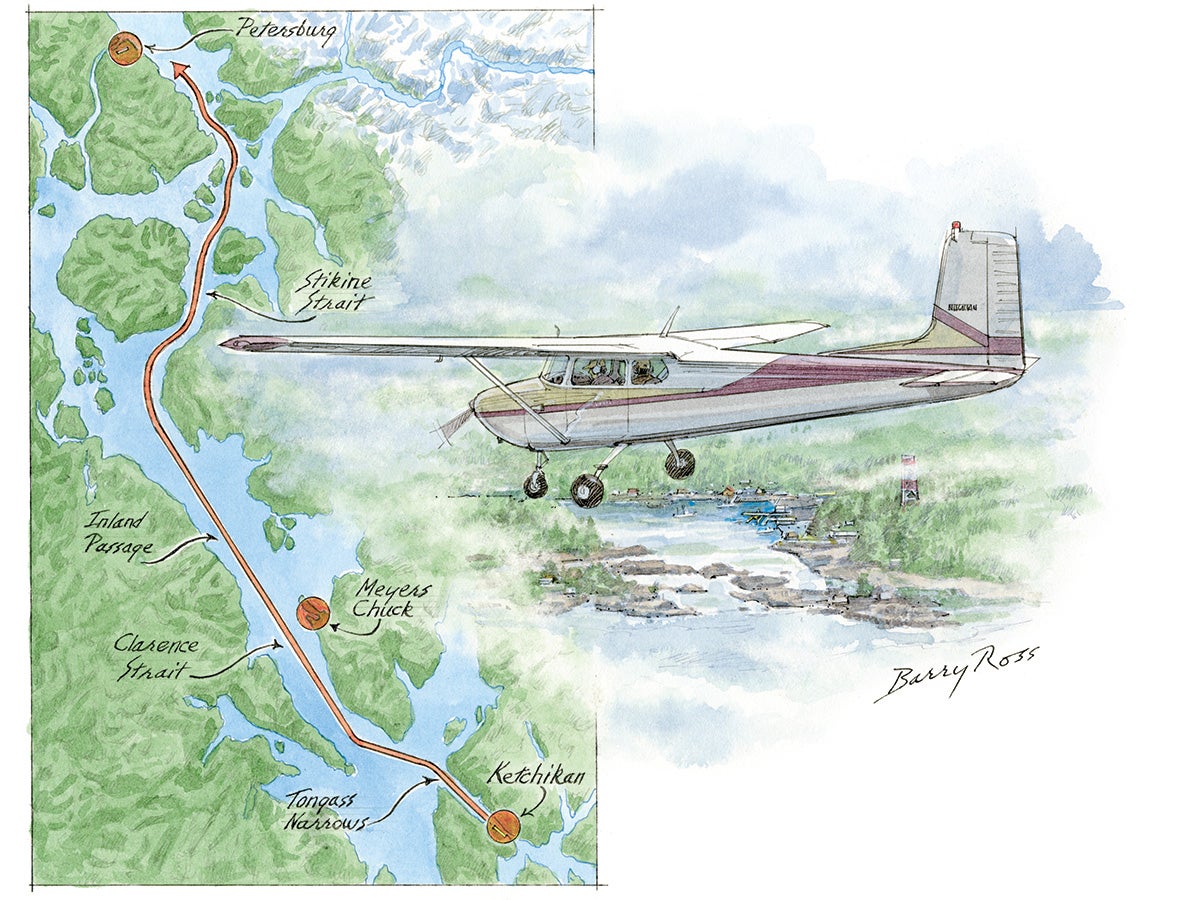
My best friend, Mike, and I woke to the subtle muttering of raindrops and realized that beyond the curtains of our Ketchikan, Alaska, motel room there was only gray, dismal sky. Damn. At that moment a scenario began that could have ended up as an NTSB accident report, starting with unquantifiable indicators and an irrational discussion.
I Learned About Flying From That: 30 Seconds to Impact

Key Takeaways:
- Two pilots initiated a VFR flight from Ketchikan, Alaska, in marginal weather, making a series of incrementally poor decisions driven by rationalization and external influences despite clear adverse conditions and their aircraft's limitations.
- The flight quickly devolved into a perilous low-altitude navigation challenge, forcing them to fly as low as 100 feet in less than one-mile visibility, exacerbated by equipment limitations, navigational errors, and a severe carburetor icing event.
- After enduring escalating fear and multiple life-threatening incidents, including a near-miss with unseen power lines, the weather unexpectedly cleared, allowing them to land safely and reflect on their gravely misguided judgment.
Key takeaways sponsored by Aviator Pro | Start Your Training ->
See a mistake? Contact us.

