













Spatial D: A Classic Case

Flying VFR into instrument conditions is the way most spatial disorientation accidents happen. Just say no.

Gemini Sparkle

Key Takeaways:

  • Spatial disorientation (Spatial D) is a serious aviation hazard that occurs when pilots lose visual references, especially in Instrument Meteorological Conditions (IMC), and can lead to loss of aircraft control.
  • A fatal accident involving a non-instrument-rated pilot highlighted this danger when they continued VFR flight into IMC, became spatially disoriented, lost control, and the aircraft experienced an in-flight breakup.
  • The NTSB determined the accident was caused by the pilot's decision to fly VFR into IMC, underscoring that preventing Spatial D requires maintaining VFR, flying within one's capabilities, and obtaining an instrument rating.
See a mistake? Contact us.

To a casual observer, the term “spatial disorientation” might be something they have to stop for a moment to consider. “Disorientation” isn’t a concept a typical person should have a problem with. “Spatial,” however, is not a word the average person on the street encounters everyday—they might even confuse it with “special,” which it is in a way. 

It might take that typical person a few seconds to grasp the concept of not being able to orient one’s self in the space around them. Merriam-Webster defines spatial as “relating to, occupying, or having the character of space.” Combine the two words and we see they describe a situation in which one would merely be uncomfortable if sitting at home on a couch but downright terrifying if they were the pilot in command of an aircraft. Sitting at home on the couch would be preferable.


If you’ve never been spatially disoriented in an airplane, good for you. If your career as a pilot continues, you’ll probably experience Spatial D. Once, as a result of failing to establish and keep a flight instrument scan after entering IMC on an IFR flight plan, I did. I was hand-flying and looking out the windscreen, earnestly trying to spot the visual conditions I knew were right over there. I looked back down at the instruments and saw I was in a 45-degree bank, which was increasing, along with the airspeed. I recovered and went on to a smooth landing at my destination.

The way I regained control and got back my spatial orientation was really quite simple: I didn’t look out the window, but at the flight instruments. I trusted them and reverted to my instrument training. The sidebar below has more details on avoiding Spatial D and recovering from the unusual attitude I was about to enter. The experience was an eye-opener, to be sure, and could have turned out much worse. Here’s an all-too-common example of one encounter with Spatial D that didn’t turn out as well. 

Background

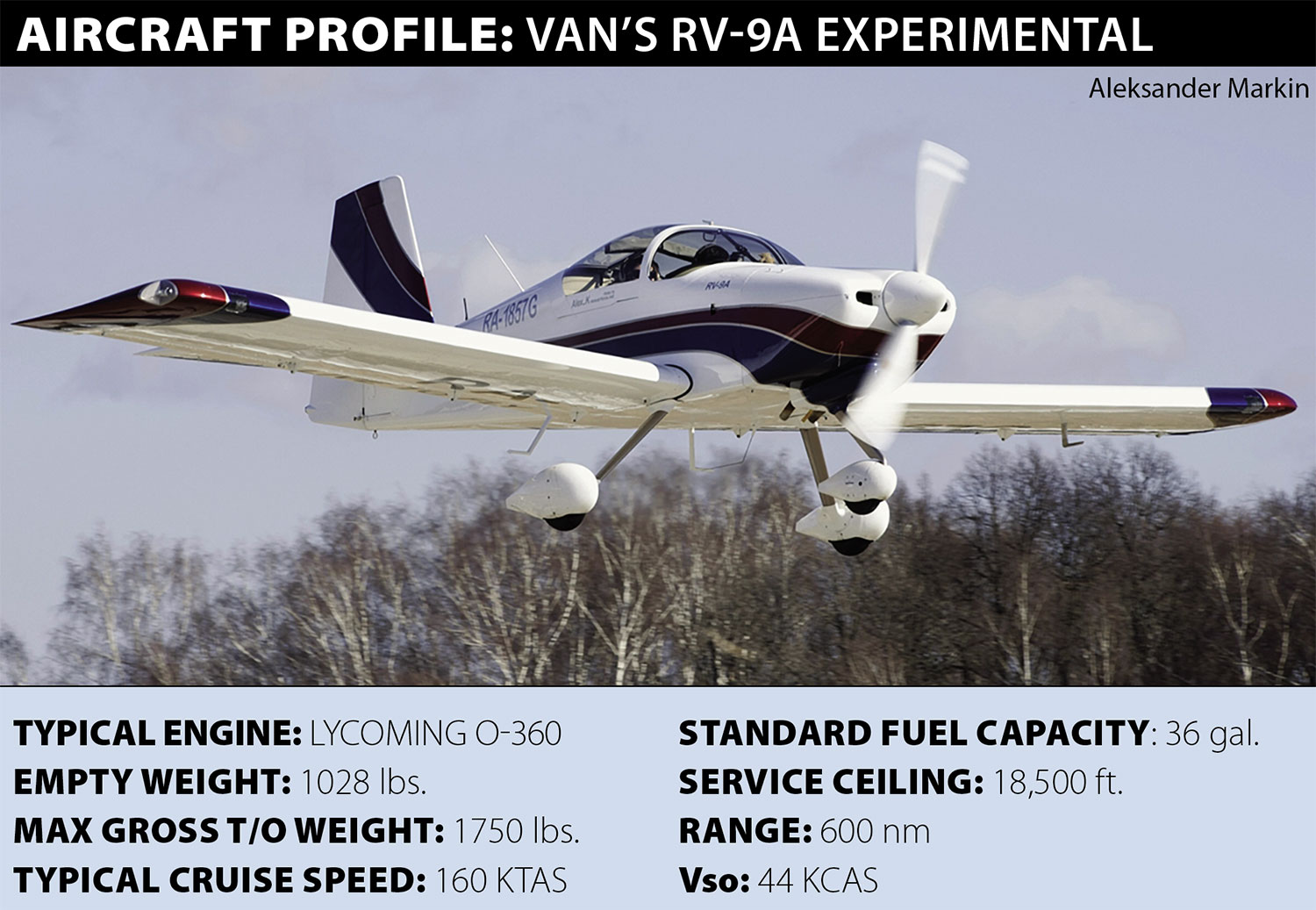
On July 25, 2022, at 0839 Central time, a Van’s RV-9A experimental was destroyed when it broke up in flight before colliding with terrain near Tryon, Nebraska. The non-instrument-rated private pilot (80, male) and student pilot-rated passenger were fatally injured. Instrument conditions prevailed.

The airplane departed Greely, Colo., at about 0715 and flew northeast toward Cherokee, Iowa, its intended destination, at 9500 feet msl, with VFR flight-following services from ATC. At 0809, ATC informed the pilot of moderate precipitation 65 miles ahead. At about 0814, the pilot told ATC he needed to deviate to the north to remain in VMC. By 0831, the pilot was deviating around clouds and requested ATC point him in a direction that was clear. The controller advised there were no Pireps in the area and reissued the depicted precipitation. The pilot then advised they would climb in an attempt to get on top of a cloud layer. At 0837, the pilot reported at 12,300 feet and “still in the soup.”

The airplane remained at that altitude about 90 seconds before starting a descending left turn. A witness on the ground reported hearing a loud “boom” and ran outside, observing the airplane overfly the house “in a spiral” before it impacted the ground. The witness also observed pieces of the airplane falling to the ground near the home.

Investigation

The airplane’s debris was spread along a line beginning about a mile northwest of the main wreckage. The first pieces of wreckage in the debris field were portions of the vertical stabilizer. The left wing, right horizontal stabilizer and portions of the rudder were located about the midpoint of the debris field, and the left horizontal stabilizer with attached empennage was located about 0.2 miles northwest of the main wreckage. The main wreckage included most the fuselage, cockpit, engine and propeller, and most of the right wing.

The left wing was separated within two or three feet of the fuselage. The right wing was found with the fuselage but partially separated about two feet outboard and bent down. The wing center section remained attached to the fuselage and had obvious downward deformation consistent with negative wing overload.

The vertical stabilizer separated mostly intact from the empennage. The rudder was separated and fractured into five pieces. The upper half of the rudder was mostly intact, but the riveted trailing edge was splayed open. A section of the left center rudder skin was recovered separately, and a section of the right center rudder skin was not recovered.

According to the NTSB, the last 20 seconds of radar data indicated that the airplane descended about 4800 feet and accelerated past its design maximum true airspeed of 182 knots to about 249-264 knots true before the radar data ended. 

The accident pilot did not request weather information from Leidos Flight Service or ForeFlight for the flight. A search of archived ForeFlight information indicated that five days before the accident, the student pilot-rated passenger did review ForeFlight information for a potential flight through the accident region.

The closest weather observation was 20 miles northeast of the accident site. At 0835 CDT, it reported wind from 160 degrees at nine knots with gusts to 15, visibility 10 miles or greater, a broken ceiling at 1200 feet agl and an overcast at 9000 feet. A station 33 miles south of the accident site, at 0853 CDT, reported wind from 110 degrees at nine knots, visibility 2½ miles in light rain and mist, a broken ceiling at 500 feet agl, broken clouds at 1500 feet and an overcast at 2300 feet.

Visible and infrared data from the GOES-16 satellite from 0840 indicate cloud tops over the accident site were near 14,000 feet msl. Precipitation was depicted by radar east of the accident site along the anticipated route of flight.

There were no Sigmet, Airmet or Center Weather Advisories valid for the accident site at the accident time.

Probable Cause

The NTSB determined the probable cause(s) of this accident to include: “The non-instrument-rated pilot’s decision to continue visual flight into instrument meteorological conditions, which resulted in spatial disorientation, a loss of control, exceedance of the airplane’s design limitations, and in-flight breakup of the airplane due to rudder flutter.”

According to the NTSB, “The accident is consistent with the non-instrument-rated pilot continuing to fly toward deteriorating weather conditions despite his knowledge of those conditions and his lack of qualification to fly in them. The pilot likely became spatially disoriented and lost control of the airplane after entering instrument meteorological conditions and losing the ability to see visual references. The airplane then entered a descent and exceeded its airspeed design limits to a point where rudder flutter occurred, which resulted in structural failure of the airplane.”

One observation is that the RV-9 series is built rather well to go so far beyond its design limits before breaking up. But break up it did. As my experience attests, it’s easy to lose spatial orientation and, as the line from the film WarGames goes, “The only winning move is not to play.

Ready to Sell Your Aircraft?

List your airplane on AircraftForSale.com and reach qualified buyers.

List Your Aircraft
AircraftForSale Logo | FLYING Logo
Pilot in aircraft
Sign-up for newsletters & special offers!

Get the latest stories & special offers delivered directly to your inbox.

SUBSCRIBE