Register

Search Results for: general aviation inc

Features

Time Shortage = Human Error

Getting rushed or falling into situations where a time shortage rears its head is one of the leading causes of inducing errors. If you are rushed for time, you are eleven times more likely to commit an error.

You are more likely to skip critical items, overlook important details or jump at the first idea that enters your mind without fully looking at other options. Youll ignore important warning signs and generally get that deer in the headlights look. Its prevalent in all segments of aviation. During my recent research into EMS helicopter accidents, I found that time pressure was one of the leading error-causing conditions.

Some time shortages are self-induced. Others are created…
Read More »
Unicom

Future Foible

I thought Future Flight [Reality Check, July] contained great visions, however, I didnt read anything in the article about spatial disorientation. All the fancy new tools for navigation, weather and etc. still leave the vertigo problem unsolved.

A new advanced instrument panel should have some means of addressing the problem. Maybe an attitude display that has real depth to it, instead of perceived depth.

-Lester Zinser
Via e-mail


The advanced displays typically include large display screens with an artificial ground profile derived from the GPS database. Research shows the design works much better than traditional attitude indicators at enabling the pilot to …

Read More »
Squawk Box

Hot Stuff

The following information is derived from the FAAs Service Difficulty Reports and Aviation Maintenance Alerts.

———-

An FAA certified repair station received a Janitrol cabin heater combustion head in exchange for a new part purchased by a customer. The trade-in combustion head had a hole approximately 0.4375 inches in diameter burned through it and the entire part was severely corroded.

Clearly cabin heaters are operated with minimal maintenance until they fail. A pressure decay test of this unit would have made its deficiencies obvious.

Cabin heaters are neglected during the summer, then expected to perform perfectly during the first cold snap. However, cabin heaters tha…

Read More »
Features

Nailing the Needles

[IMGCAP(1)]The first time a pilot on an ILS approach sneaks under the glide-slope is almost always a situation where he is on an ILS final, approaching minimums. Hes close to decision height and suddenly there are patches of ground appearing intermittently below. An instant later, the strobes are visible. He drops below the glide path and the runway is straight ahead. The pilot later realizes that remaining on glide slope at decision height would have meant executing a missed approach and possibly a trip to the alternate airport.

On the next gamble, he descends a little bit more below the glideslope path – and it works again. In fact it may work a number of times. The best estimates i…

Read More »
Features

Risky When Real

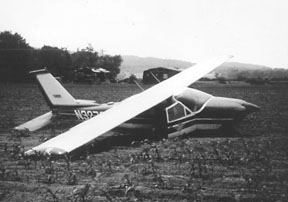
[IMGCAP(1)]I was driving down a country road when I had to blink to make certain I wasnt hallucinating. There was a Cessna 152 by the side of the road. It was undamaged, which was surprising because the road had a number of power lines running along it.

I stopped to see if the person standing next to the aircraft was okay. He said the flight instructor had pulled the mixture to simulate an engine failure when they were doing S turns along a road. The student had few options for an emergency landing area and chose the road. There was no time to try re-starting the engine.

The student said the flight instructor had walked down the road to try to find a better stretch of the road for…

Read More »
Features

Flying a Fleet

For the average owner/pilot, its not hard to stay knowledgeable about the systems and procedures of the airplane youre flying. You fly not only the same make, model, and year, but the very same airplane every time you fly.

If youre lucky, you have a panel equipped the way you want it, with the avionics you chose, laid out in the pattern you found most convenient. Switches fall easily to hand and, after you learn them once, you know exactly how to operate each piece of equipment. You know how it works, how to make it do what you want, what it can do and what it cant.

Airline pilots are in much the same situation. Even though they dont fly the same airplane, there is much consiste…

Read More »
Features

Why Engines Fail

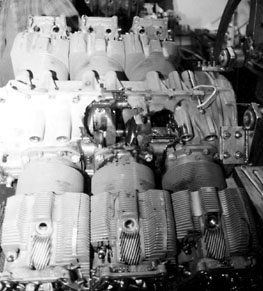
[IMGCAP(1)]Except for those who fly gliders, most pilots live in fear of an engine failure. Some are so wary they fly multi-engine airplanes for no reason other than to give them more options should an engine decide to imitate a brick. Pilots of singles, of course, have no choices. When the engine crumps, its time to hit the softest thing you can find as softly as you can manage.

But the fear of imminent engine failure is in some ways misguided. Annual inspections, preflights and runups are all designed to catch little problems before they become big ones. In addition, the relatively simple engine design helps make them more reliable.

On the other hand, there are forces at work agai…

Read More »
Airmanship

Involuntary Gliding

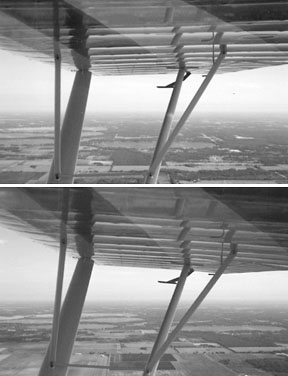
[IMGCAP(1)]In singles and even light twins in some circumstances, an engine failure means the airplane is going down. The pilots job at that point is to pick the best spot to land and properly execute the forced landing.

Sounds simple, but its a procedure that pilots routinely botch, either because their skills are so rusty or because they dont know the right way to make a forced landing.

Glider pilots are sometimes smug about their ability to land without power, but in fact, an airplane with a windmilling prop is markedly different from a glider. For one thing, the lift/drag ratio is about three times higher in gliders than in powered airplanes. An airplane cant gain altitude in…

Read More »
Features

Repelling Terrain

There are large parts of this country where the terrain can impede your climb-out after takeoff. Sometimes it can even be a factor during en route climbs.

It takes just a quick glance through the NTSB database to find dozens of accidents in which the aircraft was unable to outclimb rising terrain. Those accidents reveal a number of common factors involved with this type of accident, in addition to the rising terrain. High density altitude carries much of the blame, to be sure, but so does restricted maneuvering area, adverse winds, heavy aircraft weights and relatively low power-to-weight ratios.

When most people think of rising terrain, they picture mountain peaks that rise nearly 1…

Read More »
Features

Fallen Icon

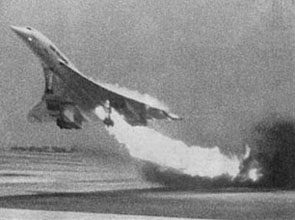
[IMGCAP(1)]When the magnificent Concorde thundered down runway 26R at Paris Charles de Gaulle Airport in July 2000, it became one of the most scrutinized airplane accidents on record. After a spectacular display of flaming fuel, the aircraft climbed to about 200 feet agl, pitched up, rolled inverted and crashed. All 100 passengers, six flight attendants and three cockpit crew members were killed, along with five people on the ground.

Aircraft accident investigators often refer to the chain of errors, preventing any one of which would stop the accident from happening. The Concorde mishap is perhaps an all-time classic in this regard, since there was a clear indication that there were…

Read More »
Pilot in aircraft
Sign-up for newsletters & special offers!

Get the latest stories & special offers delivered directly to your inbox.

SUBSCRIBE