Register

Search Results for: Cessna 172

Features

Performance Planning

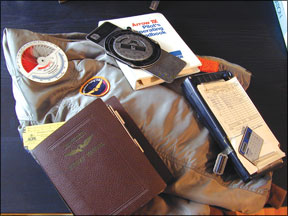
Every year, takeoffs and landings account for over half the pilot-related accidents, according to the AOPA Air Safety Foundation. While poor technique accounts for some of them, many accidents could have been prevented if the pilot had consulted available documentation to determine the airplanes performance. But before any of that can happen, we need to ensure we know how to evaluate current conditions. To assist students in determining performance data, I have them use a takeoff and landing data card on which is all the information a pilot should need to evaluate takeoff and landing performance. The card is also useful for instructors who are in the position of flying multiple aircraft models or versions. As an example, in a recent period I flew four different versions of Cessna 172s (one with the airspeed in MPH, another in knots, a third with the 180-HP STC and still different V-speeds; the fourth was a Thielert diesel conversion-you get the idea). Keeping the numbers straight for these and other different airplanes can be a challenge without a reference card. Lets look at whats important to evaluate, and how to go about assembling your own data card. The first item is to evaluate weight and balance, factors directly affecting any aircrafts performance. That an overloaded airplanes performance will decrease as its fuel consumption increases should not be news to any pilot. Too, one loaded outside its center of gravity (CG) range will handle differently, and will likely be dangerously unstable. In either case, the plane will not perform in a predictable manner and the pilot is in uncharted, dangerous waters. Step one is to get the aircrafts empty weight and moment. This sounds simple and straightforward, but I have seen incorrect aircraft weight sheets in logbooks. When I went back and checked the maintenance logs, I found a difference of over 200 pounds. Airplanes of the same make and model do not weigh the same. Dont forget basic empty weight consists of the aircraft, unusable fuel and oil.


Read More »
Squawk Box

Slippage

During the Cessna 172Ss first 100-hour inspection, a technician found both magnetos had slipped their timing approximately five degrees. The aircrafts magneto-to-engine timing was checked shortly after delivery, at 4.3 hours. Orange putty on the magneto hold-down studs was noted. It appears the magnetos have drifted significantly to the advanced position in 93 hours. This has been an ongoing issue with the engine and magneto manufacturers; SB2-08 does not address an advanced timing condition as in this case.

Read More »
Features

Are TAAs Safer?

My first “actual” instrument flight after earning the rating was a 27-nm hop from Sedalia to Boonville, Mo., in a Cessna 172. The entire flight was flown below radar coverage. Navigation was by ADF-an outbound bearing from Sedalia to intercept an inbound to Boonvilles Jessie Vertiel Memorial Airport. With my clearance received I climbed into juicy clouds at about 800 feet agl and cruised to the “far” NDB, thence flying the full-procedure approach. I had a strong crosswind on the inbound course; it was too low for VOR cross-bearings, so my navigation was by the lone, waggling ADF needle, my watch and a rough guess at my probable groundspeed. I juggled the approach plate, my charts and kneeboard, and the flight controls as I fought light turbulence while hoping to hold my wind-corrected bearing to avoid towers growing up into the murk. I broke out about two miles from the runway, lucky to pick out and avoid a Cessna scud-running just beneath the cloud deck, then scooted the rest of the way in at MDA until intercepting the VASI and landing in a stiff wind.

Read More »
Learning Experiences

…doesnt feel right…

I am a student pilot with about 60 hours total time split between a Beech Mentor T-34C, Cessna 172 and my just-purchased personal plane, a Beech Musketeer. I had flown about 20 hours with a CFI in the few months preceding my story, in both a 172 and the Musketeer. I had four flights for a total of about eight hours in the Musketeer. On the fateful flight, we took off normally in marginal VMC conditions. The smoke from several brushfires had cut visibility down to about three to four miles. We had an easy and uneventful flight with a normal takeoff, several ground reference maneuvers, a little GPS familiarization, stalls and slow flight. Nothing was out of the ordinary and the aircraft performed well.

Read More »
Unicom

Fuelish Flying

Its strange (or not so strange) that I usually hear or read about some sort of related accident happening after I read an article in your magazine. The apparent cause of those accidents are almost exactly “the gotchas” discussed in the article. With that in mind, “Fuel Gotchas” (April 2007) hit very close to home. Our local flying club just lost a Cessna 172, apparently because the pilot ran out of fuel. A 40-knot headwind resulted in a four-plus hour flight from El Monte, Calif., to Stockton, Calif. This route usually takes less then 2.5 hours. Of course, the Skyhawk only had 38 usable gallons. Do the math.

Read More »
Features

Fuel Gotchas

I was painting myself into a corner. Id departed Louisville, Kentucky into a screaming westerly wind bound for Jefferson City, Missouri. Snow and icy clouds threatened to the north, so I steered the Cessna 172 slightly south of a direct course and crossed the Mississippi somewhere north of Cape Girardeau. Now making maybe 70 knots ground speed, I was over heavily forested hills, the few small airports below closed from a recent, heavy snowfall. I started to worry about fuel.

Read More »
Preliminary Reports

NTSB Preliminary Reports

July 1, 2006, Ringgold, Ga.
Cessna 172H

At 1131 Eastern time, the airplane was substantially damaged after a total loss of engine power on initial takeoff climb. Visual conditions prevailed; the Commercial pilot reported serious injuries. The accident flight was the first after completing an annual inspection.When they arrived at the airport, the two co-owners noticed the left wing was lower than the right wing and fuel was draining out of the fuel vent. The fuel selector valve then was turned to the right main fuel tank position. The left main fuel tank was full; an estimated six gallons was present in the right tank. After takeoff, the pilot initiated a right crosswind t…

Read More »
Editor's Log

Editor’s Log: 04/06

Risk? What Risk?
Two local accidents on the same day involving singles got my attention in late February. The first occurred early in the morning as a series of snow squalls moved through the area. A Cessna 172 crashed while circling after its second GPS approach, killing two and injuring one. Late that same night, a Columbia 400 crashed at a different airport, killing the pilot and his three passengers. Early indications were that the Columbia went down while attempting an ILS.

Several members of an online discussion group in which I participate took these pilots to task for even attempting to fly in poor winter weather. A newspaper report of the second crash noted the weather…

Read More »
Squawk Box

Squawk Box: 01/06

Cessna 150M
Cracked Engine Mount

A mechanic found the R/H lower engine mount tube cracked. The crack is located within one inch of the nose wheel strut support. This crack is -inch in length, moving around the circumference of the tube. The mount (p/n 0451120-1) was replaced.Part Total Time: 5002.1 hours.

Cessna 172
Cracked Rear Wing Spar

A crack was found in the rear wing spar. A search of the SDRS database found three airplanes where cracked spars were detected. The total time in service (TIS) for these three airplanes ranged between 12,000 and 16,000 hours. The cracks are hidden between the lower skin and the flap track support rib. Use of a magnify…

Read More »
Preliminary Reports

NTSB Preliminary Reports

November 1, 2005, Daytona Beach, Fla.
Cessna 172S

At about 1136 Eastern time, a Cessna 172S experienced a hard landing at the Daytona Beach International Airport. Visual conditions prevailed. The airplane was substantially damaged and the Student pilot was not injured. The pilot stated that he did not apply adequate back pressure to the control yoke during the landing flare, and because of this, I bounced very roughly. He further stated that he executed a go-around after the hard landing, flew another traffic pattern and landed without further incident. Postflight examination of the airplane revealed damage to the firewall.

November 2, 2005, Sparks, Nev.
Schleic…

Read More »
Pilot in aircraft
Sign-up for newsletters & special offers!

Get the latest stories & special offers delivered directly to your inbox.

SUBSCRIBE