













Pylons Past: Offering Personal Retrospective on History and Future of Reno Air Races

After 59 years of tradition in Nevada, just how the move to Roswell will turn out is an open discussion.

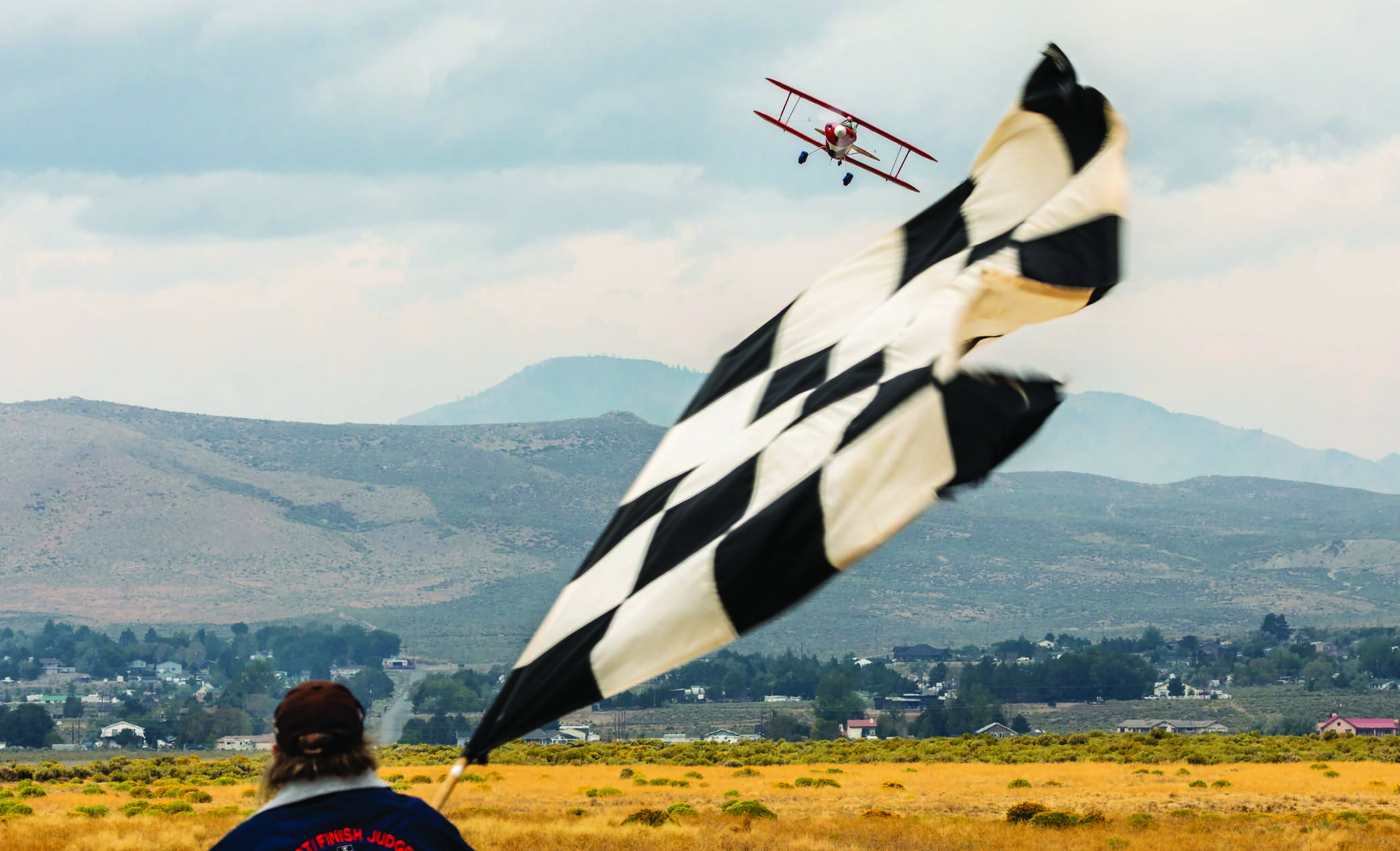
Scene from the Reno Air Races in Nevada [Reno Air Racing Association/Susan Koppel]
Gemini Sparkle

Key Takeaways:

  • The Reno Air Races, especially the "Unlimited" class featuring highly modified WWII aircraft, enjoyed a celebrated history of speed and innovation from its 1964 inception, evolving into a unique cultural event.
  • The Unlimited class at Reno eventually declined due to technical limitations, escalating costs, the revaluation of warbirds as investments (reducing race-ready aircraft), a lack of new designs after a weight limit rule, and external factors like urbanization and financial strain.
  • The modern "Sport" class emerged as the future of pylon racing, featuring contemporary aircraft, flexible rules, and significant speed potential, and the National Championship Air Races are relocating to Roswell, New Mexico, marking a new era for the sport.
See a mistake? Contact us.

Unlimited. Now there’s a word for you. What unfettered freedom it connotes, such exuberance for the future, an almost naive sense of limitless possibilities.

When I first came across unlimited in an aviation context. The editors of FLYING had published an annual titled Air Racing Aerobatics, with “racing” and “aerobatics” differentiated by different colors. It cost $1.95, a sobering $16.04 today, and was a thick 132 pages of tightly written personality profiles and technical features. Not incidentally, longtime FLYING contributor Peter Garrison expertly wrote many of these, and he’s still here in this issue. 

This Article First Appeared in FLYING Magazine

If you're not already a subscriber, what are you waiting for? Subscribe today to get the issue as soon as it is released in either Print or Digital formats.

Subscribe Now

I was all of 14 at the time, and yes, I had heard of the Reno Air Races (then only six years old), but the inside cover of that magazine had a full-page ad for the 1970 meet. I didn’t know the drawing of a P-51 being chased by a P-38 showed the planes running backward or the grandstands were on the inside of the course. But I knew there was a major air race north of me, and I wanted to go. 

Most of the air racing stories in that annual centered on the Unlimited class, and why not? It was an unlimited age. 

The Pax Americana was in full swing and burning fuel—especially in big-motored World War II hardware—was a national pastime. New muscle cars were in the showrooms and my high school parking lot. No one was much worried about emissions, and fuel economy would have to wait another three years for the Arab oil embargo. Neil and Buzz had just walked on the moon, smoky, ear splitting F4 Phantoms were everyone’s idea of a fighter, and supersonic transports were front-page news. Speed was good, and I was all in.

So were some of the gents at those air races.

Started in 1964 by Bill Stead and run around friend Bill Boeing, the original thought was an airshow to strut their personal collections of mainly WWII hardware. This quickly morphed into an air race on land Stead owned northeast of Reno, Nevada. So a relatively young cohort of pilots and engineers dusted up the hastily bladed Sky Ranch with their P-51s, Corsairs, Bearcats, and what have you. Because in those days surplus prop fighters were, if not dirt cheap, approachable by the dedicated enthusiast, that’s what the sports brought to race.

To fill out the program, contests for the ubiquitous T-6/SNJ trainer were included, along with the pure race Formula 1s for the homespun crowd. A Biplane class was also included as they were considered proper sporting machines by the greatest generation participants. More filler were the stock marquee classes for modern Wichita iron, sometimes as woman-only classes—and some aerobatic airshow acts. 

Two years later, Stead Field, named after Bill’s brother and about 20 miles west of the Sky Ranch, came surplus and the races moved to this modern, well-suited and perfectly located ex-Air Force base. It takes unique conditions to form a good air racing air field. It has to be large, with multiple runways and generous ramp space to safely host the racers, be situated in open country so no one on the ground can be annoyed or worse, and at the same time have passable transportation options such as highways and airline service so people can get there. 

On top of that, many hotel rooms are required nearby to accommodate the racers and their spectators, along with some nightlife to hold the interest of anyone who’s idea of fun isn’t changing spark plugs on an 18-cylinder radial by moonlight. It helped being close to California with its concentration of aerospace engineers and generally large population looking for fun with gasoline. Reno had all of that. 

It had been a decade and a half since the last National Championship Air Races (NCAR) in Cleveland, and an entirely new crop of pilots and planes were establishing themselves. 

Chuck Lyford was the first serious proponent of the P-51 Mustang—the go-to mount of sportsman air racers—but it was Darryl Greenamyer and his Bearcat Conquest 1 setting the pace. Conquest 1’s modifications were numerous and serious, with Greenamyer and his Lockheed engineering compadres more than willing to cut and tuck the Bearcat in their quest for Reno Unlimited Gold along with resetting the world piston airspeed record. 

By the mid-70s Conquest 1 had dominated Unlimited racing, reset the piston speed record to 469 mph, and retired to the Smithsonian National Air and Space Museum. In its wake a whole series of thoroughly hot-rodded Bearcats, Sea Furys, and legions of P-51s took up the ever-increasing challenge of outpowering and outlasting their Reno competitors. 

Competition among Unlimited teams proved the mother’s milk of Reno’s glory, spanning the incredible gulf ranging from the 1960s to well into the new millennium. Competition meant speeds kept creeping up, and there was always something new to see. 

All the while just the sound, speed, and audaciousness of Unlimited pylon racing was enough to draw a steady stream of the curious to see what the hubbub was about. Many of them returned for several years, and a few became lifelong aficionados and the bedrock of the “September family” gathered every fall.

Scene from the Reno Air Races in Nevada [Reno Air Racing Association/Susan Koppel]

First Pilgrimage

It wasn’t until 1982 when I made it to Reno, and while an age ago now, then I was disappointed to have missed the woolly early years of down-in-the-weeds flying. Too low in early Reno days was hitting sagebrush. Not the fast way around and inherently self-regulating, but the bureaucrats increasingly thought better. 

It wasn’t Unlimiteds that got me to Reno, however. It was a biplane. Underscoring the Golden State nature of the annual Nevada contest, I was living in Southern California and had learned to fly at my local field by waxing, gassing, and turning a screwdriver for the A&P there, Tom Aberle. Having turned sport flying Pitts and Stardusters into racing the diminutive biplanes starting in 1968, by 1982 Aberle had purchased a race-prepared Mong Sport, which gave me easy, local entry to the big NCAR gathering. Tagging along as a crewmember—my technical expertise ranging up to wax applicator—I finally found myself at Reno Stead Airport (KRTS). 

It was as perfect an event as I could then imagine. Although freshly married and “without means” as later described by our estate lawyer, I had already parlayed my youthful energy into a private certificate and an Austin-Healy race car. I was in a competition frame of mind, and at Reno I was surrounded by rows of the fastest, deepest-breathing flying machines. It was sensory overload from the beginning. Giant piston engines from WWII dominated, and to a kid who had never gotten past the four banger in a Cessna 150, being surrounded by the big iron was intoxicating. Those huge engines and giant props made the most delicious vibrato and sky-filling internal combustion thunder. A single Unlimited passing by in qualifying was a must-watch event, and I reveled in the idea of seven of them going flat out at once. 

But there was more than just angels singing. Paying for a pass got you nose to spinner in the pits. There were blessedly fewer rules in those days ,and the freedom to explore everything the pits and ramp offered was a major reason to make the journey to Reno. A crew pass got you past the safety line, and after hours the unrestricted ramp was a party. Live bands there were an occasional treat, and until the safety-nicks banned it, drag racing the aircraft tugs after hours was a real thing. So much so the crews hot rodded those, too.

There was a definitely more rustic feel to Stead in the early days. It was a run-down WWII leftover after all, with wood shed ticket booths and tacky used car lot vinyl pennants setting the tone. Some of the old, small hangars near the grandstands still housed all Biplane and Formula 1 racers in an impossibly crowded jumble of overlapping propellers and wing tips. The cloistering of small racers under what shelter was available was submarine-like, a condition fostering a school-like sense of community as nothing could move or be worked on without the cooperation of fellow competitors.

In the gravelly undercurrent behind the jammed F1 hangar, I came across old work benches with a gabby gaggle of guys sanding tiny two-blade aluminum propellers. The weather was uncharacteristically cold and blustery in ’82, and these gents were drenched in acetone as they worked those props with 2000 grit wet-and-dry. Even to my youthful eyes, the scene seemed like a peek behind the carny’s curtain and would arrest the blood pump of any inspector today. Indeed, if the chemicals weren’t enough, those razor-thin metal props would soon be outlawed in F1 thanks to their blade-shedding ways. Just the year before, Chuck Wentworth had somehow safely crash landed his F1, its O-200 Continental hanging by the throttle cable between the racer’s gear legs after shucking a blade tip and shaking itself apart.

Given my crew pass, I could walk out to racers on the ramp as I saw fit. Astronaut Deke Slayton turning up his F1 racer Stinger was a notable spot. I was too shy and ignorant of the fleeting nature of such opportunities that I didn’t bother him for a greeting. In Biplane, Don Fairbanks Jr. went taxiing by in his Knight Twister, and Bob Hoover was over by Ole Yeller several times a day. Everywhere the fast and famous—both human and mechanical—were present in a living, breathing hall of fame. 

Legendary Lockheed test pilot Skip Holm was qualifying Jeannie—a venerable P-51 racer from the Cleveland era that would ultimately end ignominiously crashing into the spectators in 2011—when the propeller governor failed. I’ve never heard such existential anguish from a mechanical device as when Jeannie’s wildly overrevving Rolls-Royce Merlin’s soul howled its last. I was in the Biplane hangar, but the incredible screaming drove me outside with everyone else. 

The crowd had gone silent, a stadium full of people holding their breath, as Holm looped Jeannie to an eastbound landing in front of the grandstands.

He disappeared from my view behind a tractor trailer, still plunging at incredible speed with no flaps or landing gear showing. I grimaced in anticipation of the terrifying crunch, but it never came. Scurrying around the foreground clutter, I saw Jeannie rolling on its gear into the brush off the left side of the runway. Gallons of oil coated the entire fuselage—including the canopy—but dust and commotion aside Holm and Jeannie would clearly both fly again. This was no normal day down at the local fly patch, and I hadn’t even been there two days. 

Scene from the Reno Air Races in Nevada [Reno Air Racing Association/Tim O’Brien]

The Happy Middle

Through the 1980s, the air races at Reno grew to maturity. Many old fighters were modified—some nearly beyond recognition—and speeds rose to the 480 mph neighborhood. It was a great time as each year the competitors drilled deeper for speed.

Engineering talent from major aerospace companies moonlighted at Stead while well-heeled owners made it possible as major sponsorship was impossible due to no television coverage. Without the dampening of big sponsor money, the egos ran unchecked. Used to bland, corporate-driven auto racing in my day job as a magazine reporter, Reno was always a blast of personalities and unfiltered rawness. Outside money would have ruined it. 

It was an era when many great race planes debuted. After Conquest 1 it was Rare Bear taking up the super-modified Grumman Bearcat mantle. The water-cooled crowd was even more prolific. From a modest beginning as early as 1966 the Red Baron morphed the P-51 planform all the way to Griffon power with counterrotating propellers and a heavily modified airframe before crashing in 1979. Dago Red, perhaps first of the “modern era” hot P-51s, arrived in 1981, followed by the legendary 28-cylinder Dreadnought in 1982.

While not the most modified Hawker Sea Fury at Reno, Dreadnought was easily the most successful. And there were many others, such as the also 28-cylinder Bud Light Super Corsair, the star-crossed, methanol-drinking Blind Man’s Bluff, and the wonderfully old school and humbly built “big engine in a small airframe” Yak Peristroika, later more famous as Czech Mate.

But by the end of the ’80s the WWII fighter-as-air racer was approaching its technical horizon. Only so much weight and size could be cut out of an old fighter, plus those glorious engines had precious little power potential remaining, not to mention spares were getting scarce. Two men offered radically different responses. 

John Sandberg came straight out of central casting as the hands-on, hard-working, big-iron flyboy. An old school aviation pro with a piston engine shop and a money-making metal shop servicing the biggest names in aviation, Sandberg teamed with Lockheed engineer and longtime Reno techno guru Bruce Boland to conceive and scratch-build Tsunami in 1986. There was nothing truly new in Tsunami as it was built from aluminum and used a proven Rolls-Royce Merlin engine just like a P-51.

Thus, it inevitably followed the 51s general layout but in a smaller, lighter, and more efficient package. Designed for well over 500 mph, Tsunami was emerging from its initial teething pains when it placed a close third in the fantastically thrilling, 480 mph 1991 Gold final. Tragically it was lost, along with Sandberg, to a flap failure on short final on the trip home from Reno. 

Just as Tsunami left us, Bob Pond debuted the Pond Racer as the next clean-sheet design Unlimited. A Midwest industrialist with a fondness for warbirds, Pond didn’t want to see such historical artifacts cut up into pylon racers. His solution was a dedicated race plane so fast it would retire the World War II iron. Hiring no less than the celebrated but race rookie Burt Rutan to design his all-conquering contender, the result was predictably unique—an almost dainty twin-engine machine without one proven major component.

Stuffed with new technology and requiring careful tending even on a good day, the high-strung Pond Racer oozed mechanical troubles from day one. Famously powered by Nissan race car engines as out of their element as a ballerina in a lumberjack camp, the Pond Racer whispered apologetically around the Unlimited Silver races for three years. Never able to extract anything close to the promised power, a catastrophic engine failure caused the loss of the airplane and pilot Rick Brickert at the 1993 races. 

If by conventional measure Tsunami and Pond Racer lived short, unsuccessful lives, they both showed immense promise, making it impossible to ignore purebred race planes would eventually usurp the WWII favorites. The Unlimited class’s answer was a new rule requiring a minimum weight of 4,500 pounds—heavy enough to banish any all-new race planes but light enough no Second World War fighter would be left out. 

In the 1990s and beyond, the useless weight limit had its silent effect. No other homebuilt Unlimited racers were in the offing, and so the traditional fun continued. Tiger Destefani’s sleek P-51 Strega duked it out with Lyle Shelton’s Rare Bear while everyone watching debated air versus water-cooling (water cooling won). But the longer-term effect was new Unlimiteds were still not forthcoming, and when after the turn of the millennium the surplus big war parts dwindled and institutional investors discovered stock Mustangs and Corsairs made magnificent investment vehicles, the pool of Unlimited Reno racers dried like a Serengeti watering hole.

Fans clutched their goggles and scarves as painstakingly crafted race planes were sold into stock retirement. Values had soared. An investor could buy a racing P-51 for three-quarters of a million dollars, spend a couple more million converting it back to factory new, and still sell it for a $2 million profit. Not many race plane owners could resist.

Another thorn in the Unlimited ranks was discontent by the racers over too high costs and too low prize money. It’s the way of any unlimited racing—unlimited speed goes hand in glove with unlimited expenses—but there was truth behind the static prize money complaint. For sure the heroic financials in fielding a top flight Unlimited led to first-rate aircraft such as Strega and Rare Bear simply staying home almost the last decade of Reno. 

As the brightly painted, individualistic racers faded into stock obscurity, the Unlimited class at Reno ran nearly dry, and the crowds, already aging and maybe jaded by repetition, dwindled. Speeds retreated with the waning competition and in the end the few fast racers began lapping at economy power settings.

The horrific crash into the crowd in 2011, plus stand-down years for 9-11 and COVID-19 added meaningful financial strain while the once wide-open range around Stead Field sprouted houses and warehousing. Married to the hairy-chested fighter iron and the commendable WWII patriotism never far away from these machines, the die-hard racers emptied the Palm Springs Air Museum in California for a week each year to fill the Unlimited field, but by then the main chute had failed and the organizers were clawing for the reserve’s D-ring.

When the race’s finances paled in the face of turning Stead Field into freighter port—it’s right next to California and its millions of consumers, remember—the jig was up. 

Scene from the Reno Air Races in Nevada [Reno Air Racing Association/Tim O’Brien]

A Sporting Future

Twenty-five years before the fall my Reno journey was starting to feel if not complete at least a pleasant, familiar anchor on my calendar. I had attended as crew, media, and spectator. 

By 1998 I had been watching Dreadnought rumble past for 15 years and been buzzed at 12 feet by Bob Hoover in Ole Yeller while in the media bus coming in from the pylons. By 2000 I had peaked and was looking for the next Tsunami or Pond Racer. And I found several of them in the Sport class.

With Unlimited still strong but obviously not lasting forever, the arrival of the Sport class in 1998, where current speedsters such as the Glasair III and Lancair Legacy ruled, was a godsend. Essentially “Unlimited Light,” the Sport class allowed a nearly unfettered rulebook—no more than 1,000 cubic inches and run whatever fuel or power adder you like—in a contemporary sport airframe. The original idea was to require five kit aircraft to homologate the airframe, but even that requirement was eventually dropped. This year even the 1,000-cubic-inch limit was abandoned.

Here was pylon racing’s new standard-bearers. They were contemporary airplanes with engines and technology fans could relate to, with essentially no limit on expansion of competitors or the ability to build anything new and innovative. There would be no interference from investment fund managers and no need to work around 80-year-old hardware. The attraction of the Sport class was clear, but the great inertia wheel of Reno racing didn’t want to see past the hero class Unlimiteds. And so the old fighters were paraded and the winner brought front and center as soon as he landed while the Sport contestants emerged and retreated autonomously from the distant pits without fanfare.

A 300 mph group from the beginning, the Sport class worked its way to a touch over 400 mph laps, and for the last few years at Reno the best Sport Gold racers would have finished third or fourth in the Unlimited Gold race. Open and encouraging to the press, I found the Sport pits to be my new home at Reno. The technological growth there centered mainly on engines, the same ones tens of thousands of regular pilots were flying, and the innovation coming out of the sponsoring engine shops and race teams pointed to improvements to which a regular Joe could aspire. There was much to learn from these younger, innovative racers and pass on to my readers, a hard contrast to the museum-like zeitgeist up in the Unlimited parking. 

Today

Ultimately the Sport class saw its destiny by establishing itself as its own racing organization. That would allow it to run its own races at various venues while still participating in the big NCAR event the Reno organizers would develop in a post-Stead world. 

That new NCAR venue turns out to be Roswell, New Mexico, the first such event almost upon us on September 10-14. Sport has already run its first races in Madras, Oregon, and Las Cruces, New Mexico (a state with no lack of open spaces and eager for tourist dollars), and they’ll be at Roswell Air Center (KROW), too. So will Biplane, Formula 1, plus the jets, T-6s, and the Unlimiteds.

After 59 years of tradition in Nevada, just how the Roswell races will turn out is an open discussion, but there are opportunities in doing things differently in the New Mexico desert. For sure I’ll be there to participate in the start of a new era in pylon racing.

One thing to count on is that Reno bred a modern core of air racers not willing to give up their sport. The world has changed, and the grandstands will be smaller and not so packed. But electronic media can do what it can to give this visceral sport more universal appeal, and it’s up to the NCAR organizers to project the story and technology behind it to the masses.  

Everyone is wishing the National Championship Air Races at Roswell the best, but don’t be surprised to also see Sport and possibly Formula 1 races elsewhere as the faithful forge a new era in propeller racing. 


This feature first appeared in the June Ultimate Issue 959 of the FLYING print edition.

Tom Wilson

Tom Wilson got into general aviation in 1973 after pumping avgas and waxing flight school airplanes, but the lure of racing cars and motorcycles sent him down a motor journalism career heavy on engines and racing. Today he flies for fun in a Starduster and a shared Cessna 140A.

Ready to Sell Your Aircraft?

List your airplane on AircraftForSale.com and reach qualified buyers.

List Your Aircraft
AircraftForSale Logo | FLYING Logo
Pilot in aircraft
Sign-up for newsletters & special offers!

Get the latest stories & special offers delivered directly to your inbox.

SUBSCRIBE
