
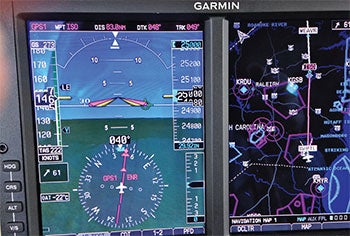

The winds of fate can blow with a gentle moderate assistance, or they can be right on the nose at 80 knots. Fate is the hunter, as Ernie Gann so eloquently put it, and the winds are frequently the weapon of choice. No matter what you fly today, winds will have a heavy effect on your sense of well-being. You know, of course, that tailwinds are generally milder than the roaring, boring headwinds. On almost any trip, the headwind leg has higher winds than the tailwind leg, for reasons known only to celestial bodies.
Though I was fully aware of these unfair and disagreeable facts, I did plan a trip last winter that I hoped would be within the capability of the Cheyenne my wife, Cathy, and I own. Good for 240 knots down low and 223 at Flight Level 250, this sturdy turboprop has a five-and-a-half-hour range if flown thoughtfully. So, a flight from Tampa, Florida (KTPA), to Lebanon, New Hampshire (KLEB), for the holidays — a distance of 1,061 nm as the goose flies — is a pretty sure bet in winter, with traditional average push of 25 knots or so. That is, it is a sure bet if the weather in New Hampshire is good and no dawdling on an approach is required. After the holiday sometimes referred to as Christmas in politically incorrect circles, we planned to fly to visit friends in Kerrville, Texas, a mere 1,518 nautical distant. How hard could two 750 nm trips be in an airplane that flies that fast (or slow, if you are a jet pilot) be?